
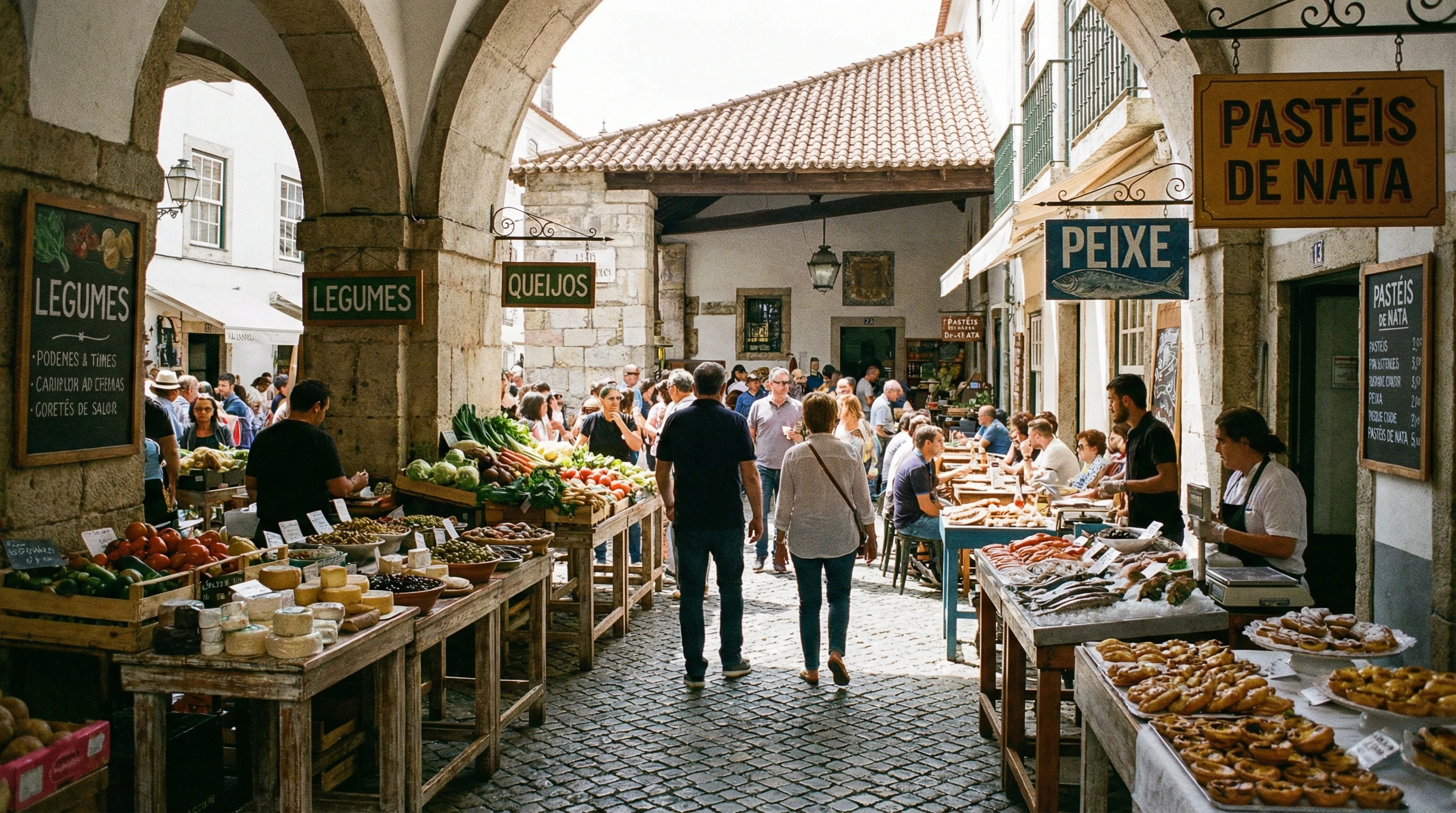
Portuguese food markets are one of the best ways to connect with local culture, flavors, and everyday life while traveling through Portugal. These lively spaces are filled with color, fresh ingredients, and the unmistakable buzz of locals shopping, chatting, and sharing food. From north to south, food markets in Portugal bring together farmers, fishmongers, bakers, and artisans offering authentic Portuguese market food at honest prices.
Whenever I travel in Portugal, markets are always high on my list. They offer a real taste of daily life and make it easy to sample regional specialties in one place—often better than any restaurant.
Why Food Markets Matter in Portuguese Culture
Food markets have played a central role in Portuguese life for centuries. They’re not just places to buy groceries; they’re social hubs where neighbors meet, traditions are passed down, and local producers showcase their craft. Much of the food comes straight from small farms or the Atlantic Ocean, keeping everything seasonal and fresh.
Even in large cities, markets feel personal. Walking between stalls, I hear stories from vendors who’ve been working the same spot for decades and see locals stopping for their daily coffee or pastry. Many classic Portuguese dishes began as simple market meals based on what was available that day—something that still shapes Portuguese cooking today.
Best Food Markets in Portugal (By City)
Lisbon: Time Out Market (Mercado da Ribeira)
Located in the heart of Lisbon, Time Out Market blends tradition with modern food culture. The outer sections still sell fresh fish, fruit, and produce, while the main hall features food counters run by top Lisbon chefs. It’s one of the easiest places to try a wide range of Portuguese dishes—from bifanas and grilled sardines to high-quality desserts—all under one roof.
Communal seating makes it social, and it’s easy to mix local flavors with a more curated food-hall experience.
Porto: Mercado do Bolhão
Mercado do Bolhão is the soul of Porto’s food scene. Recently restored, the historic building is filled with stalls selling cheese, olives, smoked meats, fresh produce, and salted cod. Upstairs, small eateries serve traditional dishes like tripas à moda do Porto and francesinha.
This is the best market in Porto for travelers who want to experience authentic northern Portuguese food culture without anything feeling staged.
Algarve: Faro Municipal Market
Faro’s Municipal Market is a seafood lover’s dream. Located near the Ria Formosa lagoon, it’s packed with freshly caught fish, clams, oysters, and shrimp. You’ll also find Algarve oranges, soft regional cheeses, and almond-based sweets typical of southern Portugal.
On weekends, pop-up stalls and food events often expand into nearby streets, creating a lively, local atmosphere.
Madeira: Mercado dos Lavradores (Funchal)
In Funchal, Mercado dos Lavradores stands out for its tropical produce and island specialties. Two floors are filled with exotic fruits, fresh fish like scabbardfish and tuna, and colorful flower stalls. Vendors in traditional dress add to the charm, and tasting local fruit alongside a glass of Madeira wine is a must.
What to Eat at Portuguese Food Markets
Savory Market Favorites
Bolinhos de bacalhau (codfish cakes) are everywhere and perfect for snacking while browsing. You’ll also find bifanas, prego no pão (steak sandwiches), grilled sardines, octopus salad, and fried fish—especially in coastal markets. In cooler months, roasted chestnuts and regional meat pies are common sights.
Desserts & Pastries
Pastéis de nata are the obvious star, but markets offer much more. Look for queijadas, travesseiros, bolas de Berlim, and regional pastries made with almonds, figs, or honey. Asking vendors for recommendations often leads to hidden gems you wouldn’t find elsewhere.
Cheese, Olives & Cured Meats
Portuguese markets shine when it comes to cheese and cured meats. From creamy queijo da serra to aged Alentejo cheeses, tasting before buying is encouraged. Pair them with marinated olives, chouriço, presunto, and fresh bread for an easy picnic that rivals any restaurant meal.
Budget Tips for Eating at Portuguese Markets
Markets are one of the most budget-friendly ways to eat in Portugal. Traditional stalls away from tourist zones usually offer better prices, and many have daily lunch specials. Buying several small snacks instead of one large meal lets you try more flavors for less money.
If you’re staying somewhere with a kitchen, markets are perfect for picking up ingredients for simple meals—fresh bread, cheese, fruit, and local wine go a long way.
Best Time to Visit Portuguese Food Markets
Morning is the best time to visit. Produce is freshest, vendors are relaxed, and locals are doing their daily shopping. By early afternoon, many stalls begin to close. Weekend visits often come with extra energy, live music, or food events—especially during festivals.
Local vs Tourist Markets: How to Spot the Difference
Markets full of locals buying groceries tend to be more traditional and affordable. Tourist-focused markets usually offer more ready-to-eat food and English menus. Both have value: traditional markets show daily life, while tourist markets make tasting many dishes quick and easy.
FAQ
What should I bring to a Portuguese food market?
A reusable bag, small cash, and napkins or wet wipes if you plan to eat on the go.
Can I pay with a card at food markets in Portugal?
Larger markets accept cards, but small stalls usually prefer cash.
Are Portuguese food markets open every day?
Most city markets are open daily except Sundays or holidays, but hours vary.
Is it okay to take photos at markets?
Yes, but always ask vendors first—it’s appreciated.