
Portuguese petiscos are small plates, snacks, or shared dishes often served in casual places such as tascas, bars, cervejarias, wine bars, and market stalls. They are sometimes compared with Spanish tapas, but petiscos have their own Portuguese style, dishes, portions, and eating habits.
For first-time visitors, petiscos can be an easy way to try several Portuguese foods without ordering a formal three-course meal. The main thing is to understand how they work, how much to order, and how to avoid common mistakes such as overordering or assuming every small plate is cheap.
This guide explains what Portuguese petiscos are, how they compare with tapas, where to try them, what to order, and how to enjoy them without confusion.
Quick Answer
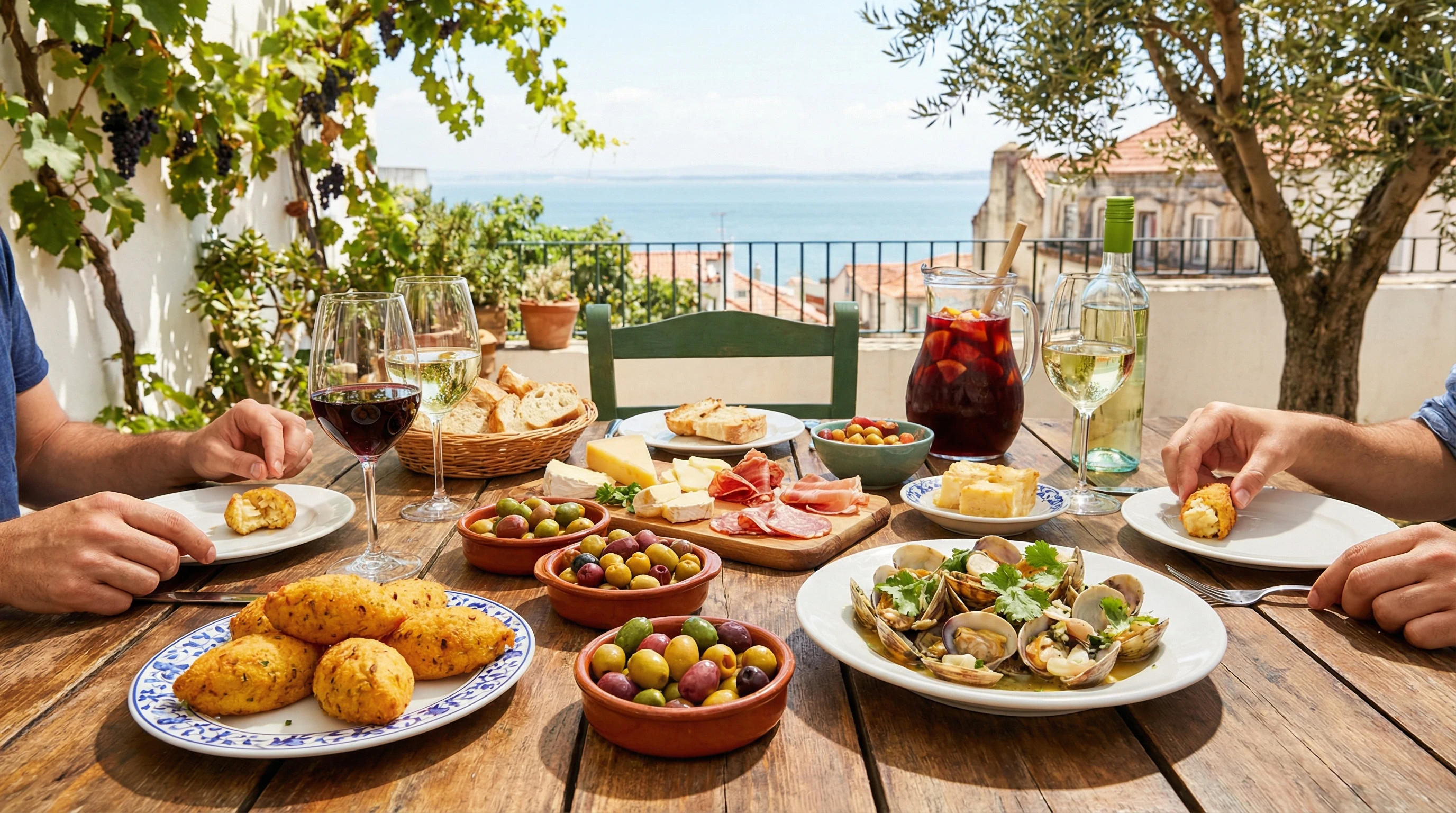
Petiscos are Portuguese small plates or snacks, often shared at the table with drinks or as a casual meal. They may include seafood, cured meats, cheese, olives, codfish cakes, sausages, clams, octopus salad, or fried snacks.
They are not exactly the same as Spanish tapas. Petiscos are often ordered from a menu, shared slowly, and can be used as a light snack or a full meal depending on how many plates you order. First-time visitors should start with a few dishes, check portion sizes, and ask about prices if seafood or specials are involved.
What Are Portuguese Petiscos?
Petiscos are Portuguese small plates, snacks, or shared dishes. The word comes from “petiscar,” which means to snack or nibble.
They can be eaten before a meal, with drinks, or as a casual meal when several plates are shared. Some petiscos are small bites, while others are closer to smaller versions of main dishes.
Common examples include codfish cakes, clams, octopus salad, cured meats, cheese, olives, sausages, fried snacks, and seafood dishes. Portions vary by restaurant, so it is usually better to start with a few plates and order more if needed.
Petiscos vs Tapas: What Is the Difference?
Petiscos are often compared with Spanish tapas because both involve small plates, snacks, and shared food. However, they are not exactly the same.
Tapas traditions vary widely across Spain. In some places, small bites may come with drinks, while in others they are ordered separately from a menu. Petiscos in Portugal are usually ordered as shared dishes and may be larger than a single bite.
The safest way to understand petiscos is to think of them as Portuguese small plates. They can be a snack with drinks, a light meal, or a full shared meal depending on how many dishes you order.
Where to Eat Petiscos in Portugal
Petiscos are usually found in casual places rather than formal restaurants, although this varies by city and region.
- Tascas: These small, often family-run taverns are classic petiscos territory. They are often simple and no-frills, and may be popular with regular customers. Tascas can be a good place to find simple, traditional dishes.
- Neighborhood Bars: Local bars in Lisbon, Porto, coastal towns, and smaller places may serve petiscos with drinks in a casual setting.
- Wine Bars and Cervejarias: Petiscos are often served with Portuguese wine or beer. Wine bars may offer regional petiscos, while cervejarias may offer heartier dishes, seafood, or shellfish.
- Food Markets: Modern markets like Mercado da Ribeira in Lisbon or Mercado do Bolhão in Porto may have stalls dedicated to petiscos, useful for an informal bite.
- Coastal Towns vs Cities: In coastal areas, petiscos may feature more fish and seafood, while some city tascas may focus more on sausages, cheeses, and fried snacks.
Petiscos can be a practical way to try several Portuguese dishes in one meal.
Typical Portuguese Petiscos to Try
- Picapau: Marinated beef or pork cut into bites, cooked in a garlicky sauce, and eaten with toothpicks. Often served with beer or wine.
- Bolinhos de Bacalhau: Golden codfish cakes made from salted cod, potatoes, and herbs. They are often crisp outside and soft inside.
- Ameijoas à Bulhão Pato: Clams cooked with garlic, cilantro, olive oil, and white wine. The sauce is often eaten with bread.
- Presunto, Queijo, Olives: Slices of cured ham, regional cheese, and olives are common simple petiscos or table snacks.
- Sardines & Grilled Seafood (Seasonal): Grilled sardines are common in summer, especially near coastal towns.
Menus may change depending on the restaurant, region, season, and available ingredients. Ask about daily specials if they are available. Some places may also offer daily or regional petiscos such as octopus salad, pickled vegetables, or lupini beans.
When Do People Eat Petiscos?
Petiscos are often eaten with drinks, before dinner, or as a casual shared meal. They may appear in the late afternoon, early evening, or at night, depending on the place and local routine.
They are flexible. A few plates can work as a snack, while several shared dishes can become a full meal. For visitors, the easiest approach is to order slowly, see how large the portions are, and add more dishes if needed.
Cost and Budget Tips for Petiscos
Petiscos can be good value, especially when shared, but prices vary by city, restaurant, ingredient, and location. Simple items such as olives, cheese, codfish cakes, or fried snacks may be cheaper than seafood, cured meats, or special dishes.
Ordering a few plates first is usually safer than ordering too much at once. Portion sizes vary, and some petiscos are larger than first-time visitors expect.
Check prices carefully in tourist-heavy areas, near waterfronts, or when ordering seafood by weight. For more budget tips, see Eating in Portugal on a Budget and Best Cheap Eats in Porto.
Common Tourist Mistakes With Petiscos
- Ordering Too Much at Once: Petiscos aren’t meant to all come out together like a big dinner. Start slow; you can always order more.
- Expecting Fixed Menus: Some places write specials on chalkboards, and menus change day to day. Ask what’s good today instead of looking for familiar dishes.
- Confusing Petiscos with Full Dinners: While you can eat enough petiscos for a full meal, do not expect a standard main-course format. Expect a more flexible shared-plate style.
- Paying Tourist Prices in the Wrong Places: Better-value petiscos spots may be away from the main tourist streets. Look for casual tascas, neighborhood restaurants, or simple bars for better value and traditional dishes.
- Not Checking Table Snacks: Bread, olives, cheese, or other table snacks may be charged separately.
- Assuming Petiscos Are Always Tiny Portions: Some petiscos are larger than first-time visitors expect.
Are Petiscos a Good Way to Try Portuguese Food?
Petiscos can be a good way to try several Portuguese foods in one meal, especially for visitors who prefer shared plates and casual places. They are not the only way to eat in Portugal. Cafés, pastelarias, markets, prato do dia lunches, seafood restaurants, bakeries, and snack bars all show different sides of Portuguese food culture. Petiscos are most useful when you want a relaxed meal, a few drinks, or a simple way to taste several dishes without ordering one large main course.
Petiscos are usually best approached slowly: order a few plates, check portions, and add more if needed.
Related Guides
If you are planning to eat out in Portugal, these guides may also help:
- How to Order Food in Portugal
- Portuguese Snacks to Try
- Prato do Dia in Portugal
- Eating in Portugal on a Budget
- Best Cheap Eats in Porto
- What to Eat in Lisbon
- What to Eat in Porto
Frequently Asked Questions
What are Portuguese petiscos?
Portuguese petiscos are small plates, snacks, or shared dishes often eaten with drinks or as a casual meal. They may include seafood, cured meats, cheese, olives, codfish cakes, sausages, or fried snacks.
Are petiscos the same as tapas?
Petiscos are often compared with Spanish tapas, but they are not exactly the same. Petiscos are Portuguese small plates and may be larger or more meal-like, depending on the restaurant.
Can petiscos be a full meal?
Yes, petiscos can become a full meal if you order several plates to share. It is usually best to start with a few dishes and order more if needed.
Where can you eat petiscos in Portugal?
Petiscos are often served in tascas, bars, cervejarias, wine bars, casual restaurants, and market stalls. Availability varies by region and restaurant.
What are common petiscos to try?
Common petiscos include bolinhos de bacalhau, clams, octopus salad, presunto, cheese, olives, chouriço, fried snacks, and grilled seafood.
Are petiscos cheap in Portugal?
Petiscos can be good value when shared, but prices vary by city, restaurant, location, and ingredient. Seafood, cured meats, and specials may cost more than simple snacks.
How many petiscos should you order?
For first-time visitors, it is usually better to start with two or three plates for the table, then order more if needed. Portion sizes vary by restaurant.
Do you need to speak Portuguese to order petiscos?
You do not need fluent Portuguese, especially in tourist areas, but a few phrases can help. Asking what is available, what is included, and how large the portions are can make ordering easier.
Bottom Line
Portuguese petiscos are small plates, snacks, or shared dishes that can be eaten with drinks, before dinner, or as a casual meal. They are often compared with Spanish tapas, but petiscos have their own Portuguese style, portions, and dishes.
For first-time visitors, the easiest approach is to start with a few plates, check portion sizes, ask about daily specials, and order more if needed. Seafood, cured meats, cheese, and specials may cost more than simple snacks, so it is worth checking prices before ordering.
Petiscos can be a relaxed way to try several Portuguese foods in one meal without choosing a formal starter, main course, and dessert. Understanding how they work can make eating out in Portugal easier, more flexible, and more enjoyable.