
Some of the links on this page are affiliate links, which means I may earn a small commission if you make a purchase through them, at no extra cost to you. This helps support the site and allows me to continue creating helpful content.
Lunch in Portugal is more than a quick midday stop. For many locals, it is an important part of the day and a good chance to enjoy simple, filling food, regional dishes and affordable daily specials. For visitors, understanding Portuguese lunch culture makes eating out much easier. Knowing when locals usually eat, what dishes appear on lunch menus, and how prato do dia or menu do dia work can help you find better-value meals and avoid common tourist mistakes.
Quick Answer: How Does Lunch Work in Portugal?
Lunch in Portugal usually happens between 12:30 pm and 2:30 pm, with most locals stepping out around 1 pm. Restaurants and cafés offer a prato do dia (dish of the day) or a menu do dia (menu of the day), both often affordable, filling, and based on what the kitchen is preparing that day.
Lunch is more relaxed than breakfast or a quick snack. Expect a leisurely meal, courses like soup and a main dish, and time carved out for dessert and coffee afterward.
| Lunch Feature | What It Means | Visitor Tip |
|---|---|---|
| Typical Time | 12:30–2:30 pm | Arrive early to avoid the rush and to catch daily specials |
| Prato do Dia | Daily special, often one or two main dishes | Ask for it; it’s usually the best price and most traditional |
| Menu do Dia | Set menu, includes courses and a drink | Great value for money; local favorite for working lunch |
| Pace of Meal | Relaxed, often with dessert and coffee | Don’t rush; enjoy people-watching and the ambiance |
| Included Extras | Bread, olives, sometimes cheese | Ask before eating if you are unsure |
What Time Do People Eat Lunch in Portugal?
Most Portuguese people step out for lunch right after 1 pm, especially during the workweek. In busy neighborhoods or city centers, spots get crowded from 1–2 pm as locals pack in for their break. After 2:30 pm, kitchens at smaller local restaurants may close or switch to serving only light snacks until dinner prep starts. In busy tourist areas or big cities like Lisbon and Porto, lunch hours are more flexible, with some places serving all day or adapting to late eaters. Smaller towns, rural villages, or family-run eateries stick closer to classic hours, so if you show up after 3 pm, you might discover the kitchen already shut.
What Do Portuguese People Eat for Lunch?
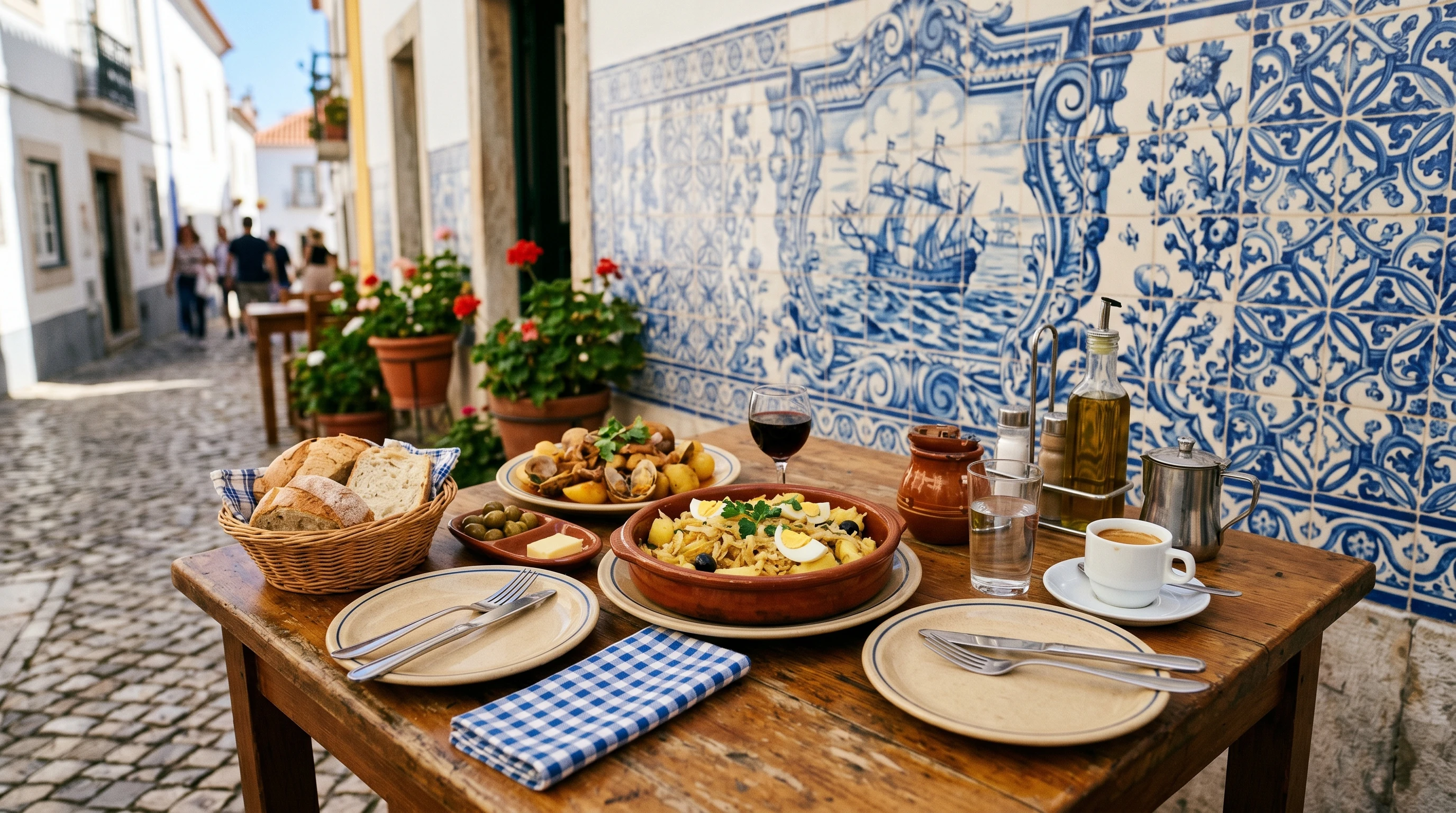
The usual Portuguese lunch begins with savory soup, like caldo verde or a simple veggie version, followed by a hearty main dish. You can expect choices like grilled chicken, pork chops, fresh fish, seafood rice, or long-cooked stews such as feijoada (bean stew with meat) or cozido à portuguesa (a blend of boiled meats and vegetables). Classic sides are rice and potatoes, or sometimes a small salad. Many locals finish up with fruit or a popular dessert such as arroz doce (rice pudding), bolo de bolacha (biscuit cake), or simply a seasonal piece of fruit, followed by a shot of small espresso. Bread baskets are often brought to the table at the start, sometimes with olives, butter or regional cheese.
- Soup: Homemade, included in daily menus (vegetable, caldo verde, or fish)
- Grilled fish: Like sardines, dourada (golden bream), or mackerel
- Pork and chicken: Grilled, stewed, or in sandwiches
- Bacalhau (salt cod): Served baked, fried, or in creamy casseroles
- Sides: Rice, boiled potatoes, fries, or small salads
- Dessert: Fruit, rice pudding, doce da casa (house dessert), mousse
- Coffee: A small espresso, called bica or café
What Is Prato do Dia?
Prato do dia means “dish of the day”. It’s a rotating special based on what the kitchen is making fresh that day. It’s a popular way to get a home-style meal at a solid price, often including a soup or simple starter, a generous main (meat, fish, or vegetarian), and sometimes even a drink or dessert. The prato do dia highlights local ingredients and changes daily, drawing on what’s in season or just came in from the market. For travelers, asking for the prato do dia opens the door to lesser-known regional dishes and local taste of what locals eat.
What Is Menu do Dia?
Many Portuguese restaurants offer a menu do dia, which is a fixed-price lunch menu. It almost always comes with a soup or starter, a main course (occasionally with a few options), a drink (wine, soda, or water), dessert, and a coffee at the end. The menu do dia is a great value option for lunching in Portugal, especially at local spots where office workers and locals crowd in during the week. Plates are usually generous and you can expect those home-cooked flavors. Sometimes these menus appear scribbled on a chalkboard or taped to a window. Tip: check out the menu before you sit down to see what’s on offer.
Lunch in Local Restaurants vs Tourist Areas
Eating lunch at a neighborhood restaurant can often feel more local and may offer better value than restaurants in busy tourist areas. Local tascas or snack bars keep things simple with a couple of daily specials and a short list of classics. There may be fewer English translations and no fancy presentation, but you’ll get honest prices and a chance to share space with regulars. In contrast, spots in major tourist zones often have multilingual menus, longer lunch hours, and loads more dish options—including international fare and “safe picks”. These places are more approachable for first-timers, with plenty of English spoken and predictable selections, but prices trend higher and you might miss regional gems.
- Local Eats: Simpler decor, daily specials, good prices, fewer English translations, simple local dishes
- Tourist Spots: English menus, all-day service, expanded choices (sometimes pricier)
Common Lunch Dishes to Try in Portugal
These dishes often appear on traditional lunch menus, especially in local restaurants away from the busiest tourist streets. If you do not recognize a dish on the board, ask the staff what it includes. It may be a regional special worth trying.
- Bacalhau à Brás: Shredded salt cod, onions, thin potatoes, scrambled eggs, and fresh parsley
- Sardinhas Assadas: Grilled sardines, especially a summer highlight
- Dourada Grelhada: Grilled golden bream, typically served whole with salad and potatoes
- Arroz de Marisco: Seafood rice loaded with shrimp, clams, sometimes lobster
- Frango Piri-piri: Grilled chicken brushed with fiery piri-piri sauce
- Bifana: Tender pork sandwich with garlic and spices, found as a popular quick lunch
- Caldo Verde: Iconic kale and potato soup, usually as an appetizer
- Porco à Alentejana: Pork and clams with potatoes, garlic, and cilantro (from the south)
- Feijoada: Slow-cooked pork and bean stew
Most of these show up regularly as daily specials at neighborhood spots, especially away from tourist centers. If you don’t recognize a name on the board, ask about it. You might track-down a regional or family recipe you’ve never heard of.
If you want to understand Portuguese food beyond the menu, a local food tour can be a helpful way to try traditional dishes, learn what to order and discover small places you might not find on your own. You can compare Portugal food tours and local dining experiences on Viator or GetYourGuide before your trip.
Drinks and Coffee at Lunch
Lunch drinks are usually pretty relaxed: tap water, sparkling water, or a glass of “vinho da casa” (house wine) or cold beer. Ordering a soda like Sumol, a Portuguese favorite, or another soft drink happens often, too. Set menus often include a drink, such as water, wine, beer or a soft drink. When you’ve finished lunch, you’ll almost always be offered a “café”—the small espresso, served in a small cup. Even if coffee isn’t your norm, having a shot after lunch is all part of the Portuguese rhythm.
Tips for Tourists Eating Lunch in Portugal
- Check the prato do dia: Usually the most traditional and best value meal.
- Ask for a recommendation: Staff can often tell you which dishes are popular or freshly prepared that day.
- Couvert isn’t always free: Bread, olives, cheese, or spreads may be added to your check per person. Decline politely if you don’t want them.
- Check fish pricing: Whole grilled fish could be priced by weight. Ask if you’re uncertain, so the bill has no surprises.
- Arrive before the kitchen closes: In quieter areas, kitchens may close at 2:30 or 3 pm—aim to arrive by 1:30 for the best selection.
- Take your time: Lunch is meant to be leisurely and enjoyed. There’s no rush to finish.
- Learn basic menu lingo: “Peixe” (fish), “carne” (meat), “sopa” (soup), “sobremesa” (dessert), and “conta” (bill).
Common Mistakes to Avoid
- Coming after lunch hours and finding the kitchen closed
- Skipping daily specials or set menus that offer local value
- Assuming the couvert is included by default
- Expecting every menu and staff member to know English fluently
- Sticking only with familiar dishes; Portugal’s food scene packs surprises
- Not asking about allergens or ingredients if you have dietary needs
Related Portugal Food Guides
- How to Read a Portuguese Menu
- Eating in Portugal on a Budget
- Portuguese Petiscos Explained
- Portuguese Street Food vs Traditional Restaurants
- Portuguese Wines Explained
- Portuguese Desserts & Sweets
- A Food Lover’s Guide to Portugal
Frequently Asked Questions
What time is lunch in Portugal?
Lunch in Portugal is generally eaten between 12:30 pm and 2:30 pm, with many locals sitting down around 1 pm. Smaller local restaurants may stop serving lunch after the main lunch period.
What do Portuguese people usually eat for lunch?
A typical Portuguese lunch may include soup, a main dish such as fish, pork, chicken, bacalhau or stew, plus rice, potatoes or salad. Many people finish with fruit, dessert and a small espresso.
What is prato do dia?
Prato do dia means “dish of the day.” It is a daily special that usually offers a filling, good-value meal based on what the restaurant is preparing that day.
Is lunch expensive in Portugal?
Lunch does not have to be expensive in Portugal, especially at local restaurants away from busy tourist areas. Prato do dia and menu do dia options are often among the best-value meals.
Do restaurants in Portugal serve lunch all day?
Many local restaurants serve lunch during traditional lunch hours, usually around 12:30 pm to 2:30 pm. Restaurants in tourist areas or larger cities may serve food for longer, but hours vary.
Is lunch the main meal in Portugal?
For many people in Portugal, lunch is an important meal of the day and can be more substantial than breakfast or dinner. This varies by lifestyle, work schedule and region.
Wrapping Up
Portuguese lunch culture is simple, practical and closely tied to local food habits. Once you understand lunch hours, prato do dia, menu do dia and a few common dishes, eating out in Portugal becomes much easier.
For first-time visitors, local lunch spots can be a good way to try traditional food without overcomplicating the meal. Arrive during the main lunch window, check the daily special, ask what is recommended and take your time. Lunch in Portugal is not something to rush.