
Some of the links on this page are affiliate links, which means I may earn a small commission if you make a purchase through them, at no extra cost to you. This helps support the site and allows me to continue creating helpful content.
Florence is one of the best food cities in Italy—but it’s also one of the easiest places to fall into tourist trap restaurants. I’ve made that mistake myself: paying high prices for average food near the Duomo, only to realize later I missed out on real Florentine cuisine.
In this guide, I’ll show you exactly how to avoid tourist trap restaurants in Florence, spot authentic local spots, and make sure every meal you have in 2026 is actually worth it.
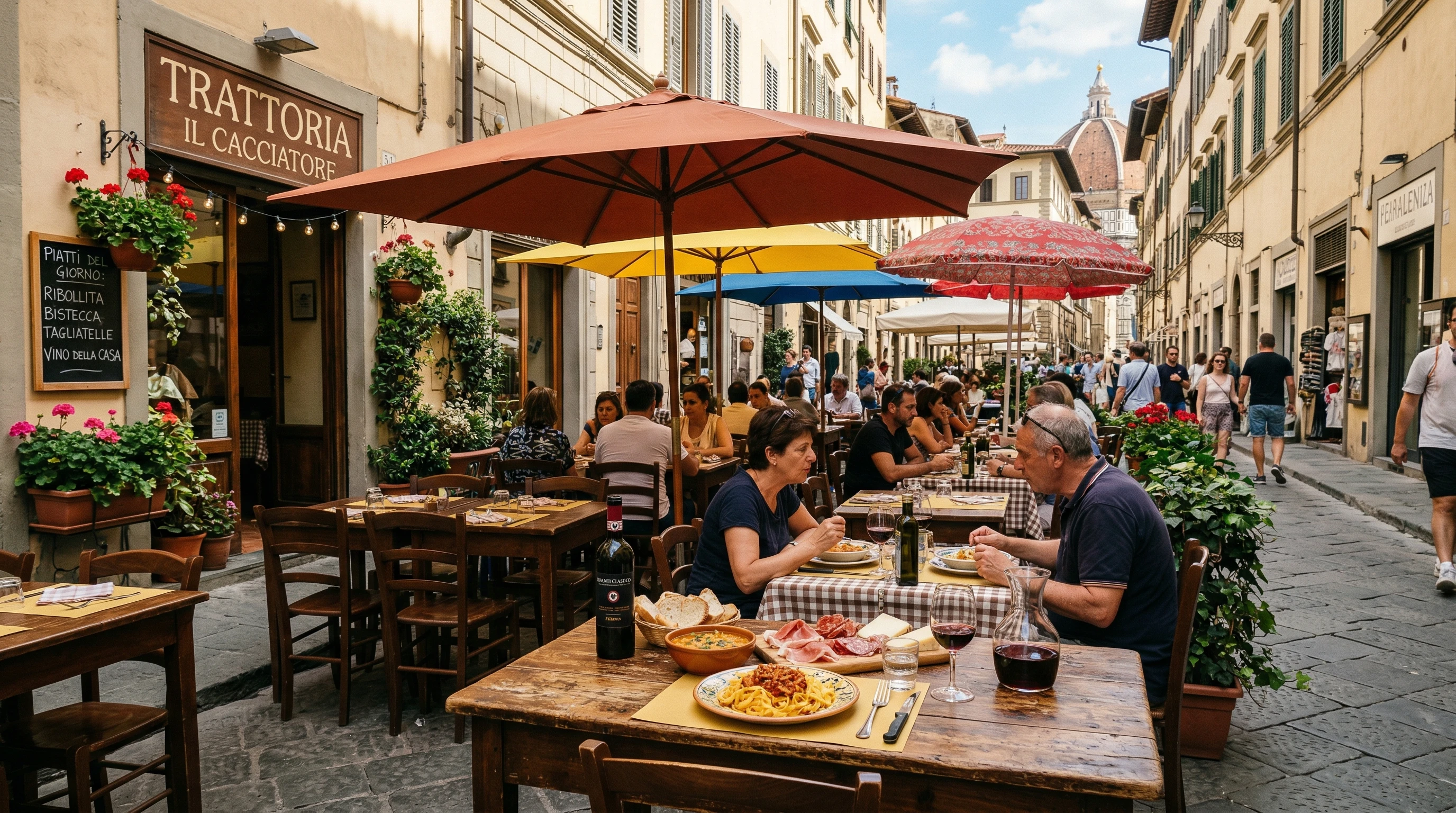
What Makes a Restaurant a Tourist Trap in Florence?
Tourist trap restaurants in Florence mainly exist for their convenient locations and savvy marketing, not for true Tuscan cooking. These spots rely on being close to big attractions, having noticeable signage, and menus in loads of languages. The food might not be awful, but it’s rarely worth the high bill or generic flavors.
Because Florence draws millions of tourists every year, many restaurants can survive off one-time visitors. This means less motivation to keep people coming back for great meals. The key is picking up on what sets these spots apart from the real local gems.
How to Spot a Tourist Trap Restaurant in Florence
- Directly on Main Squares or Right Beside Landmarks
Eating in Piazza della Signoria or beside Ponte Vecchio usually means paying for the scenery, not the meal. - Menus Decked Out with Big Color Photos
Locals hardly ever order from glossy photo menus. Real Florentine places tend to rely on paper menus or a handwritten board. - Massive Menu with Every Italian Dish Imaginable
If you see pizza, seafood, burgers, and lasagna all in one place, it’s aiming to please every tourist. Authentic trattorias keep menus tight and focus on a handful of local specialties. - Servers Calling Out to Passersby
When staff are hustling on the sidewalk with English menus, it’s a sure bet locals aren’t stopping in. - No Locals at Any Table
If every table is filled with out-of-towners, consider it a red flag. Genuine local places attract native speakers and regulars. - Menus Translated in a Bunch of Languages
If you see a menu in every major language, it’s aimed at travelers, not residents. - Cheap Set “Tourist Menus” or Unexpected Extra Charges
Beware of ultra-cheap lunch deals and surprise fees like high “coperto” service charges. These are warning signs.
Where to Find Real Food in Florence Instead
- Oltrarno District
On the far side of the Arno, you’ll dig into relaxing trattorias and enotecas, especially along Via dei Serragli and Piazza Santo Spirito. It’s calmer and prices are usually better. - Hidden Streets of Santa Croce
Go a little east of the Santa Croce basilica, toward Via dei Macci or Via delle Pinzochere, and you’ll stumble upon cozy spots where students and locals actually eat. - Sant’Ambrogio
This area is home to the Mercato di Sant’Ambrogio and super casual osterias serving classic Tuscan fare. The bars and cafes around here are welcoming, offering snacks like lampredotto sandwiches.
Walking just a bit away from the busiest tourist routes—ten minutes can be enough—usually lands you somewhere much more genuine. Look for real neighborhoods with lots of apartment blocks and local shops, not shops pushing souvenirs.
Best Food Tours to Skip the Guesswork (2026 Update)
If you’d rather not take chances, consider booking a food tour. You’ll spend a few hours with a guide who knows the city, sampling regional foods you might otherwise miss. Food tours typically include market visits, tastings at small family places, and tips on local tradition. It’s a real time-saver if you want each meal to count and don’t want the pressure of second-guessing restaurants.
Benefits of a food tour:
- Local guides with insider knowledge of Florence
- Tastings at real, off-the-beaten-path eateries
- No wasted time hunting for hidden gems on your own
- Opportunities to ask about food customs or cooking traditions
👉 Want to skip tourist traps completely?
Check the best-rated Florence food tours here and discover real local spots with a guide who knows exactly where to go.
Quick Tips to Avoid Tourist Trap Restaurants in Florence
- Walk Ten Minutes from Landmarks
Eating away from the Duomo or main museums ups your odds of finding a local spot. - Peek Inside First
See who’s eating. A full house of locals is the best sign you’ve found something worth trying. - Keep an Eye Out for Small or Handwritten Menus
Chalkboards or daily-changing menus usually mean the cooks are working with fresh, seasonal ingredients. - Check Reviews Carefully
Look past ratings. Read feedback in both English and Italian to see what regulars are saying, and avoid places that keep getting called out for being pricy or bland. - Check the Specials Board
If there’s a “piatti del giorno,” odds are the kitchen is serving real Florentine food. - Let Your Nose Lead
Follow the smell of grilled meat or fresh bread, not overwhelming garlic or fry oil.
Classic Florentine Dishes to Watch For (And What to Skip)
Knowing what genuine Florentine cooking looks like really helps when picking a restaurant. Try to spot these specialties on the menu:
- Bistecca alla Fiorentina – Massive, rare steak by the kilo. If you get thin slices and fries, it’s probably not the real thing.
- Pappa al Pomodoro – Rustic bread and tomato soup. Hearty and usually seasonal.
- Ribollita – Rich bread, bean, and veggie stew. Look for a dish that’s deeply flavored, not just bits of canned stuff.
- Trippa and Lampredotto – Way more than street snacks. If you’re feeling adventurous, these are musts. Sample them from a street cart or little sandwich shop.
- Crostini di Fegato – Chicken liver spread on toast; seeing this appetizer means you’ve landed in the right place.
Dishes to skip: American-style spaghetti with meatballs or places hyping “Carbonara” and “Lasagna” on plastic placemats with lengthy English explanations. These aren’t Florence’s specialties, and they show the kitchen isn’t focused on Tuscan tradition.
My Favorite Local Eateries (Updated for 2026)
When I’m in Florence, here’s where I seek out the most satisfying meals:
- Trattoria Cammillo (Oltrarno): Legendary for its fresh pasta, regional mains, and the friendliest staff. Reserve if you can.
- Trippaio del Porcellino (near Piazza della Repubblica): A tiny street cart serving iconic lampredotto sandwiches that locals crave.
- Osteria Vini e Vecchi Sapori (Santa Croce): The menu is tiny, focused, and taps into seasonal local cooking.
- Mercato di Sant’Ambrogio: Loads of lunch stalls and market vendors; a great combo of real food and lively atmosphere.
If you like things picked out by experts, check the updated collections of Florence’s authentic restaurants vetted by local food lovers.
Can You Trust Google Reviews and Ratings in Florence?
Online reviews are helpful, but far from foolproof. Popular, central places rack up stars thanks to location and fast service more often than great food. I read reviews in both English and Italian, and weigh the local comments more heavily. Praise for “casalinga” (homestyle) cooking or mentions of regular visits with family are the best green lights.
FAQ: What Travelers Really Want to Know About Eating in Florence
How can I spot a genuine restaurant in Florence?
Check for a local-heavy crowd, menus centered on the region’s dishes, and handwritten signs. If nearby tables are filled with Italian conversation and staff aren’t shoving multilingual menus at you, you’re in good shape.
Do expensive restaurants give you better food in Florence?
Not always. Upscale places near tourist areas often cater just to visitors. The tastiest meals are often at low-key, family-run spots with reasonable prices.
Is street food really safe in Florence?
Yes, Florentine street food—especially lampredotto and trippa—is not just safe, but a highlight for foodies. Vendors are overseen by the city, and a long lunch line is your top cue for quality and freshness.
Do locals eat close to the main attractions?
Rarely. Florentines tend to steer clear of places too near the Duomo or Ponte Vecchio. Go a few blocks away, or check areas like San Frediano and Sant’Ambrogio for a truly local dining experience.
Don’t Waste a Meal in Florence
If you care about food—and honestly, you should here—it’s worth taking the time to pick out places where cooking is still an art, not just a tourist business. Whether you strike out on your own adventure or book a food tour for peace of mind, you can set free yourself from the bland pizza places and enjoy a meal you’ll talk about long after your trip.
👉 Don’t risk wasting a meal in Florence
Explore top-rated food tours and authentic local experiences here before you go.