
Some of the links on this page are affiliate links, which means I may earn a small commission if you make a purchase through them, at no extra cost to you. This helps support the site and allows me to continue creating helpful content.
If you open an Italian menu and feel unsure what to order first, you are not alone. Italian restaurant menus often follow a traditional course structure: antipasti, primi, secondi, contorni and dolci. The good news is that you do not have to order every course. Many locals choose one or two dishes depending on the occasion, appetite and time of day. Once you understand what each section means, ordering in Italy becomes much easier and far less intimidating. This guide explains how to read an Italian menu, what antipasti, primi, secondi, contorni and dolci mean, how coperto works, and which common tourist mistakes to avoid before the bill arrives.
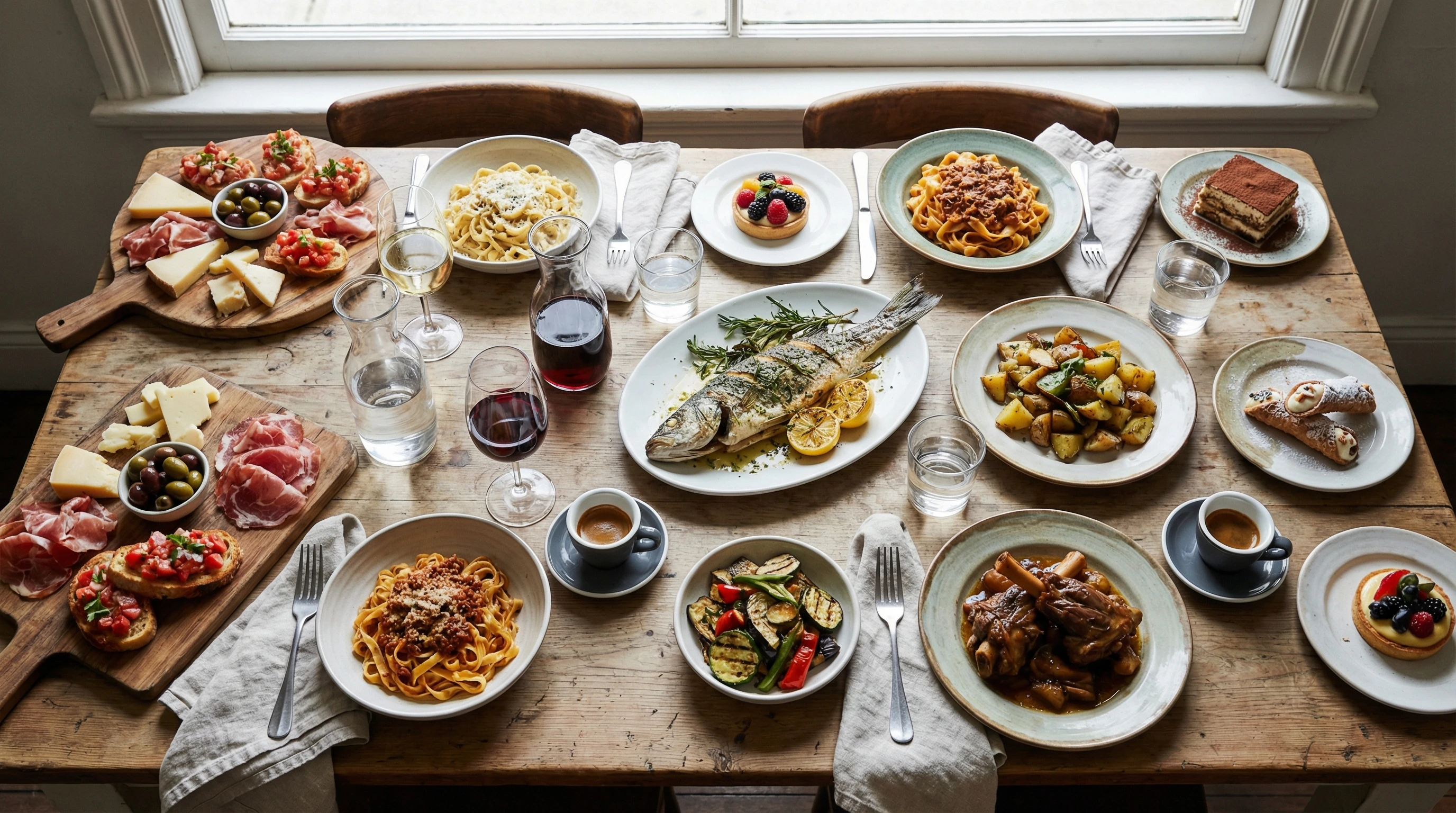
Quick Answer: How Do Italian Menus Work?
Italian menus are usually divided into courses. Antipasti are starters, primi are first courses such as pasta, risotto or soup, secondi are main protein dishes, contorni are side dishes, and dolci are desserts.
You do not need to order every course. For a normal meal, many people order a primo only, a secondo with a contorno, or an antipasto followed by one main dish. For longer dinners or special occasions, you can order several courses and enjoy the meal slowly.
Why Italian Menus Are Structured Differently
Italian menus can look a bit overwhelming if you’re new to them. Instead of simple starters and mains, you’ll see sections labeled Antipasti, Primi, Secondi, Contorni, and Dolci. There’s a reason behind this: Italian meals are more about enjoying each stage, spending time together at the table, and savoring the food. Food culture in Italy puts an emphasis on variety and pacing so you have a more relaxed and social experience at mealtime. Italian menus are built around courses, not just “starter, main and dessert.” This does not mean every meal is formal or expensive. It simply gives diners flexibility: you can order a light pasta lunch, a full multi-course dinner, or just a main dish with a side.
Each course has its own place, flavors, and traditions. Italians don’t always eat every single course at each meal, but understanding how the sections work helps you order more confidently and try new dishes you might otherwise skip. Even smaller restaurants in Italy stick to this structure, so once you know the basics, you’ll feel right at home wherever you go.
Want to understand Italian food culture faster? A local food tour in Rome or Florence can be a relaxed way to try antipasti, primi, secondi and regional dishes with someone explaining the menu as you go.
What Does Antipasti Mean?
Antipasti (singular: antipasto) means “before the meal.” These dishes are served at the very start of the meal and are meant to wake up your appetite. Traditional antipasti often feature cold cuts, cheeses, marinated veggies, or seafood, sometimes served on large platters to share. Common examples include prosciutto and melon, caprese salad, bruschetta, mixed olives, marinated vegetables and local cheeses. You’ll also find regional specialties depending on where you are in Italy, so some antipasti reflect local cheeses, meats, or pickled vegetables, giving you a true taste of the area.
You aren’t expected to fill up on antipasti. Instead, they’re about light, flavorful bites that give you a sense of what’s coming and allow everyone at the table to settle in and enjoy the conversation. In fact, many Italians use antipasti time to catch up with friends or family, setting the tone for a laidback dining experience.
What Does Primi Mean on an Italian Menu?
Primi piatti (first courses) come after antipasti and are usually warm, savory, and filling. This is the point in the meal where you’ll see pasta, risotto, gnocchi, or soup. Primi are carb-based dishes and, in places like Rome, classic primi include carbonara, amatriciana, or cacio e pepe. In the north, risotto alla Milanese is a favorite, while in Tuscany you might see ribollita (a thick vegetable and bread soup).
Primi don’t come with meat or fish as the star; those are saved for the next course. It’s common to order just a primo if you want a lighter meal, or to split one with a friend. Portion sizes are made to give you a good taste without leaving you stuffed before the rest of the meal. When dining with Italians, I noticed how much they appreciate conversation between courses; the pacing is just as important as the food itself.
Primi does not mean “starter” in the English sense. It means the first main course, usually pasta, risotto, gnocchi or soup.
What Does Secondi Mean?
Secondi piatti (second courses) are your main proteins. Here you’ll find fish, meat, or even eggs as the centerpiece. Common choices include grilled steak (bistecca), roast chicken, veal cutlets (cotoletta), or grilled fish. Each region highlights different meats and preparations, so the secondi often showcase what’s local and seasonal.
Traditional Italian meals separate the starches from the proteins, so your secondo will usually arrive on a plate by itself; just the meat or fish, with no side dishes automatically included. If you want vegetables or potatoes, you need to order them from the contorni section. This is an odd thing for some travelers, but it’s just how Italian meals are served. Paying attention to these details can help you avoid surprises when your plate arrives.
Secondi usually do not include pasta, rice or potatoes automatically. If you want a side dish, order it separately from the contorni section.
What Are Contorni?
Contorni means “side dishes.” These are usually vegetables, potatoes, or salads designed to go alongside your secondo. Contorni could be anything from grilled vegetables and roasted potatoes to simple salads or sautéed spinach. I always find it helpful to check which vegetables are in season, because Italian kitchens really celebrate fresh local produce. Some restaurants will offer a daily special for contorni based on the morning market, giving you a chance to try something new each time.
On the menu, contorni are usually listed in their own section. You order and pay for them separately, then eat them with your main dish. Sometimes contorni appear after the primi and together with the secondi, depending on the restaurant. Don’t hesitate to ask for suggestions; servers are usually happy to point you toward the best local options.
What Does Dolci Mean?
Dolci are desserts, and Italian sweets are often the perfect way to end a meal. Typical dolci include tiramisù, panna cotta, gelato, semifreddo, or a selection of fruit. Sometimes you’ll see cheeses offered here too, especially in the north. Coffee, usually a small espresso, is served after dessert, not with it. That sequence was confusing for me at first but now I really enjoy the simple routine of ending with a strong shot of espresso or a digestivo (a little glass of grappa or limoncello) if you’re feeling adventurous.
Some restaurants in Italy love to showcase their housemade desserts, and if you see something labeled “della casa” it’s made right there and worth a try. Pairing dessert with a local liqueur or espresso will give you the true Italian dining finish.
Coperto, Servizio and Tipping in Italy
When you eat at a sit-down restaurant in Italy, you may see a small charge on the bill called coperto. This is a cover charge, usually around €1–€3 per person, and it often covers the table setting, bread, cutlery and general restaurant service basics. It is not a tip, and it is normally listed on the menu.
You may also see servizio, which means a service charge. This is different from coperto and is more common in tourist areas, large groups or certain restaurants. If the menu says servizio incluso, it means the service charge is already included in the bill.
Tipping in Italy is optional. You do not need to leave a large percentage tip like in some countries. If the service was good, you can round up the bill or leave a few extra euros, but it is not expected in the same way as in the United States. Always check the bill first so you understand whether coperto or servizio has already been added.
Do You Have to Order Every Course in Italy?
Contrary to what you might have read or seen in movies, Italians rarely order the whole spread in a normal meal. At lunch, it’s common to see just a primo or secondo, sometimes with contorno and always with coffee. At dinner, people might enjoy antipasti and a primo, or antipasti and a secondo. Big holiday meals or special gatherings are when all courses are enjoyed. Most of the time, I found myself full after just two courses. The real joy is in picking and choosing what sounds good, not following a strict rule.
If you’re worried about over-ordering, don’t feel pressured. It’s absolutely normal to pick and choose based on what you want and how hungry you are. Also, Italian dining is very flexible, and you’ll often see people enjoying a mix of lighter and heavier meals during the week, saving the bigger spreads for weekends or special occasions.
Common Italian Menu Mistakes Tourists Make
- Expecting side dishes to be included
- Thinking primi means appetizer
- Ordering coffee with dessert
- Forgetting about coperto
- Assuming tipping works like in the US
- Trying to order every course at lunch
It’s easy to fall into these traps when you’re new to dining in Italy. Remember, every region—and even every restaurant—might do things a bit differently, so stay open to new experiences and ask questions if you’re unsure.
Example Italian Meal Order
If you want to try ordering like a local, here’s how I might structure a meal when I feel like going all out or when celebrating:
- Antipasti: Mixed salumi platter for the table
- Primi: Spaghetti alla carbonara
- Secondi: Saltimbocca alla Romana (veal with prosciutto and sage)
- Contorni: Sautéed spinach and roasted potatoes
- Dolci: Tiramisu
- Caffè: Espresso
Portions are designed so you can pace yourself and enjoy a bit of everything without feeling rushed. Feel free to skip or add courses based on how hungry you are. On special occasions, pairing wines with each course is also a fun way to get a deeper sense of local flavors.
Typical Italian meal order:
• Antipasti → starter
• Primi → pasta or rice dish
• Secondi → main protein
• Contorni → side dish
• Dolci → dessert
• Caffè → espresso
Italian Menu Course Summary Table
|
Course |
Italian Name |
What It Means |
Examples |
|---|---|---|---|
|
Starter |
Antipasti |
Small dishes before the meal |
Bruschetta, olives, caprese |
|
First course |
Primi |
Pasta, risotto, gnocchi or soup |
Carbonara, risotto, minestrone |
|
Second course |
Secondi |
Main protein dish |
Steak, fish, chicken, veal |
|
Side dish |
Contorni |
Vegetables, potatoes or salad |
Roasted potatoes, spinach |
|
Dessert |
Dolci |
Sweet dishes |
Tiramisù, gelato, panna cotta |
|
Coffee |
Caffè |
Usually espresso after dessert |
Espresso |
Frequently Asked Questions
What does primi mean on an Italian menu?
Primi means first courses. These are usually pasta, risotto, gnocchi, soup or similar dishes. Primi are not small appetizers; they are often one of the main parts of the meal, but they usually do not include meat or fish as the main protein.
What is the difference between primi and secondi?
Primi are first courses such as pasta, risotto or soup. Secondi are second courses and usually focus on meat, fish, eggs or another protein. If you order a secondo and want vegetables, potatoes or salad, you usually need to order a contorno separately.
Do you have to order both primi and secondi in Italy?
No, you do not have to order both primi and secondi. Many people choose just one or two courses depending on how hungry they are. Ordering only a primo, or a secondo with a side dish, is completely normal.
What is antipasti in Italy?
Antipasti are small starter dishes served before the main part of the meal. They may include cured meats, cheese, olives, bruschetta, marinated vegetables, seafood or regional specialties. Antipasti are often shared at the table.
What is coperto on an Italian bill?
Coperto is a cover charge added by many sit-down restaurants in Italy. It usually covers the table setting, bread and general service basics. It is not the same as a tip, and it is normally listed on the menu or bill.
Is tipping expected in Italian restaurants?
Tipping is not required in Italy the way it is in some countries. If service is good, you can leave a small amount or round up the bill, but large tips are not expected. Always check whether servizio, or service charge, has already been added.
Does water come free at Italian restaurants?
Water is usually bottled and charged separately in Italian restaurants. You may be asked whether you want acqua naturale, still water, or acqua frizzante, sparkling water. Tap water is not commonly served automatically in sit-down restaurants.
Final Thoughts
Learning about Italian menus helped me enjoy meals much more during my travels. I hope now you feel more at home at the Italian table and can order with confidence anywhere in Italy. Next time you find yourself staring at an Italian menu, you’ll be ready to order like a pro and savor every stage of the meal, just like the locals.