
Cafés and pastelarias are part of everyday life in Portugal. They are places for morning coffee, simple breakfasts, pastries, quick snacks, light lunches and short breaks during the day. For visitors, Portuguese café culture can feel a little different at first. Coffee is usually small and strong, many people drink it quickly at the counter, and pastelarias often serve far more than just sweet pastries. This guide explains how cafés and pastelarias work in Portugal, what coffee drinks to order, which pastries to try, and which local habits can help you feel more comfortable when you step inside.
Quick Answer: How Does Café Culture Work in Portugal?
Portuguese café culture is casual, practical and part of daily life. Locals visit cafés and pastelarias for espresso, milk coffee, pastries, sandwiches, toast, soup, light meals and short breaks throughout the day. Many people drink a quick espresso at the counter, while others sit down for breakfast, a snack or a simple lunch. Coffee is usually smaller and stronger than visitors from some countries may expect, and table service may cost more in busy or tourist-heavy areas. Once you know a few basic coffee terms, such as café, bica, meia de leite and galão, ordering becomes much easier.
| Café Item | What It Means | Visitor Tip |
|---|---|---|
| Café (bica) | Short, strong espresso shot | Ask for “um café” at the counter for the local experience |
| Meia de leite | Half coffee, half steamed milk, small cup | Great if you want something creamy, not too strong |
| Pastel de nata | Crispy egg tart pastry | Eat warm, often sprinkled with cinnamon |
| Sandes mista | Simple ham and cheese sandwich | Cheap and filling, good for breakfast or snack |
| Pão com manteiga | Bread roll with butter | Light, classic breakfast side |
What Is a Portuguese Café or Pastelaria?
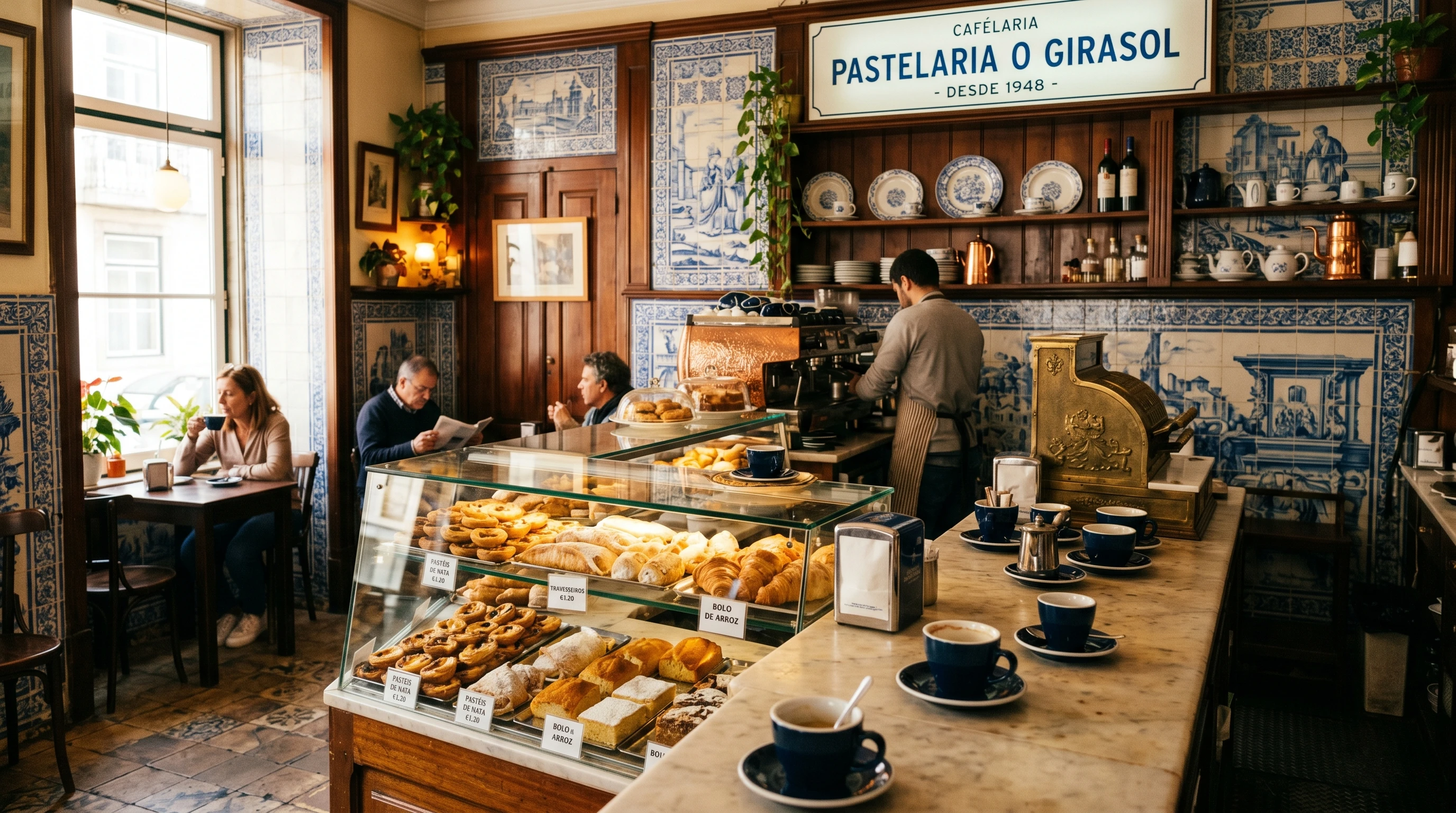
You’ll spot the words “café” and “pastelaria” all around Portugal, sometimes even on the same sign. A “café” is a spot focused on coffee drinks and simple snacks. Picture espresso, sandwiches, pastries, and sometimes soups or light meals. A pastelaria is closer to a bakery café, usually with pastries, cakes and other sweets displayed at the counter. Some pastelarias bake bread and pastries right on-site, while others put more attention on their coffee bar and treat selection.
In both cities and small towns, you may find several cafés on the same street, each with its own style. Some hold onto tradition with tiled walls and marble counters, while others are bright and modern. Even the smallest village nearly always has its own pastelaria for locals and travelers alike. Most cafés offer a mix of drinks—coffee, tea, juices—and a wide choice of sweet and savory pastries, sandwiches (sandes), and at lunch a daily special (prato do dia) or fresh soup. It’s common to catch locals taking a break for breakfast, a mid-morning coffee, lunch, or an afternoon snack. Cafés shape how people in Portugal move through their day.
Common Portuguese Coffee Types
Coffee in Portugal is usually small, strong and often affordable, especially at local cafés. Most people drink some variety of espresso, but there are more options than a simple shot. Here’s a guide to the main terms you’ll see—ordering becomes easier with a little practice:
- Café / Bica: In Lisbon, bica is commonly used for espresso, while café is understood almost everywhere. It’s dark and strong, meant for quick sipping.
- Meia de leite: Equal parts espresso and hot milk, served in a mug or glass. Think of it as Portugal’s twist on a café au lait—creamy and mellow.
- Galão: A tall glass, filled mostly with hot milk and topped off with a shot of espresso. Lighter and milkier, it’s popular for breakfast or for those who like their coffee less strong.
- Abatanado: A bigger, weaker espresso, similar to an Americano. If you want more to drink but still want that coffee flavor, try this one.
- Carioca: A mild espresso made from the second run-through of the grounds, so you get flavor without as much kick. Great when you want to tone things down.
- Descafeinado: Decaf, available as straight espresso or with milk—just ask for “descafeinado” to avoid caffeine.
How to Order Coffee in Portugal
Ordering coffee in Portugal is simple after you learn a few basic words. Most times, you walk up to the counter, make eye contact with the staff, and say your order. Some cafés let you sit and order at the table, but beware: In some cafés and tourist areas, table service can cost more than ordering at the counter.
Handy Portuguese coffee phrases:
- “Um café, por favor.” -One espresso, please.
- “Uma meia de leite, por favor.” –A half coffee, half milk, please.
- “Um galão, por favor.” -One galão, please.
- “Para levar.“ -To go.
- “A conta, por favor.” — The bill, please.
If you need your drink to go, ask for “para levar.” Just keep in mind, takeaway orders are much less common in traditional cafés, since locals prefer enjoying coffee on the spot—standing or sitting.
Popular Portuguese Pastries to Try
Portuguese pastelaria culture is huge, with far more on offer than the classic custard tart. Here are some favorites you’ll want to sample:
- Pastel de nata: A crispy cup filled with creamy custard, caramelized on top. Warm with a sprinkle of cinnamon, it’s a national icon for a good reason.
- Pão de Deus: Fluffy sweet bread roll topped with coconut and sugar, nice alone or split and filled with ham or cheese.
- Bola de Berlim: Portuguese doughnut, split and filled with rich egg-yolk custard—sometimes sold by vendors on the beach in summer.
- Queijada: Tart made from cheese, eggs, and sugar for a deliciously tangy, rich small treat. Nearly every region boasts its local version.
- Travesseiro: A light, pillow-shaped pastry from Sintra, filled with almond paste and wrapped in flaky layers. Worth trying if you see it.
- Arroz doce: Sweet and creamy rice pudding, dusted with cinnamon and sold in individual bowls or cups.
- Bolo de arroz: Muffin-like cake made with rice flour, light and sweet, wrapped in a paper collar. Ideal for dunking in coffee.
With so many types, you can point at what looks good or ask staff for tips if you can’t choose. Looking at the pastry display is often the easiest way to choose, especially if you do not know the names yet.
Breakfast in Portuguese Cafés
Breakfast in Portugal stays low-key and simple. Most people just grab coffee and a pastry, or maybe coffee with toast (torrada) or a sandwich (sandes). Bread with butter (pão com manteiga) remains a classic. Some prefer savory sandwiches or sweet treats, but servings are usually on the smaller side. If you want a large cooked breakfast or brunch, you are more likely to find it in hotels or modern brunch cafés in larger cities. Otherwise, quick and fresh is the rule.
Check out Portuguese Breakfast Culture for a look at traditional morning routines and food customs.
Cafés for Cheap Snacks and Light Meals
Cafés and pastelarias are a top pick for travelers looking to save money while eating well in Portugal. Grab sandwiches (sandes), savory pies, soup of the day (sopa do dia), pastries (sweet or savory), and juice without spending too much. Many spots have daily lunch dishes (prato do dia), with fresh juice (sumo natural) close at hand. These neighborhood places are quick, budget-friendly and useful for simple meals during the day. Friendly staff, plus a blend of locals and tourists, make the atmosphere easygoing for anyone who walks in.
Want more ideas for eating well and saving euros? See Eating in Portugal on a Budget for trusted tips and tricks.
Local Café Habits Visitors Should Know
- Standing at the counter: Locals often drink coffee standing up for a quick break—it’s social, fast, and often cheaper than sitting.
- Table service may cost more: In some cafés, especially in tourist areas, sitting at a table can cost more than ordering at the counter.
- Coffee is small and strong: Don’t expect a giant American-style mug unless you go for a galão, which is mostly milk anyway.
- Cafés are casual: No fancy outfits needed. Everyone’s welcome, from students to grandparents.
- Menu size varies: Some focus just on pastries; others serve a full range of light meals. Peek at the counter or chalkboard menu to see what’s available.
- Opening hours differ: Many cafés open early for breakfast and shut by evening, though some stay out late or close on Sundays.
Common Mistakes Tourists Make in Portuguese Cafés
- Expecting a large filtered coffee as the norm; espresso shots are standard, and milk comes on the side or if you ask.
- Only ordering pastel de nata—with dozens of amazing pastries on display, try a few others for the full experience.
- Sitting in top tourist squares without checking the prices—table service and a great view mean you might pay a premium.
- Assuming every café does hot meals; many stick to pastries, sandwiches, and snacks only.
- Skipping the basic coffee words; learning them helps avoid wrong orders and surprises!
- Expecting takeaway cups everywhere—most locals enjoy their coffee on the spot, standing or sitting in the café.
Related Portugal Food Guides
- Portuguese Breakfast Culture
- How to Read a Portuguese Menu
- Portuguese Lunch Culture
- Portuguese Dinner Culture
- Eating in Portugal on a Budget
- Portuguese Desserts & Sweets
- A Food Lover’s Guide to Portugal
- Portuguese Food Markets
- Portuguese Petiscos Explained
Frequently Asked Questions
What coffee do people drink in Portugal?
Most people opt for espresso (café or bica)—a strong, small shot served fast. Other popular drinks are meia de leite and galão, which offer more milk and a less intense flavor.
What is a pastelaria in Portugal?
A pastelaria is a bakery café, usually offering a big variety of pastries and cakes right alongside coffee, juice, sandwiches, and sometimes simple lunches.
What is the difference between bica and café?
In Lisbon, “bica” and “café” mean the same thing: a shot of espresso. Elsewhere, “café” is more commonly used. Both will get you a strong, short coffee.
What pastries should you try in Portugal?
Pastel de nata is a good place to start, but don’t overlook pão de Deus, bola de Berlim, travesseiro, queijada, and bolo de arroz. If you’re lost, just ask the staff for advice or to explain what’s on the counter.
Is coffee expensive in Portugal?
Coffee is usually affordable in Portugal, especially when ordered at the counter. Prices can be higher in tourist areas, high-rent locations, hotel cafés and central squares.
Do Portuguese cafés serve breakfast?
Yes—expect light options like coffee with a pastry, bread and butter, toast, or a sandwich. Big cooked breakfasts are rare outside of international hotels or modern brunch cafes.
Wrapping up
Portuguese café culture is simple, practical and easy to enjoy once you understand the basics. A small espresso at the counter, a meia de leite with breakfast, or a pastry in a local pastelaria can all be part of an ordinary day in Portugal. For visitors, the best approach is to keep things simple. Learn a few coffee names, look at the pastry display, check whether table service costs more, and do not be afraid to point at something if you are unsure of the name. Cafés and pastelarias are some of the easiest places to experience everyday Portuguese food culture without spending much or planning too far ahead.