
Ordering food in Portugal is usually straightforward, but first-time visitors may be unsure about menus, daily specials, table snacks, payment habits, tipping, and basic Portuguese phrases.
Portuguese restaurants can work slightly differently from what visitors expect. Bread, olives, cheese, or butter may appear on the table without being ordered, prato do dia lunch specials may have different inclusions, and some smaller cafés or tascas may prefer cash.
This guide explains how to order food in Portugal, what phrases to use, how restaurant menus usually work, and which common mistakes to avoid when eating out.
Quick Answer
Ordering food in Portugal is usually simple. Choose a café, tasca, restaurant, snack bar, pastelaria, or market food stall, check the menu or daily board, and ask what is included if ordering prato do dia.
Bread, olives, butter, cheese, or other table snacks may be charged if eaten, even if they are placed on the table automatically. A few simple Portuguese phrases can help, but perfect pronunciation is not necessary. When ready to pay, ask for “A conta, por favor.”
Common Types of Places to Eat in Portugal
Portugal has several common types of places to eat, from simple cafés and pastelarias to tascas, snack bars, restaurants, and market food stalls. Knowing the difference can help first-time visitors choose the right place for a quick snack, budget lunch, casual dinner, or more formal meal.
- Café: These are relaxed places for coffee and snacks, but some serve light lunches or soup of the day.
- Pastelaria: A bakery-café that usually focuses on pastries and sweet treats, but many also offer sandwiches and coffee.
- Tasca: A small, family-run restaurant serving affordable, home-style food. Tascas often have handwritten menus or just a daily special.
- Snack bar: Casual spots for coffee, sandwiches, or quick meals like toasties and burgers.
- Restaurante: This can range from simple family places to formal dining rooms. These spots focus on sit-down meals with full lunch and dinner service.
- Mercado food stall: Many city markets include small stalls with high tables. These stalls may offer regional dishes, fresh sandwiches, snacks, or petiscos. For more on choosing where to eat, see Best Cheap Eats in Porto and What to Eat in Lisbon.
How Portuguese Menus Usually Work
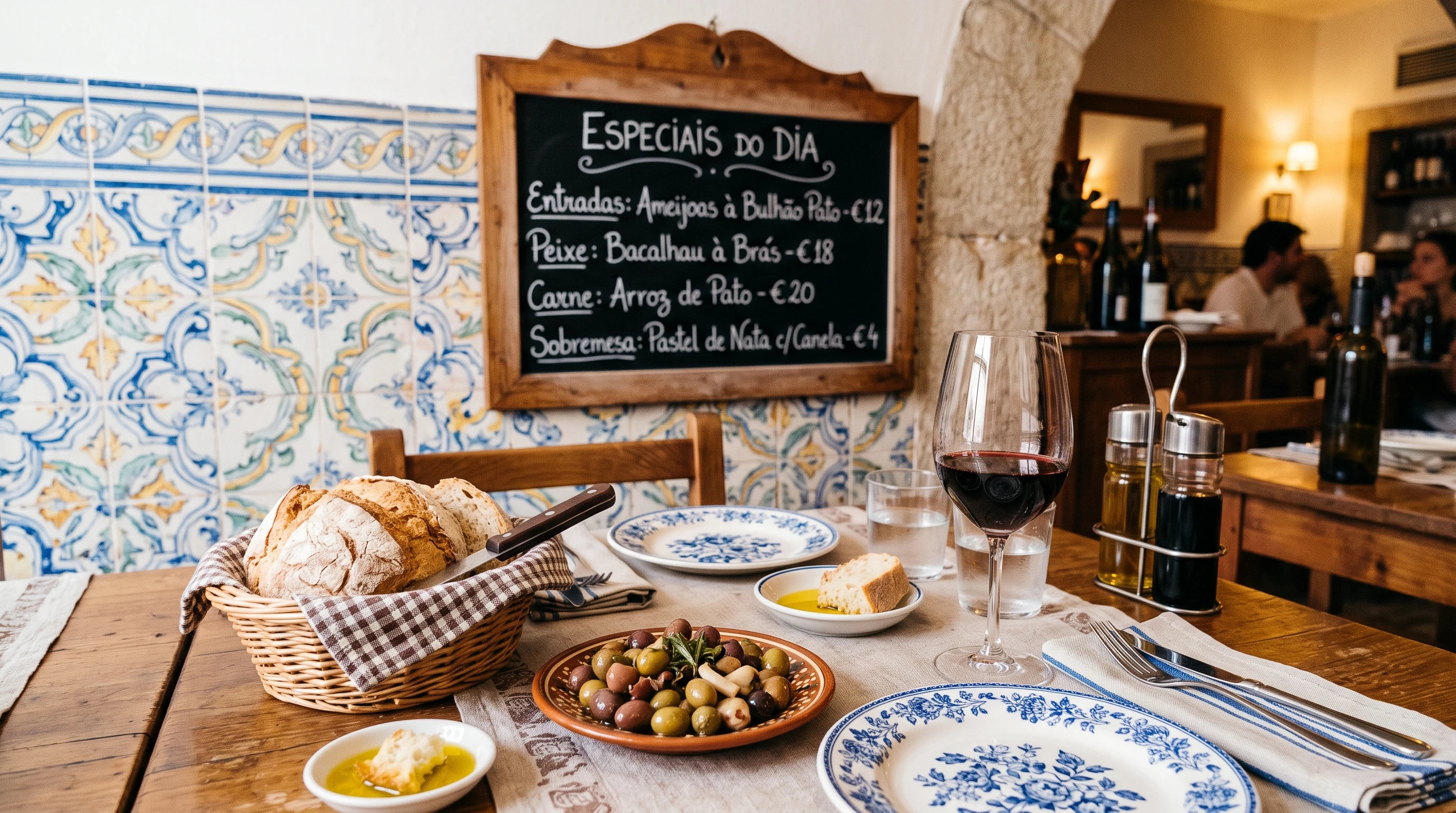
Menus in Portugal vary, but many use familiar sections such as starters, soups, main dishes, side dishes, desserts, and drinks. Some places offer a printed menu, while others rely on a handwritten daily board. At lunchtime, you may find set menus with a starter, main, drink, and coffee for a fixed price. Dinner menus are often more focused on à la carte dishes, although this varies by restaurant.
Starters are often simple: soup, sliced ham, cheese, or table snacks like olives and bread. Many simple restaurants and cafés offer soup, especially at lunch. Trying the local soup is a good way to sample regional flavors, as many restaurants add their own touch, whether it’s a classic caldo verde or a chickpea broth.
Main dishes are centered around fish (peixe) or meat (carne). Classics like grilled sardines, bacalhau (salted cod), roast chicken, and pork dishes are common. Many menus feature a prato do dia (dish of the day), especially at lunch, often with rice, potatoes, or salad as sides. When unsure, check whether the main dish includes a side or whether it must be ordered separately. Vegetarian options may be easier to find in larger cities, but smaller local restaurants may have fewer choices.
Fish and seafood menus may list prices by the kilo or by portion. It’s a good idea to ask, since fresh seafood can cost more than expected. For fish or seafood, check whether the price is listed by portion or by weight, and ask about the daily selection if needed. These specialties might include clams in garlic sauce, grilled dourada, or octopus salad.
Desserts include sweet rice pudding, chocolate mousse, or a slice of tart. Coffee can usually be ordered with or without dessert. Local pastry shops (pastelarias) offer a wider range, from custard tart to almond cakes, so you can finish your meal there if the restaurant’s selection is limited.
Drinks usually include local wines (vinho da casa), beer, juices, and still or sparkling water. Menus sometimes use regional terms, and some items may only be available by asking the server. For a glimpse at common dishes, see What to Eat in Porto. House wine may be available in some restaurants and can be a simple local option, but prices and quality vary. If you’re not sure, ask for the most popular choices or recommendations for a pairing with your food.
Useful Portuguese Phrases for Ordering Food
| Phrase | Meaning | When to Use It |
|---|---|---|
| Bom dia | Good morning | Greeting at breakfast or early lunch |
| Boa tarde | Good afternoon | Greeting at lunch or in the afternoon |
| Tem mesa? | Do you have a table? | Asking about seating |
| Tem prato do dia? | Do you have a dish of the day? | Checking for the daily special |
| O que inclui? | What is included? | Clarifying what comes with a dish |
| Queria… | I would like… | Polite way to order food or drink |
| A conta, por favor | The bill, please | When ready to pay |
| Obrigado / Obrigada | Thank you | Thanking server (men say obrigado, women say obrigada) |
Bread, Olives, Cheese and Table Snacks
In some Portuguese restaurants, bread, olives, butter, cheese, or small snacks may be placed on the table without being ordered. These items may be charged if eaten. If you do not want them, leave them untouched or politely ask the server to remove them. This is a normal restaurant practice in Portugal, not usually a trick, but it can surprise first-time visitors. Some table snacks are inexpensive, while cheese, cured meats, seafood starters, or special items may cost more. Check the menu or ask before eating them if you are unsure.
Ordering Prato do Dia
The prato do dia, or dish of the day, is a regular feature at Portuguese cafés, tascas, and simple restaurants, especially at lunch. This special is usually cooked in larger quantities and can change daily. Sometimes the prato do dia is just a main course with a side, or it might include soup and dessert as part of a menu option. Asking “Tem prato do dia?” or “O que inclui?” can help confirm what is available and what is included in the price. Prato do dia can be a practical lunch option, especially for visitors looking for a simple Portuguese meal without choosing from a long menu. For more details, see Prato do Dia in Portugal.
Ordering Petiscos
Petiscos are Portuguese small plates or snacks, sometimes compared with Spanish tapas, but with Portuguese dishes and eating habits. These often appear on special menus in the evening or in casual bars, sometimes as light meals or appetizers. Plates can be as simple as chouriço sausage, grilled prawns, or fried green beans. They are often shared, although portions vary by restaurant. It is often sensible to order one or two plates first, then add more if needed. If portion sizes are unclear, ask the server before ordering several plates. You’ll find petiscos at modern restaurants as well as in old-school tascas. For more details, check out Portuguese Petiscos Explained and Portuguese Snacks to Try.
Ordering Coffee and Dessert
Meals in Portugal often end with coffee. Many places serve small espresso-style coffee, commonly called café or bica, while drinks such as galão or meia de leite are milkier options. Dessert is optional. Common choices may include rice pudding, mousse, fruit, cake, or regional sweets. Pastelarias usually offer a wider range of pastries than standard restaurants.
Paying the Bill in Portugal
When ready to leave, ask for the bill; waiters rarely bring it automatically. The phrase “A conta, por favor” is all that’s needed. Card payments are common in cities, larger restaurants, and many mid-range places, but availability can still vary. In local tascas, small cafés, or outdoor markets, carrying some cash can be useful, as some places may have a card minimum or accept only cash. Always checking the payment options beforehand saves awkward moments. Some places may bring a portable card reader to your table; in others, you may pay at the register. Double-checking the bill for extra items like couvert or snacks is a good habit before paying.
Tipping in Portugal
Tipping in Portugal is appreciated but not usually expected in the same way as in the United States or Canada. For good service, some visitors round up the bill or leave a small amount. In more formal restaurants, a slightly larger tip may be appropriate, but it is not normally required. Check the bill first to see whether a service charge has already been included. Tipping for coffee or small snacks is usually optional.
Common Restaurant Mistakes to Avoid
- Assuming table snacks like bread and olives are free
- Not checking what prato do dia includes
- Ordering seafood before checking the price or if it’s priced by weight
- Expecting lunch prices at dinner or on weekends
- Choosing only restaurants on busy tourist streets and missing out on better value nearby
- Being afraid to ask simple questions about the menu or service
- Assuming everywhere accepts cards, especially in small towns
- Ordering too many petiscos at once, since portions can be larger than expected
Related Guides
- Prato do Dia in Portugal
- Best Cheap Eats in Porto
- Eating in Portugal on a Budget
- Portuguese Petiscos Explained
- Portuguese Snacks to Try
- Portuguese Breakfast Culture
- What to Eat in Porto
- What to Eat in Lisbon
- What to Buy at Portuguese Supermarkets
Frequently Asked Questions
Do you need to speak Portuguese to order food in Portugal?
Using simple Portuguese phrases is helpful, but many staff in urban or tourist areas speak some English. Speaking slowly and politely is usually enough.
How do you ask for the bill in Portugal?
Say “A conta, por favor” when you are ready to pay. The server may bring the bill to the table, or you may be asked to pay at the counter.
Are bread and olives free in Portugal?
Bread, olives, cheese, butter, or other snacks may be placed on the table automatically. If eaten, they may be added to the bill. Leave them untouched or ask for them to be removed if you do not want them.
What does prato do dia mean?
Prato do dia means “dish of the day.” It is usually a daily lunch dish and may sometimes be part of a set menu with soup, a drink, dessert, or coffee.
Can you pay by card in Portuguese restaurants?
Card payments are common in cities and larger restaurants, but smaller cafés, tascas, markets, or rural places may prefer cash or have minimum card payments. Carrying some cash can be useful.
Do you tip in Portugal?
Tipping is not mandatory, but it’s appreciated for good service. Rounding up the bill or leaving a small amount is common, while larger tips are usually optional.
What is the easiest food to order in Portugal?
Sandwiches, soup, prato do dia, and simple grilled dishes are usually straightforward choices. Asking what is included can make ordering easier.
How do you order politely in Portuguese?
Use “Queria…” followed by the dish or drink. Adding “por favor” is polite and useful.
Portugal Restaurant Ordering Summary
Ordering food in Portugal is usually simple once you understand menus, daily specials, table snacks, payment habits, and a few useful phrases. For first-time visitors, the most important habits are to check what is included, ask about prato do dia, watch table snacks, confirm seafood prices when needed, and carry some cash for smaller cafés or local spots. A few phrases such as “Tem prato do dia?”, “O que inclui?”, “Queria…”, and “A conta, por favor” can make eating out easier without needing perfect Portuguese.