
Some of the links on this page are affiliate links, which means I may earn a small commission if you make a purchase through them, at no extra cost to you. This helps support the site and allows me to continue creating helpful content.
Porto is one of Portugal’s best cities for hearty northern dishes, seafood, pastries, petiscos, coffee, and regional drinks. First-time visitors can find everything from the famous francesinha sandwich to salt cod, grilled fish, bakery snacks, and Port wine.
Knowing what to eat in Porto makes it easier to choose between traditional restaurants, casual cafés, bakeries, food markets, and wine experiences. Some dishes are filling and rich, while others work better for a quick lunch, snack, or light breakfast.
This simple Porto food guide explains the main dishes, snacks, pastries, drinks, and common food mistakes to know before your first visit.
Quick Answer: What Should You Eat in Porto?
The best foods to try in Porto include francesinha, bifana, tripas à moda do Porto, bacalhau, grilled fish, polvo à lagareiro, arroz de marisco, caldo verde, petiscos, rissóis, croquetes, pastel de nata, pão de Deus, Port wine, vinho verde, and Portuguese coffee.
For a filling local meal, try francesinha or tripas à moda do Porto. For something lighter, choose bifana, petiscos, pastries, or grilled fish. For drinks, Port wine is the classic Porto experience, while vinho verde is a lighter northern Portuguese option.
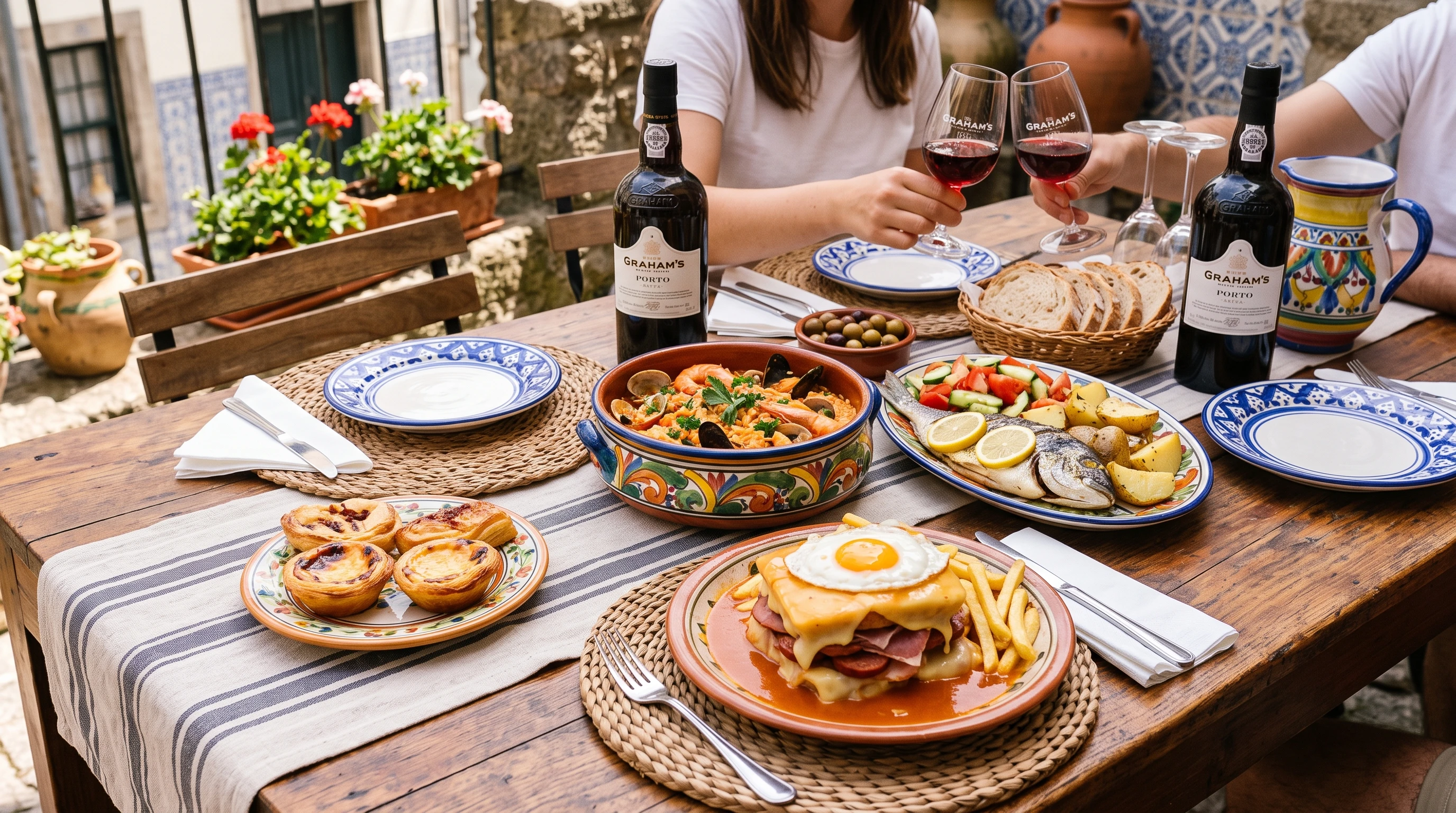
Best Foods to Try in Porto
This easy table shows Porto’s main foods, their type, and when you might want to try them:
| Food | Type | Best For |
|---|---|---|
| Francesinha | Hearty sandwich | Classic Porto meal |
| Bifana | Pork sandwich | Quick lunch |
| Tripas à moda do Porto | Traditional stew | Local specialty |
| Bacalhau | Salt cod dish | Traditional meal |
| Petiscos | Small plates | Casual dinner |
| Port wine | Fortified wine | Local drink experience |
Francesinha and Hearty Porto Foods
Francesinha is one of Porto’s most famous dishes. It is a large sandwich usually made with steak, ham, and sausage, covered with melted cheese and a spicy tomato-beer sauce. It is often served with fries, and some versions come with a fried egg on top.
This is a very filling meal, not a light snack. Recipes vary between cafés and restaurants, so sauce flavor, portion size, and toppings can differ a lot.
Another traditional Porto dish is tripas à moda do Porto. This stew is usually made with tripe, beans, sausage, and other meats. It is strongly connected with the city’s food history, although it may not appeal to every visitor.
Caldo verde is a gentler introduction to Portuguese comfort food. This potato and kale soup is often served with chouriço and bread. It can work as a starter, light meal, or late supper.
Other hearty northern dishes may include alheira sausage, roasted meats, pork dishes, and rich stews, depending on the restaurant and region.
Seafood and Cod Dishes in Porto
Porto has a long tradition with seafood. You’ll find everything from grilled sardines to octopus and clams. Bacalhau (salt cod) is a national obsession, and you’ll spot it baked, fried, or shredded in dishes like bacalhau à brás (with potato and egg) or bacalhau com natas (creamy baked cod).
Fresh grilled fish, like dourada (sea bream) or robalo (sea bass), is served in both simple neighborhood spots and fancier riverside restaurants. Simply cooked with olive oil, lemon, and maybe a side of boiled potatoes, fresh fish can be a highlight. Check the price on the menu since it’s usually listed by weight and can vary a lot depending on where you eat.
Polvo à lagareiro is a tender, oven-roasted octopus dish, surrounded by garlic-infused olive oil and oven-baked potatoes. Arroz de marisco (seafood rice) is also popular and shares similarities with Spanish paella, but it’s saucier and more comforting. You’ll notice big steaming pots arriving at tables meant to be shared. Seafood dishes are found across Porto, but weekends or holiday times can mean higher prices or bigger crowds at the best places. Try to reserve ahead if you want seafood at a trending eatery along the river or in the Matosinhos quarter, which is especially known for its grill houses and seafood restaurants.
For those interested in something more affordable, seek out caldeirada (Portuguese fish stew)—a brothy bowl filled with fish, potatoes, onions, tomatoes, and herbs, with each chef giving their own tweak. Grilled sardines are especially popular in summer, especially around June and local festival periods, when many restaurants and street events celebrate the fresh catch. Simple cafés and local restaurants may also serve fresh fish in a straightforward, traditional style.
Petiscos, Snacks, and Casual Food
Petiscos are Portuguese-style snacks, similar to Spanish tapas, often meant to be shared. Look out for bars and casual restaurants offering a blackboard with small plates to try alongside wine or beer. Local petiscos include:
- Bifana (thin spicy pork sandwich on a soft roll)
- Prego (thin steak sandwich, sometimes with garlic sauce)
- Rissóis (crispy pastries filled with shrimp, meat, or fish)
- Croquetes (fried croquettes, usually beef or pork)
- Oven warmed chouriço sausage, olives, and local cheeses
- Bolinho de bacalhau (salt cod fritters)
Cheese boards, cured meats, and marinated vegetables round out a petisco spread. Many bars and classic cervejarias (beer halls) serve petiscos, especially during late afternoon or early evening. For more detail, check out Portuguese Petiscos Explained and Portuguese Snacks to Try.
For a casual evening, petiscos can be a simple way to try several small dishes with wine, beer, or soft drinks.It is a relaxed way to try several flavors in one meal without ordering several full dishes. Some places fuse petiscos with modern influences, so don’t be afraid to try creative plates featuring new twists on classic ingredients.
Pastries, Coffee, and Breakfast Foods
Eating sweet baked treats is part of the Porto experience. The most famous is pastel de nata, a flaky custard tart often dusted with cinnamon. Most cafés and bakeries sell them daily; warm is best if you want to enjoy the creamy texture and crisp pastry.
Pão de Deus (“bread of God”) is a rich sweet roll topped with coconut, sometimes eaten for breakfast with butter or jam. Other morning options include bolo de arroz (rice flour cake), tosta mista (ham and cheese toastie), and small sugary croissants or éclairs. Bakeries in Porto usually open early and fill up with locals getting coffee and a quick bite before work. If you are unsure of the names, pointing to items in the pastry case is usually acceptable in casual cafés and bakeries.
Coffee in Portugal is strong and usually served as an espresso, called a café. You can ask for a “meia de leite” (half milk, half coffee) if you want something less intense. For more on local café habits, see Portuguese Breakfast Culture, Portuguese Café Culture, and Portuguese Desserts & Sweets.
In addition to classic pastries, you’ll find regional treats like jesuítas (crisp layered pastry with sugary egg glaze), éclair shaped travesseiros, and honeyed cakes made with almond or orange. Different bakeries may offer slightly different pastries, cakes, and regional sweets, so it is worth trying more than one if you enjoy desserts. Breakfast in Porto is typically small and quick, but weekend mornings see families enjoying pastries and coffee together.
Drinks to Try in Porto
Port wine is the city’s iconic drink. It’s a fortified wine produced and aged in Porto’s cellars, with sweet notes ranging from ruby to tawny styles. Wine lodges in Vila Nova de Gaia (across the river) offer everything from quick tastings to detailed tours. Even if you’re new to wine, most tours and restaurants explain the basics and give you a chance to try a style that suits you.
Vinho verde is another popular choice, a refreshing, lightly fizzy white wine from the Minho region. Besides these, red wine from the Douro Valley and crisp whites are available in most restaurants and bars. Portuguese beer, especially Super Bock and Sagres, is a common draft choice at casual spots.
If you prefer non-alcoholic options, try fresh orange juice (sumo de laranja natural), sparkling water, or a “galão” (milky coffee similar to a latte). For anyone thinking of bringing a bottle home, check customs rules and airline limits before you pack wine or spirits in your luggage. Exploring the modern craft beer scene adds yet another option for adventurous drinkers, with local brewers producing IPAs and stouts increasingly found at trendy bars around Porto’s center.
Food Markets and Supermarkets in Porto
Markets are a good place for fresh snacks and local food without needing a full restaurant meal. Mercado do Bolhão is the main central market, where you can buy fresh produce, baked goods, cured meats, cheeses, and snacks for a picnic. Many bakeries, small grocery shops (mercearias), and cafés in every neighborhood sell sandwiches, pastries, and cheap meals to go.
Supermarkets like Continente, Pingo Doce, and Minipreço offer prepared foods, fruit, yogurt, local olives, and affordable wine. These can be useful for budget snacks, simple lunches, or stocking up before a day trip. For more details, read Portuguese Food Markets and What to Buy at Portuguese Supermarkets.
In addition to Bolhão, smaller neighborhood markets and grocery shops can be useful for local bread, cheese, ham, fruit, pastries, and simple picnic food. If you are self-catering or planning a day trip, supermarkets and small shops can be an easy way to keep food costs lower while still trying Portuguese products.
Should You Take a Porto Food Tour?
Trying local food for the first time can be easier with a guided food tour. Food tours in Porto often include stops at classic cafés, wine lodges, bakery counters, and petisco bars, plus plenty of tasting and stories about food culture. You can book group tours or private guides for everything from pastries and coffee to seafood and wine pairings.
If you want to try several Porto foods with local context, booking a guided food tour is a simple way to sample local dishes, pastries, petiscos, wine, and neighborhood favorites without planning every stop yourself. It can also be useful for learning how local dishes, cafés, wine, and petiscos fit into Porto’s food culture. Some tours also explain eating habits, table customs, and how local dishes fit into Portuguese food culture.
Common Mistakes to Avoid
- Only eating on the busiest tourist streets; exploring side streets and local areas usually gets you better quality and value.
- Underestimating how filling a francesinha is; sometimes one sandwich is enough for two people.
- Forgetting to check seafood prices before ordering. Some dishes are priced by the kilo, and bills can add up quickly.
- Assuming table snacks (like bread, cheese, or olives) are always free. They often appear on your bill if you eat them.
- Skipping bakeries and local cafés. These are great for cheap snacks, coffee, and sweet treats.
- Only trying Port wine and missing out on vinho verde or other regional drinks.
- Packing fresh pastries for long journeys; most don’t travel well and are best enjoyed fresh.
Related Portugal Food Guides
- What to Eat in Lisbon
- Portuguese Snacks to Try
- Portuguese Breakfast Culture
- Portuguese Café Culture
- Portuguese Desserts & Sweets
- Portuguese Petiscos Explained
- Eating in Portugal on a Budget
- What to Buy at Portuguese Supermarkets
- Best Food Souvenirs from Portugal
Frequently Asked Questions
What food is Porto famous for?
Francesinha sandwich, tripas à moda do Porto (tripe stew), bacalhau (salt cod), petiscos, and pastel de nata are all really representative of Porto’s local food scene. Port wine is its most famous drink.
What should first-time visitors eat in Porto?
First-time visitors may want to try francesinha, bifana, grilled fresh fish, petiscos, pastel de nata, and at least one glass of Port wine or vinho verde.
Is Porto good for seafood?
Yes, Porto’s location means there’s lots of fresh grilled fish, cod dishes, octopus, and shellfish, though quality and pricing vary by neighborhood and season.
What is francesinha?
Francesinha is a huge stuffed sandwich with steak, sausage, and ham, topped with bubbly cheese, a spicy tomato beer sauce, and fries on the side.
What is a good cheap meal in Porto?
Bifanas, pregos, rissóis, bakery sandwiches, and petiscos at bars are all affordable. Supermarkets and local cafés sell simple snacks for a few euros.
Should you take a food tour in Porto?
A food tour can help you try a range of dishes, hear local stories, and skip guessing where to eat. It’s handy for first-time visitors who want context or limited time for exploring food spots.
What desserts should you try in Porto?
Pastel de nata, pão de Deus, bolo de arroz, and other bakery treats are popular. Every bakery has its own specialties.
Can you eat well in Porto on a budget?
Yes, street food, bakeries, markets, and local cafés all offer filling meals for low prices. Avoid busy tourist spots for better deals.
Is Porto food expensive?
Porto can be affordable if you eat at bakeries,cafés, markets, and casual restaurants. Francesinha, bifana, pastries, soups, and petiscos can be budget-friendly choices, while seafood, riverside restaurants, and wine experiences may cost more.
Porto Food Guide Summary
Porto is a good city for travelers who want hearty northern Portuguese food, seafood, pastries, coffee, petiscos, and wine. The main foods to try include francesinha, bifana, tripas à moda do Porto, bacalhau, grilled fish, octopus, pastel de nata, pão de Deus, Port wine, and vinho verde.
For a first visit, it makes sense to mix different food experiences instead of eating every meal in the same type of place. Try a traditional restaurant for francesinha or tripas, a bakery for pastries and coffee, a casual bar for petiscos, and a market or supermarket for simple snacks.
Food tours can also be useful if you want local context and several tastings in one route. Otherwise, Porto is easy to explore at your own pace by checking menus, comparing prices, and trying a mix of classic dishes and everyday snacks.