
Prato do dia in Portugal means “dish of the day” and is one of the simplest ways to find a filling lunch in cafés, tascas, neighborhood restaurants, market eateries, and simple local lunch spots.
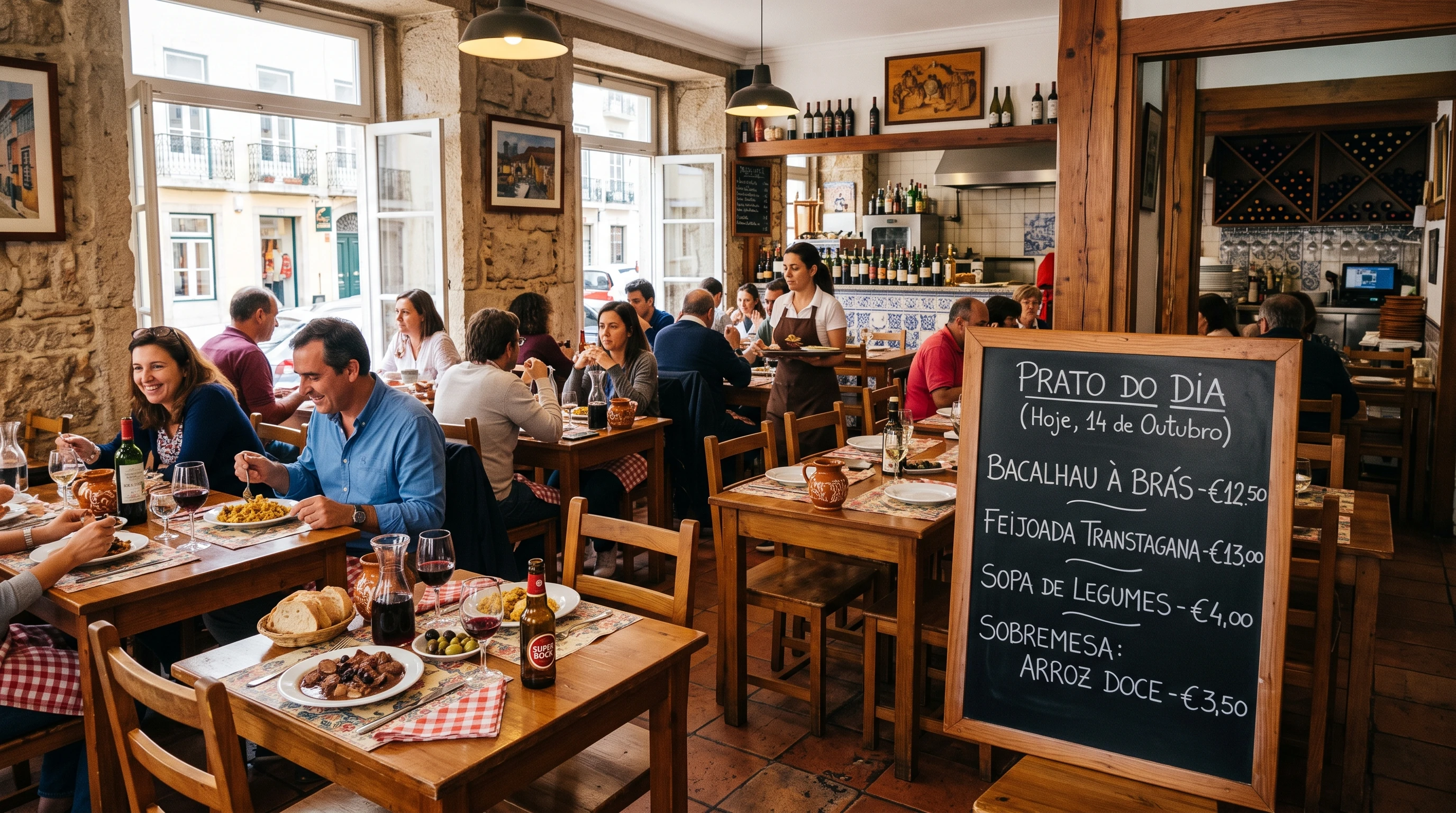
For first-time visitors, prato do dia can be a useful way to try Portuguese food without studying a long menu. It is usually served at lunchtime, often on weekdays, and may be shown on a chalkboard, printed menu, handwritten sign, or board near the entrance.
This guide explains what prato do dia means, what may be included, when it is usually served, how to order it, and what common mistakes to avoid.
Quick Answer
Prato do dia in Portugal usually means a daily lunch dish or simple lunchtime special. In some places, it may be only the main dish. In others, it may be part of a set lunch menu that includes soup, bread, a drink, dessert, or coffee.
What is included depends on the restaurant, so always check the menu, board, or ask before ordering. Prato do dia is most common at lunchtime, especially on weekdays, and can be a practical option for travelers looking for a simple, budget-friendly Portuguese lunch.
What Does Prato do Dia Mean?
The literal translation of prato do dia is “dish of the day.” In most places, this refers to one or two cooked dishes, sometimes based on what’s freshest, most practical, or most popular at that time of year. The meaning can switch up, though. In some spots, it’s just a single main course, while in others, it forms part of a set Portuguese daily lunch menu with several items, such as soup and dessert. It is generally intended as a simple, practical lunchtime option for workers, students, and other diners looking for a reasonably priced meal.
Some restaurants might post the prato do dia options on a chalkboard near the door or a paper menu at the entrance, switching offerings every day or week. It’s common to see two or three choices per day, and the main goal is to serve traditional, hearty Portuguese food at lunchtime in a simple, affordable way. For travelers, prato do dia can be a simple way to try everyday Portuguese dishes without choosing from a long menu.
What Is Usually Included?
What you get with prato do dia can change a lot depending on where you eat. At the most basic, it will likely include just the main dish (such as grilled chicken, fish, or a daily stew), with some bread and maybe side salad, rice, or potatoes. In some places, prato do dia may also include soup, a drink, dessert, or coffee. Sometimes, lunch comes with a small portion of olives or butter for the bread, but these little side snacks may also be added to the bill. It is worth checking the board or asking “O que inclui?” to confirm whether soup, a drink, dessert, or coffee is included in the fixed price. Don’t assume coffee, wine, or dessert is free with every Portuguese daily lunch menu. If you are vegetarian, it’s best to ask if they have an egg or vegetable-based option, since most prato do dia dishes typically feature meat or fish.
Where Can You Find Prato do Dia?
Prato do dia is often found in casual Portuguese eateries such as:
- Cafés and snack bars, especially those away from the busiest tourist corridors
- Local tascas (simple Portuguese taverns or diners)
- Neighborhood restaurants catering mainly to workers and locals
- Lunch counters inside or near city markets
- Some bakeries (pastelarias) with a hot meal section
- Restaurants in small towns or suburbs
It is often easier to find in places that serve regular weekday lunch customers, such as workers and students. Restaurants close to tourist attractions might not offer it, and chain restaurants are less likely to advertise prato do dia. If you see a handwritten board or a daily menu taped to the door, it’s usually a good sign that it’s a local spot with a rotating selection. Some pastelarias also serve hot lunches, so it is worth checking their menu or daily specials board.
When Is Prato do Dia Served?
Traditionally, prato do dia is a weekday lunchtime offering. Lunch service in Portugal commonly falls between around 12:30 pm and 2:30 pm, although opening and serving times vary. In most places, prato do dia is prepared in batches to serve big groups quickly, so it sometimes sells out by the late lunch hour.
At dinner, most tascas and restaurants return to their normal à la carte menu. A few places might have a smaller or different prato do dia at night, but it’s less common. Weekends can be hit or miss; some very neighborhood-focused spots might offer daily dishes on Saturdays, but many close or focus on more elaborate family-style meals. In tourist-heavy districts, menus are more likely to be fixed-price but not labeled as prato do dia. For the best chance of finding prato do dia, aim for a weekday lunch and avoid arriving too late.
Common Dishes You Might See
Here’s a table of classic everyday dishes that show up frequently as prato do dia on Portuguese lunch menus, along with why they work nicely for lunch:
| Dish | What It Is | Why It Works for Lunch |
|---|---|---|
| Grilled chicken (frango grelhado) | Simple grilled meat, usually with fries or rice | Filling, easy to recognize, works for most tastes |
| Grilled fish (peixe grelhado) | Daily fish, typically served with boiled potatoes and salad | Fresh option near coast, light but satisfying |
| Bacalhau dish | Salt cod in a casserole, stew, or grilled with vegetables | Traditional Portuguese lunch option |
| Sopa do dia | Daily vegetable or legume soup | Light, good for a smaller lunch, or as a starter |
| Feijoada | Stew with beans, pork, and sausage | Hearty, warm, especially in cooler months |
| Arroz de pato | Rice cooked with shredded duck and sausage | Comfort food, rich flavor, filling for lunch |
| Carne de porco à alentejana | Pork with clams and potatoes | Regional specialty, unique mix for a lunch treat |
| Caldo verde | Kale and potato soup with chouriço sausage | Traditional soup or light starter |
Other dishes may also appear, depending on the region, season, and restaurant. You may see stews, breaded pork, omelets, vegetable soups, fried fish, or simple meat-and-potato dishes. The exact choice changes by place, which is part of why checking the board before ordering is useful.
Is Prato do Dia Cheap?
For those thinking about Portugal budget lunch options, prato do dia usually stands out for being one of the more affordable ways to eat a balanced meal at a sit-down restaurant. Prices are often lower in small towns, suburbs, and simple neighborhood restaurants, while city centers and tourist-heavy areas may cost more. What is included also matters, because a menu with soup, drink, dessert, or coffee may be priced differently from a single daily dish.
The set price for a Portuguese daily lunch menu is often lower than adding up soup, main dish, and drink from the main menu, which is why it’s a common choice for workers and students. That said, specials featuring fresh fish or shellfish may cost extra, and extras like table snacks are sometimes billed separately. It’s really important to double-check before ordering if you want to stick to a budget. Not every prato do dia is the same price every day, and some places change the offering and the price based on what’s available at the market. The range of options and fair prices have helped prato do dia spread fast through both traditional diners and newer eateries aiming to build local loyalty. Cafés that serve workers often get crowded between 12:30 and 1 pm—try to arrive on the early side for the fastest service and the full list of dishes still available. Lunch spots serving local workers may become busy around the main lunch period, and some daily dishes can sell out. Arriving earlier may give you a wider choice.
How to Order Prato do Dia
These simple phrases can help when ordering a Portuguese lunch special:
- “Tem prato do dia?” (Do you have a dish of the day?)
- “O que inclui?” (What is included?)
- “É com bebida?” (Is a drink included?)
- “É com sobremesa?” (Is dessert included?)
In many restaurants, asking for “prato do dia” or pointing to the daily board is enough. Perfect pronunciation is not necessary, but asking politely and confirming what is included can help avoid misunderstandings.
Common Mistakes to Avoid
- Assuming all extras (drink, coffee, dessert) are free. Always double-check what’s included.
- Eating the olives, cheese, or bread brought to the table without realizing these snacks may get added to your bill.
- Expecting the same daily menu to be available at dinner or weekends. Prato do dia is often unavailable after lunch service.
- Choosing only restaurants on main tourist streets, where prices are often higher and menus may be aimed more at visitors.
- Not noticing if fish or seafood dishes are priced by weight or as a supplement outside the fixed menu.
- Thinking prato do dia will always be the cheapest option, as sandwiches or half portions can sometimes cost less.
- Arriving very late for lunch (after 2 pm) and finding daily specials already sold out or unavailable.
Prato do Dia vs Menu do Dia
Both prato do dia and menu do dia are common terms in Portugal, and they sometimes get used in different ways depending on the restaurant. Prato do dia usually refers to the main hot dish of the day, while menu do dia may suggest a complete set, often soup, main dish, drink, and dessert or coffee. That being said, not every place uses these terms exactly the same. The safest approach is to look at the menu or board and check what is included.
Some restaurants list several pratos do dia and also offer a menu do dia that combines the main dish with extras such as soup, a drink, dessert, or coffee. Because restaurants use these terms differently, always check what is included before ordering.
Related Guides
- Best Cheap Eats in Porto
- Eating in Portugal on a Budget
- What to Eat in Porto
- Where to Eat in Porto
- What to Eat in Lisbon
- Portuguese Breakfast Culture
- Portuguese Snacks to Try
- What to Buy at Portuguese Supermarkets
Frequently Asked Questions
Here are some common questions about prato do dia and daily lunch menus in Portugal:
What does prato do dia mean in Portugal?
It means “dish of the day.” Usually, it is a main lunch dish or special offered by cafés, tascas, or restaurants.
Is prato do dia cheap?
It can be good value, especially compared with ordering several separate items, but prices vary by restaurant, location, and what is included.
What is included in prato do dia?
A main lunch dish is usually the base. Some places may also include soup, bread, a drink, dessert, or coffee, but this depends on the restaurant. Check the board or ask before ordering.
When is prato do dia served?
Prato do dia is usually a lunchtime option, especially on weekdays. It is less common at dinner and may not always be available on weekends.
Where can you find prato do dia in Portugal?
Prato do dia can often be found in cafés, tascas, neighborhood restaurants, market eateries, and other casual lunch spots.
Is prato do dia only for locals?
No. Anyone can order it. It is a common option for both locals and visitors looking for a simple lunchtime meal.
What is the difference between prato do dia and menu do dia?
Prato do dia usually means the daily main dish, while menu do dia may be a full set meal. Always check what each includes at the specific restaurant.
How do you ask for prato do dia in Portuguese?
Simply say, “Tem prato do dia?” (Do you have a dish of the day?) to the server.
Prato do Dia Summary
Prato do dia is one of the easiest ways to find a simple Portuguese lunch, especially in cafés, tascas, market eateries, and neighborhood restaurants. It usually means a dish of the day, but in some places it may be part of a fuller lunch menu. For first-time visitors, the main rule is to check what is included before ordering. Soup, bread, drinks, dessert, coffee, and table snacks are not always included in the fixed price. Prato do dia can be a useful option for budget-conscious travelers, but prices and portions vary. Look beyond the busiest tourist streets, read the menu carefully, and ask simple questions such as “O que inclui?” if you are unsure.