
Some of the links on this page are affiliate links, which means I may earn a small commission if you make a purchase through them, at no extra cost to you. This helps support the site and allows me to continue creating helpful content.
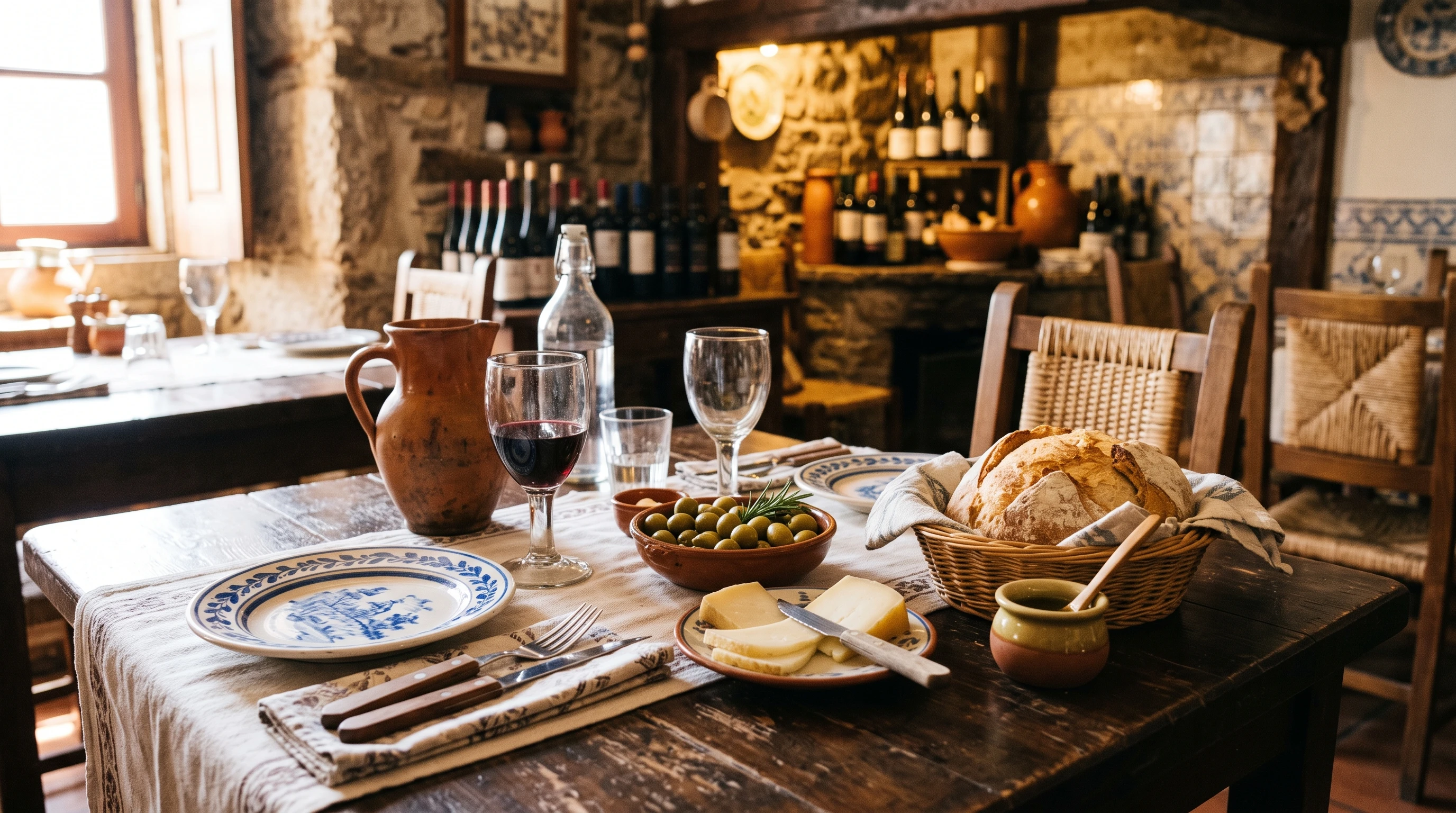
Eating out in Portugal is usually relaxed, but a few restaurant customs can confuse first-time visitors. Bread, olives, cheese, or pâté may arrive at the table before you order. The daily dish may be written on a board. The bill may not arrive until you ask for it.
Understanding these small details can help you avoid surprise charges, order more confidently, and feel more comfortable in Portuguese restaurants.
This guide explains basic Portuguese restaurant etiquette, including greetings, couvert, prato do dia, petiscos, tipping, payment, and common mistakes to avoid.
Quick Answer
Portuguese restaurant etiquette is usually simple. Greet the staff politely, check whether couvert is charged, ask about the prato do dia, do not assume bread and olives are free, and ask for the bill when you are ready to pay.
Meals may feel slower than in some countries, especially in traditional restaurants. Tipping is appreciated for good service, but it is usually optional. If you are unsure about prices, payment, or table items, it is normal to ask the server politely.
Greet Staff Politely
A quick greeting goes a long way in Portuguese restaurants. Even if you don’t speak much Portuguese, the effort shows respect. Here are a few easy options:
- Bom dia – Good morning
- Boa tarde – Good afternoon
- Boa noite – Good evening
- Obrigado (if you’re male) / Obrigada (if you’re female) – Thank you
Most servers appreciate a smile and a simple greeting. Nobody expects perfect pronunciation. Being polite and using these words helps set a friendly tone, which is valued in Portuguese dining culture.
Understand Couvert Before Eating
When you sit down in a Portuguese restaurant, you might spot small plates with bread, olives, butter, cheese, or even pâté brought to your table right away. These little extras are called couvert. In some places, they are complimentary, but often you’ll be charged a small fee if you eat them.
If you don’t want these extras, you can politely let your server know, or just leave them untouched and you usually won’t be charged. Always check the menu for couvert prices.
Read more: What Is Couvert in Portugal?
Check the Prato do Dia
Most traditional Portuguese restaurants offer a prato do dia, or daily dish. This is usually a set lunch special that comes with a main dish, and sometimes even includes soup, dessert, or a drink for a very fair price.
The prato do dia changes from day to day and may be listed on a chalkboard, paper menu, or recited by your server. It’s a great way to try local home-cooked food at a good value. You can ask, “Qual é o prato do dia?” (What is the special today?)
Read more: Prato do Dia in Portugal
Do Not Rush the Meal
Meals in Portugal can feel slower than in some countries, especially in traditional restaurants, smaller towns, and family-run places. Servers may not check on the table every few minutes, and they may not bring the bill until you ask.
This does not usually mean poor service. It is often just a more relaxed pace. If you need something, politely get the server’s attention. If you are ready to leave, ask for the bill by saying, “A conta, por favor.”
Know the Difference Between Petiscos and Starters
The word petiscos describes small sharing plates or snacks, often enjoyed with drinks. Petiscos are sometimes compared with Spanish tapas, but they are part of Portuguese food culture and have their own dishes, portions, and style. These are different from starters on the menu, which are individual dishes you order before the main course. Petiscos are usually shared by everyone at the table, while a starter is more like a personal appetizer.
Petiscos include favorites such as octopus salad, flame-grilled chouriço, or small fried fish, and they reflect regional tastes. Ordering a few petiscos can be a useful way to try several small dishes without choosing a full main course.
If you want to understand Portuguese food, petiscos, restaurant customs, and local dishes more easily, a guided food tour can be a useful introduction before eating out on your own.
Compare Portugal food tours here.
Read more: Portuguese Petiscos Explained
Ask Before Ordering Seafood, Cheese, or Specials
Some Portuguese foods, such as fresh seafood, cured cheeses, or certain meat dishes, can be pricier than other menu items. If you don’t see a price clearly listed, or you’re offered a “special” by the server, just double-check before ordering. Politely asking about prices is normal in Portugal, and it helps you avoid surprises on the bill.
Special occasions or high-demand days could also bring higher prices for seafood and daily catches, so don’t hesitate to check. Asking “Quanto custa?” (How much does it cost?) is a smart habit to avoid confusion.
How to Ask for the Bill
In Portugal, it’s common for the server to bring the bill only after you ask for it. When you are ready to pay, get your server’s attention and say, “A conta, por favor” (The bill, please).
Card payment is widely accepted, especially in cities and tourist areas. Small or traditional spots might prefer cash, or may not accept cards for very small amounts. Asking “Posso pagar com cartão?” (Can I pay by card?) is an easy way to check.
Some restaurants may bring a handheld payment terminal to your table, while others invite you to the counter to settle the bill. Either is common, and both approaches are considered polite.
Tipping in Portuguese Restaurants
Tipping in Portugal is usually optional. It is appreciated for good service, but it is not normally expected in the same way as in the United States.
For casual meals, rounding up the bill or leaving a small amount of change can be enough. In nicer restaurants, some visitors leave around 5% to 10% for very good service, but this is still optional.
For quick coffees, pastries, or small café orders, tipping is not usually expected.
Common Restaurant Mistakes to Avoid
- Assuming couvert is always free.
- Eating bread, olives, cheese, or pâté without checking whether they are charged.
- Not checking prices for specials, seafood, or off-menu items.
- Expecting the bill to arrive automatically.
- Assuming every restaurant accepts cards.
- Ordering the catch of the day without confirming the price.
- Rushing the meal in a slower traditional restaurant.
- Confusing petiscos with full main courses.
- Not checking the bill before paying.
Related Guides
- What Is Couvert in Portugal?
- How to Order Food in Portugal
- Prato do Dia in Portugal
- Portuguese Petiscos Explained
- Eating in Portugal on a Budget
- Best Cheap Eats in Porto
- Portuguese Snacks to Try
- What to Eat in Lisbon
- What to Eat in Porto
Frequently Asked Questions
Here are answers to some of the most common questions first-time visitors ask about Portuguese restaurant etiquette:
Is it rude to leave food in Portugal?
Leaving some food is not considered rude, especially if you are full or didn’t like a certain dish. In family-run spots, finishing your plate can show you enjoyed it, but nobody expects you to force yourself.
Do you need to tip in Portuguese restaurants?
Tipping is not required, but it’s appreciated for good service, especially in tourist areas or nice restaurants. Small change or rounding up is usually enough. At casual or self-service places, it’s very normal not to tip at all.
Do Portuguese restaurants bring the bill automatically?
No, the bill is usually brought only after you ask for it by saying “A conta, por favor.” Waiting for the bill to come automatically will often leave you sitting for a while!
Are bread and olives free in Portugal?
Not always. In most traditional restaurants, bread, olives, cheese, or butter on the table are charged as couvert if you eat them. Always check the menu or ask your server if you’re unsure.
Can you pay by card in Portuguese restaurants?
Card payment is common in cities and tourist areas, but smaller restaurants, cafés, or rural spots may prefer cash. It’s always smart to check before you order, especially for very small transactions.
What does prato do dia mean?
Prato do dia is the dish of the day, typically a lunch special at a reduced price. It is often good value, and can include a drink, soup, or dessert in some cases.
What is the difference between petiscos and starters?
Petiscos are small sharing plates, usually placed in the middle of the table for everyone. Starters are ordered as individual dishes before the main course. Petiscos are more often shared.
Do you need to speak Portuguese to eat out in Portugal?
No, but learning a few polite words helps a lot. Many servers in tourist areas speak some English or Spanish. A smile and a simple “bom dia” or “obrigado” make a good impression anywhere.
Bottom Line
Portuguese restaurant etiquette is usually simple once you understand a few basic customs. Couvert may be charged if you eat it, the prato do dia can be a useful lunch option, and the bill is usually brought when you ask for it. Meals may feel slower than in some countries, especially in traditional restaurants, but this is often part of the normal pace. Tipping is usually optional, and checking prices or asking questions politely is completely acceptable. For first-time visitors, the best approach is simple: greet the staff politely, check the menu, ask if you are unsure, and review the bill before paying.