
Some of the links on this page are affiliate links, which means I may earn a small commission if you make a purchase through them, at no extra cost to you. This helps support the site and allows me to continue creating helpful content.
Portuguese dinner culture can feel relaxed and social, but it may surprise visitors who are not used to eating later in the evening. Dinner in Portugal often starts later than in many other countries, and local restaurants may not get busy until well after 8 pm. Understanding typical dinner times, couvert, reservations, common dishes and restaurant habits can make eating out much easier. This guide explains what to expect when having dinner in Portugal, especially if you are visiting for the first time.
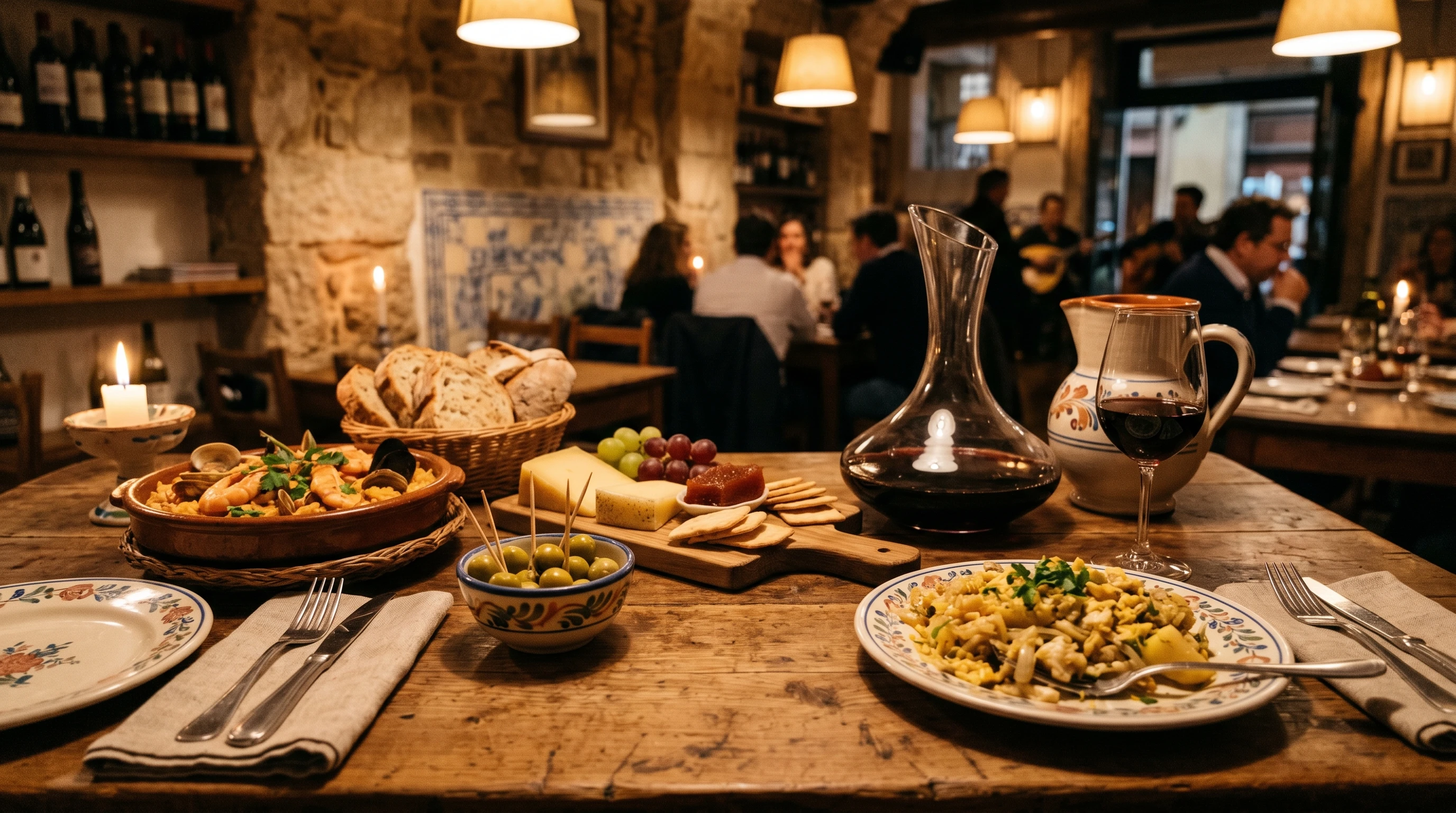
Quick Answer: How Does Dinner Work in Portugal?
Dinner in Portugal usually starts later than many visitors expect. In cities and busy towns, restaurants often begin filling up around 8 pm to 9 pm, while tourist areas may serve earlier. For many locals, lunch is the main meal of the day, so dinner at home can be lighter. However, restaurant dinners can still be full meals with starters, main dishes, dessert and coffee. Visitors should check opening hours, understand how couvert works, and consider reservations for popular restaurants, weekends and summer evenings.
| Dinner Feature | What It Means | Visitor Tip |
|---|---|---|
| Dinner Hours | Starts 7:30–9:30 pm | Plan for a late dinner |
| Meal Size | Can be lighter at home | Restaurants still serve full meals |
| Reservations | Useful in busier spots | Call ahead on weekends or in tourist areas |
| Common Dishes | Fish, pork, chicken, soups and petiscos | Ask about specials or local favorites |
| Restaurant Pace | Meals are usually relaxed and unhurried | Do not expect to rush |
| Couvert | Starters like bread and olives arrive automatically | Usually charged if eaten |
What Time Do People Eat Dinner in Portugal?
Dinner in Portugal usually starts around 7:30 pm, but restaurants may not be busy until 8:30 or even 9 pm in cities. In Lisbon and Porto, you’ll find locals strolling in for dinner well after sunset. Smaller towns sometimes have a shorter window for dinner, often closing up the kitchen around 10 pm, while tourist-heavy areas might open a little earlier or keep the kitchen running later in the summer months. If you tend to eat early, it’s smart to check restaurant opening hours before you show up hungry. Many eateries will list hours online or post them at the door, and a quick phone call can prevent disappointment if you’re unsure about the timing. On Fridays and weekends, expect popular places to be packed later in the evening—if you want a more local atmosphere, arriving a little later is often better than eating very early.
Is Dinner the Main Meal in Portugal?
Lunch is actually the bigger meal for most Portuguese people. Expect to see heavier dishes and more food at lunch, especially if it’s homemade or a full menu meal at a local restaurant. At home, dinner is sometimes simpler—think soup, salad, or a light sandwich. Eating out is a little different. If you meet friends or family at a restaurant for dinner, it can be a big, filling meal with starters, main courses, and dessert. Dining out becomes a chance to socialize, so people tend to settle in for a longer time together at the table. While dinner at home may focus on comfort and simplicity, restaurant dinners are often more social and can be a good chance to try traditional dishes in a slower setting.
What Do Portuguese People Eat for Dinner?
Dinner in Portugal covers a lot of ground, but you’ll spot some patterns. Grilled fish shows up on menus year-round, especially in coastal cities. Cod (bacalhau) is everywhere, with dozens of ways to prepare it. Many places offer pork dishes, like secretos (grilled pork with seasoning), or hearty stews like feijoada. Chicken gets the piri-piri treatment—a tasty, spicy option you see everywhere. Rice dishes with seafood, simple soups, and good bread are all common. For a lighter or more casual night, smaller plates called petiscos (small Portuguese sharing plates) make dinner more about sharing and sampling than a single big plate. Vegetarian options are less common, but vegetable-based soups and salads are widely available. Dairy and cheese also play a role in starters, and charcuterie selections are worth checking out for a wider taste of local flavors. Many restaurants use simple regional ingredients, and specials can vary by season and location.
Dinner in Local Restaurants vs Tourist Areas
Local Portuguese restaurants have their own personality. These spots might look basic from the outside but often have well-cooked, traditional food and a lively, neighborhood vibe. Don’t expect a glossy menu or English translations at every single place. Some just chalk up the specials on a board or write them on a simple menu card. Prices tend to be lower, and service is casual. Tourist-heavy restaurants might open a little earlier, offer English menus, and usually have slightly higher prices. These restaurants are designed for convenience and comfort rather than local flair, but they’re handy if you want familiar food or more flexible dinner hours. In the countryside and smaller towns, restaurants keep traditions strong, bringing you homemade dishes with plenty of local color. Whether you’re in a city or rural village, for first-time visitors, a mix can work well: local restaurants for better value and traditional dishes, and tourist-friendly places when you need easier opening hours or English menus.
Eating in Portugal on a Budget
Do You Need a Reservation?
Reservations aren’t always necessary, but they come in handy for certain situations. If you’re eyeing a trendy restaurant in Lisbon or Porto, want to eat out on a weekend, or are in a popular coastal town (like Cascais or Lagos) during summer, it’s smart to reserve a table. Even some simple seafood grills near the ocean fill up on warm evenings. For smaller, no-fuss places, walk-ins are totally normal during quieter times. If you’re set on a particular restaurant, or are in a group, booking ahead helps avoid disappointment. Calling ahead, using popular reservation platforms, or even stopping by earlier in the day to ask can all work well. If you aren’t sure, a quick online search often reveals if reservations are recommended.
Couvert, Starters and Petiscos at Dinner
It’s totally normal in Portugal for the server to bring bread, olives, cheese, or other little bites to the table as soon as you sit down. This is called the couvert. You are usually charged for the items you eat, so if you don’t want the couvert, simply leave it untouched or politely ask for it to be taken away. Some restaurants have more variety: marinated carrots, local sausage, or spreads. For dinner that’s less formal, or when sharing is the plan, petiscos fit the bill. Order a few for the table and you’ll get a little taste of everything. It’s a fun, relaxed way to build your own meal. Sharing dishes encourages conversation and lets everyone try a wider range of Portuguese flavors; it’s a good way to try several flavors without ordering one large main dish.
Common Portuguese Dinner Dishes to Try
- Bacalhau à Brás: Shredded cod with potatoes, eggs, and onion—warm and comforting.
- Grilled Sardines: Especially popular in summer, served with potatoes or salad.
- Dourada Grelhada: Grilled sea bream, often whole, with simple sides.
- Arroz de Marisco: Creamy rice stew made with shellfish and a rich seafood broth
- Polvo à Lagareiro: Roast octopus with olive oil and garlic, popular for seafood lovers.
- Frango Piripiri: Grilled chicken brushed with spicy piri-piri sauce.
- Porco à Alentejana: A combo of pork and clams, cooked together in garlic and spices.
- Caldo Verde: A simple green soup with kale and slices of chouriço sausage.
- Petiscos: Small Portuguese sharing plates, cheeses, fried cuttlefish, spicy sausage, and more.
Portuguese menus change depending on the region and the chef, so always check the dish of the day. It’s a solid way to try something that’s fresh or in season and occasionally unique to that part of the country.
If you want to try Portuguese dishes with more guidance, a Lisbon or Porto food tour can be a useful way to understand what locals order before exploring restaurants on your own.
Portugal food tours and local dining experiences
Drinks and Coffee After Dinner
Dinner drinks often include water, beer, soft drinks or vinho da casa, the house wine. Vinho verde can be a good match for fish or warm evenings. After dinner, some people order a small espresso, while others may choose port wine, aguardente or a regional liqueur. Habits vary by restaurant and region.
Restaurant Etiquette Tips for Dinner in Portugal
- Arrive according to local dinner hours. Restaurants often don’t fill up until after 8 pm.
- Ask about the prato do dia (dish of the day), which is often a good value and local favorite.
- If you order fish, check if it’s sold by weight. This affects the final price, and some special fresh catches are priced differently than menu items.
- Understand the couvert starter policy; you’re only charged if you eat it.
- The bill won’t come until you ask (say “A conta, por favor”).
- Meals are slow-paced; don’t expect to rush. Take your time and enjoy the moment.
- Polite greetings and simple phrases in Portuguese (like “boa noite” for “good evening”) are appreciated.
Portuguese restaurant culture is welcoming, but a little patience goes a long way. If you have dietary needs or questions, staff can often help, although English levels vary. If you have special requests, speaking slowly and pointing to the menu can smooth the way for communication. Reading a few basic food words before you go is helpful, too.
Common Mistakes Tourists Make at Dinner
- Arriving too early and finding restaurants closed or empty. Wait until after 7:30 or even 8 pm for a real local atmosphere.
- Assuming the couvert is free; many are surprised to see these items on the bill.
- Expecting every restaurant to keep the kitchen open all day. Many close between lunch and dinner or have last orders by 10 pm.
- Not checking restaurant hours ahead of time, especially in small towns or villages.
- Skipping local dishes and sticking to tourist menus. Often, the best food comes from the daily specials or menu português.
- Not reserving a table at busy or popular restaurants during peak times, resulting in long waits or missing out on popular restaurants.
By staying flexible and keeping these details in mind, travelers can avoid disappointment and get the most from their Portuguese dinner experience. Enjoying the rhythm of the evening and trying something new can make the meal more enjoyable in Portugal!
Related Portugal Food Guides
- Portuguese Lunch Culture
- How to Read a Portuguese Menu
- Portuguese Petiscos Explained
- Eating in Portugal on a Budget
- Portuguese Wines Explained
- Portuguese Desserts & Sweets
- A Food Lover’s Guide to Portugal
Frequently Asked Questions
What time is dinner in Portugal?
Dinner in Portugal usually starts between 7:30 pm and 9:30 pm, depending on the area. In cities, many local restaurants get busier around 8:30 pm or later.
Do Portuguese people eat dinner late?
Portuguese dinners are often later than in many other countries, especially in cities and on weekends. Tourist areas may offer earlier dinner service.
Is dinner expensive in Portugal?
Dinner prices vary by city, restaurant type and location. Local tascas and casual restaurants are often more affordable, while seafood restaurants, trendy bistros and tourist-area restaurants can cost more.
Do you need reservations for dinner in Portugal?
Reservations are useful for popular restaurants, weekends, summer evenings, coastal towns and busy areas of Lisbon or Porto. Casual local restaurants may accept walk-ins.
What should tourists order for dinner in Portugal?
Good dinner options include grilled fish, bacalhau, arroz de marisco, frango piri-piri, porco à Alentejana, caldo verde and petiscos. The dish of the day can also be a good choice.
Is couvert free at dinner in Portugal?
Couvert is usually not free. Bread, olives, cheese or other small starters may be added to the bill if you eat them. You can politely refuse them if you do not want them.
Wrapping Up
Dinner in Portugal is usually relaxed, social and later than many visitors expect. Once you understand the usual dinner hours, couvert, reservations and common dishes, eating out becomes much easier.
For first-time visitors, the best approach is simple: check opening hours, consider booking popular restaurants, ask about local dishes and take your time. Portuguese dinner is not usually something to rush, especially when eating out with friends or family.