
Some of the links on this page are affiliate links, which means I may earn a small commission if you make a purchase through them, at no extra cost to you. This helps support the site and allows me to continue creating helpful content.
Figuring out a Portuguese menu for the first time can feel a little overwhelming, especially when every meal seems to open with new words like entradas, petiscos, prato do dia, bacalhau, sobremesas, and vinho da casa. Many travelers quickly realize the menu isn’t just about picking food; it’s also about getting a deeper sense of Portuguese food culture and how locals enjoy their meals. This guide breaks down the basics so you can understand the main menu sections, recognize common dishes and order with more confidence using only a few useful Portuguese words.
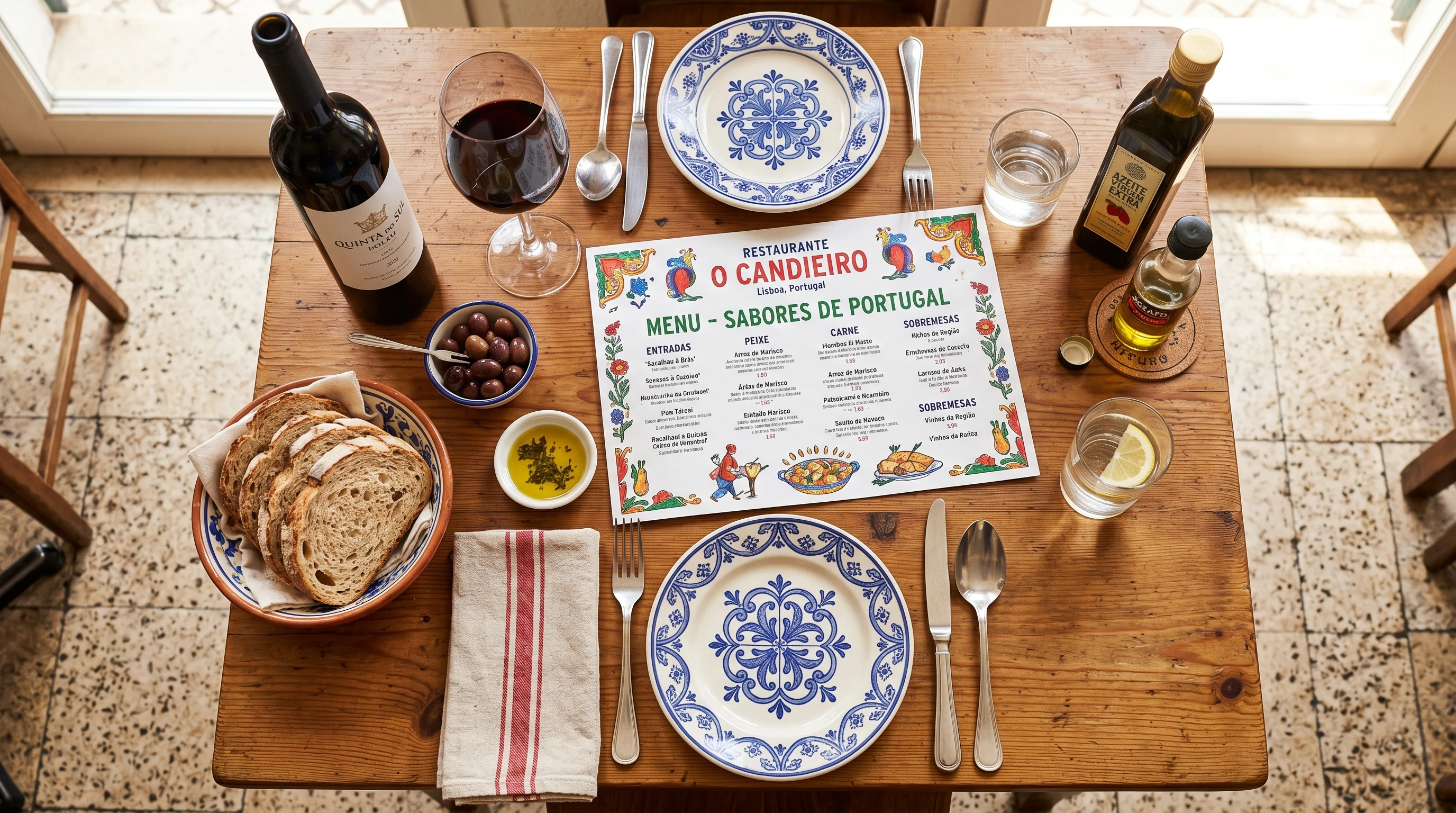
Quick Answer: How Do Portuguese Menus Work?
Most Portuguese menus follow a pretty standard layout. You will usually see sections for starters, petiscos (small, shareable plates), main dishes with fish or meat, a daily special (prato do dia), desserts, house wine (vinho da casa), and coffee to finish. Lunch menus often feature a great-value set meal called menu do dia or prato do dia, especially in local spots.
| Portuguese Word | Meaning | What to Expect |
|---|---|---|
| Entradas | Starters | Bread, cheese, cured meats, small salads |
| Petiscos | Small plates | Small Portuguese sharing plates, hot or cold |
| Prato do dia | Dish of the day | Daily special, usually filling and affordable |
| Peixe | Fish | Grilled, baked, or stewed fish dishes |
| Carne | Meat | Pork, chicken, beef, sometimes lamb |
| Sobremesa | Dessert | Cakes, puddings, fruit, sweet rice |
| Vinho da casa | House wine | Affordable local red or white wine |
| Café | Coffee | Espresso or milky coffee |
Common Portuguese Menu Sections
Many traditional Portuguese menus are simple and practical, but knowing the main sections makes it much easier to spot what you want.
- Entradas: Starters like bread, olives, regional cheeses, and maybe a small salad or soup. Sometimes these arrive without you even asking for them.
- Petiscos: Small sharing plates or snacks, similar to Spanish tapas but uniquely Portuguese. These let you try more flavors without needing a huge main.
- Peixe: Fish dishes appear everywhere. Portugal loves grilled fish, so get ready for simple, fresh tastes.
- Carne: The meat section covers everything from the famous piri-piri chicken to hearty pork stews and juicy grilled steaks.
- Marisco: All things seafood: shrimp, clams, crab, and sometimes hearty seafood rice or stews.
- Sobremesas: Desserts, often offering homemade cakes, creamy puddings, or local specialties.
- Bebidas: Drinks ranging from local wines and beers to soft drinks and fresh juices.
What Is Couvert in Portugal?
Couvert is a little Portuguese quirk that surprises a lot of visitors. When you sit down, staff often bring a basket of bread, a plate of olives, some butter, cheese, or even small cuts of cured meat. It is usually not included in the meal price; if you eat it, it is normally added to the bill. Couvert is usually inexpensive, but prices can vary depending on where you are. Feel free to refuse it; saying “não, obrigado” (or “obrigada” for women) is enough. It is perfectly acceptable to refuse it politely.
What Is Prato do Dia or Menu do Dia?
Prato do dia translates to “plate of the day,” and most neighborhood spots have one or more. These daily specials are filling, freshly made, and budget-friendly. Menu do dia is usually a lunch deal with a soup or starter, main dish, drink, dessert, and coffee included. Locals love these, so keep them in mind if you want a full meal for a good price. These combos are a great way to check out what’s in season and what the kitchen is preparing fresh that day.
Fish, Meat, and Seafood Words to Know
Getting familiar with a few Portuguese food words makes reading the menu far less confusing. Here are some popular dishes and names you’ll come across:
- Bacalhau: Salted cod, prepared in countless ways and one of Portugal’s most famous ingredients
- Sardinhas: Sardines, mainly grilled and especially popular in summer
- Dourada: Sea bream, typically served whole and grilled
- Polvo: Octopus, often served in salads, stews, or grilled over coals
- Frango: Chicken, most often used for spicy piri-piri dishes
- Porco: Pork, especially grilled or slow-cooked, with options like porco preto
- Bife: Steak, usually beef but sometimes pork
- Marisco: All sorts of shellfish and seafood, including mixed platters and seafood rice
Portuguese Drinks on the Menu
Portugal has a relaxed approach to drinks at meals. The cornerstones are wine, beer, and coffee.
- Vinho da casa: House wine, red (tinto) or white (branco), served practically everywhere. Local, tasty, and a good deal.
- Vinho verde: Usually served as a fresh, lightly sparkling white wine, especially popular in warm weather.
- Cerveja: Beer, usually light lagers like Super Bock or Sagres, served cold.
- Café: Espresso, intense and small. In Lisbon it’s called “bica.”
- Meia de leite: Milky coffee—half espresso, half hot milk, similar to a small latte.
- Galão: Tall glass of mostly milk with some espresso, lighter and less intense than a standard coffee.
Desserts and Coffee After the Meal
Dessert menus in Portugal (sobremesas) may be short, but there is usually something simple and sweet to finish the meal. Desserts are often homemade, with recipes handed down through families. Here are the favorites you’ll stumble upon:
- Pastel de nata: Classic custard tart, crisp on the outside, creamy inside. You will find them in cafés too, and some restaurants serve them warm.
- Arroz doce: Sweet milk rice pudding with a hit of lemon and plenty of cinnamon on top.
- Pudim: Caramel flan, creamy and light, sometimes labeled “pudim flan” or “pudim caseiro.”
- Bolo: Cake of every shape and flavor—think chocolate, almond, orange, or even simple sponge cake.
It’s common to finish with coffee. Most choose an espresso, but café menus are flexible. If you want more milk or something bigger, order a meia de leite or galão to match your mood.
Useful Portuguese Phrases for Ordering
Speaking a little Portuguese is always appreciated. It can help you connect with locals and make dining out feel more relaxed. Here are some quick and super useful phrases to know when you read a Portuguese menu or order:
- A ementa, por favor. (The menu, please.)
- O que recomenda? (What do you recommend?)
- Sem carne, por favor. (Without meat, please.)
- A conta, por favor. (The bill, please.)
- Obrigado / obrigada. (Thank you—male/female)
If pronunciation feels difficult, pointing to the dish on the menu is completely normal in casual restaurants.
Common Tourist Mistakes With Portuguese Menus
It is easy to make a few common mistakes when reading a Portuguese menu for the first time. Here are some errors to avoid, which can save you money and help you eat like a local:
- Assuming couvert is free. Only eat it if you’re happy to pay a little extra.
- Only choosing dishes you already recognize instead of trying local specialties. Be open to new flavors.
- Ignoring the prato do dia. The daily special often gives you fantastic value and the freshest ingredients.
- Confusing petiscos with full meals. Unless you order a bunch, you’ll probably want to add a main plate as well.
- Not checking if fish is priced by weight. Prices per kilo can surprise you, so ask if it isn’t clear.
- Showing up for dinner too early. Most locals eat after 8 pm, so 6 pm is prime tourist time, not local time.
- Not checking about dietary needs or allergens. Portuguese kitchens can be flexible, but let them know what you need in advance.
Related Portugal Food Guides
- Portuguese Breakfast Culture
- Portuguese Petiscos Explained
- Portuguese Street Food vs Traditional Restaurants
- Eating in Portugal on a Budget
- Portuguese Food Markets
- Portuguese Wines Explained
- Portuguese Desserts & Sweets
- A Food Lover’s Guide to Portugal
Frequently Asked Questions
What does prato do dia mean in Portugal?
Prato do dia means “dish of the day.” It is usually a daily special that offers a filling meal at good value, often based on what the restaurant is preparing fresh that day.
Is couvert free in Portugal?
Couvert is usually not free. If bread, olives, cheese or other small items are brought to the table and you eat them, they are normally added to the bill. You can politely refuse them if you do not want them.
What does petiscos mean on a Portuguese menu?
Petiscos are small Portuguese plates or snacks, often shared at the table. They can be hot or cold and are a good way to try several different flavors in one meal.
What is vinho da casa?
Vinho da casa means “house wine.” It is usually a simple local wine served by the glass, carafe or bottle, and it is often one of the most affordable drink options on the menu.
Do Portuguese restaurants have English menus?
Restaurants in tourist areas and larger cities often have English menus, but smaller local restaurants may only have Portuguese menus. Learning a few basic food words can make ordering much easier.
What should tourists order in Portugal for the first time?
For a first meal in Portugal, the prato do dia is often a good choice because it is local, filling and usually good value. Other common options include bacalhau, grilled sardines, caldo verde, piri-piri chicken, amêijoas à Bulhão Pato and pastel de nata.
Wrapping Up
Reading a Portuguese menu becomes much easier once you know the main sections and a few common food words. Entradas, petiscos, prato do dia, peixe, carne, sobremesas and vinho da casa appear often, and each one tells you something useful about how the meal is structured.
For first-time visitors, the best approach is to keep it simple: check the daily special, ask what is recommended, understand how couvert works and do not be afraid to try a local dish. With a little preparation, ordering in Portugal feels much less confusing and much more enjoyable.