
If you expect a large breakfast in Portugal, the local routine may surprise you. Portuguese breakfast culture is usually simple, quick, and built around good coffee, fresh bread, and something small from a café or pastelaria.
A typical Portuguese breakfast is not a heavy plate of eggs, bacon, and sausages. Most locals start the day with an espresso, a milky coffee, bread with butter, a pastry, or a toasted ham and cheese sandwich. It is affordable, easy to find, and often eaten at the counter before work.
For first-time visitors, breakfast in Portugal is one of the easiest ways to feel closer to local daily life. You do not need to order anything complicated. You just need to know what locals usually eat, what coffee names mean, and which tourist breakfast habits to avoid.
Quick Answer: What Do Locals Eat for Breakfast in Portugal?
Most Portuguese breakfasts are light and simple. Common choices include coffee, bread with butter or jam, pastel de nata, croissants, simple pastries, or a tosta mista, which is a toasted ham and cheese sandwich. Many people eat breakfast at a local café, bakery, or pastelaria rather than having a large meal at home.
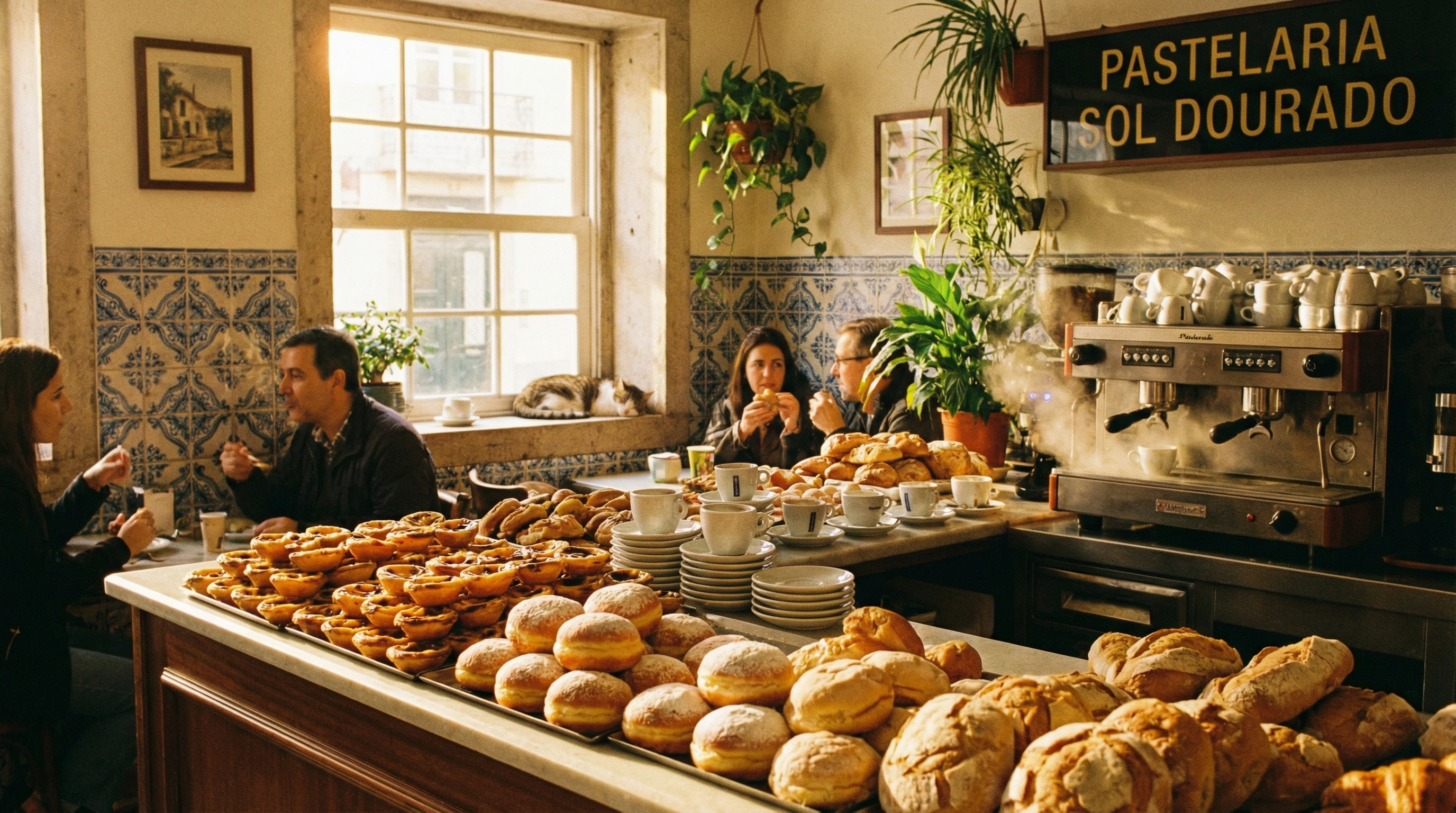
What a Typical Portuguese Breakfast Looks Like
For most people in Portugal, breakfast isn’t the main event of the day. It’s something familiar and fast, usually just enough to get you going until lunch. You’ll notice three things right away: everyone drinks coffee, there’s always a choice between sweet and savory, and most people don’t linger too long unless it’s the weekend.
In Lisbon or Porto, you’ll see folks grabbing a quick espresso (called a bica) and a pastry, often standing at the counter rather than grabbing a seat. That’s because mornings in Portugal are about keeping things light but still catching up with neighbors or the café owner. A lot of people just grab bread with butter, jam, or cheese. Those with a sweet tooth reach for a pastel de nata. On weekends, there’s a bit more time, so you might spot a couple enjoying breakfast while reading the paper or chatting for longer.
Interestingly, regional habits do exist, adding local variety. For example, in Porto, it’s common to see people ordering broa (cornbread) or regueifa (a type of soft, chewy bread) as their morning bite. These subtle differences show how breakfast, though simple, still reflects local food traditions.
Portuguese Coffee Culture Explained
Portuguese coffee culture basically fuels the entire breakfast experience. If you want to eat like a local in Portugal, learning the main coffee drinks makes everything smoother. Three main styles pop up:
- Bica: An espresso shot, served in a small cup. In Lisbon, this is what most people ask for.
- Meia de Leite: Half coffee, half steamed milk. Kind of like a Portuguese take on a café au lait.
- Galão: Served in a tall glass, this one is a lighter coffee with a good amount of milk, perfect if you prefer your morning drink less intense.
Ordering coffee is quick and to the point. You just say what you want and pay at the counter. Some small cafés may not have a detailed breakfast menu, so looking at the counter display is often the easiest way to choose. On weekday mornings, coffee is often quick and practical, although weekends can be more relaxed. It’s all about getting that caffeine fix so you can start your day. Still, it always feels social, whether you’re alone reading the news or chatting about football scores with a friend.
Another fun fact is the regional names for coffee. If you travel from Lisbon to Porto, you might hear bica called cimbalino. Even experienced visitors sometimes find these subtle differences interesting—it shows how deep coffee culture goes, even in a country as small as Portugal.
Popular Portuguese Breakfast Foods
You don’t need to chase down fancy meals to find out what locals eat in Portugal in the morning. The classic pastelaria breakfast in Portugal is centered on items you’ll see behind the glass counter at almost any bakery:
- Pastel de Nata: Not just a treat for tourists; locals grab these creamy custard tarts with their coffee, often dusted with a bit of cinnamon.
- Pão com Manteiga: Simple bread with salted butter. This could be any fresh roll or slice of pão de forma (like sandwich bread).
- Tosta Mista: A warm toasted sandwich with ham and cheese. You’ll find these pretty much everywhere in the morning.
- Savory snacks: Some cafés also sell simple savory pastries, cheese-filled items, or small sandwiches, although these vary a lot by region and bakery.
-
Other Pastries: Most bakeries have a whole selection of sugary and flaky pastries, like bolas de Berlim (donutlike treats) and palmier (crispy, sweet puff pastries).
Fresh fruit is also a common add-on in some regions, along with yogurts or small cheese portions. If you’re exploring rural areas, homemade preserves and local honey served with bread are worth tracking down. These touches offer insight into Portugal’s deep bread and dairy traditions. As you get used to pastelaria breakfast Portugal style, you’ll notice some people stick to whatever’s freshest, while others order the same thing every single morning. It becomes part of the comfort and structure of their day.
Where Locals Eat Breakfast
Many locals do eat something simple at home, especially on busy mornings, but cafés and pastelarias are still a big part of everyday breakfast culture in Portugal. In cities and towns, it is common to stop for coffee and a small bite before work. The tradition is to stop at the closest pastelaria, café, or bakery. These spots are open early, and there’s always something fresh out of the oven. Neighborhood pastelarias are part of daily life; you’re likely to see the same faces each morning, and it’s totally normal to eat standing up at the counter.
Cafés near workplaces fill up starting around 8am. Some people swing by with coworkers to grab a quick bite before the office. In smaller towns and villages, bakeries become the main meeting place for breakfast and a quick bit of news or gossip.
If you visit Portugal and go for a hotel breakfast buffet, you’ll get a bigger spread, but that’s not really what locals do. You might pay a lot more and get food that’s nowhere near as fresh as the pastelaria down the street. Touristy places right near attractions often charge double for the same thing you can find in a quieter neighborhood café.
Curious if home breakfasts exist? Some people opt for simple bread, coffee, and sometimes fruit or cheese at home, especially on lazy weekends. However, the café remains the top spot for most everyday mornings.
How Breakfast Fits Into Daily Eating Habits
Portuguese breakfast culture sticks to a light start because the midday meal is where people really go all in. Breakfast is more about waking up and connecting with the local community than filling up for the day. After a light bite in the morning, most locals wait for lunch (served between 1 pm and 2 pm) when it’s common to have the prato do dia, the daily special, usually quite filling.
That’s why most folks don’t need a heavy morning meal. The routine is designed so you’re not too hungry before lunch, but you’ve still had something fresh and tasty. Adapting to this setup can make the rest of the day in Portugal much easier, and you get to avoid feeling sluggish in the heat, especially in the summer months.
Later in the day, a small afternoon snack called a lanche is common, keeping hunger at bay before the later dinner hour. This rhythm sets Portugal apart from many northern European countries, where breakfast is often the largest meal of the morning.
Common Tourist Mistakes at Breakfast
Many visitors are surprised by how simple breakfast in Portugal can be. Here are a few common mistakes to avoid:
- Expecting eggs and bacon or “full English” style breakfasts in casual cafés; these rarely exist outside of hotels or international spots.
- Ordering a large “American breakfast” usually means you are in a tourist-focused place rather than a typical local café.
- Sitting for ages in a busy café during the morning rush isn’t typical; if you want to soak up the vibe, head in after 10 am.
- Choosing a café right next to major attractions often means you’ll pay double for a coffee and roll.
For the best results, check out places a couple streets off the main tourist routes, step up to the counter, and don’t plan to stay forever. You’ll get fresher food, spend less money, and have a more authentic experience.
Breakfast on a Budget in Portugal
Finding a cheap breakfast in Portugal is pretty easy. Breakfast in Portugal is often budget-friendly, especially if you choose a neighborhood café or pastelaria instead of a tourist-facing restaurant. A coffee with bread or a simple pastry is usually one of the cheapest ways to start the day, while a tosta mista with coffee costs a little more but is still usually affordable compared with a hotel buffet or tourist breakfast menu. Even in city centers, prices are super reasonable unless you’re in a spot that caters only to tourists. The real win is how good everything tastes for the price. The breads and pastries are baked fresh daily, the coffee is rich, and the atmosphere feels local. If you want to try something different, some cafés offer freshsqueezed orange juice for around €1 extra. It’s a great upgrade for not much money.
Many places also offer small savory pies, mini quiches, or even a slice of homemade cake as part of a breakfast deal. This variety means you can mix in some variety into your routine while sticking to a budget.
So… How Do Locals Really Start the Day?
It all comes down to a routine that’s simple, fast, and doesn’t make a fuss. Breakfast in Portugal is about a quick coffee with fresh bread or a pastry, either at home or standing at the pastelaria counter. It’s not a big meal or an event, it’s just a regular part of the day that lets people fuel up and connect before getting on with everything else. Once you get used to it, you start to see why it’s actually a pretty nice way to kick off the morning.
So, if you want to eat like a local, embrace the simplicity. You’ll fit in, spend less, and enjoy what the neighborhood has to offer.
Frequently Asked Questions
What do Portuguese people eat for breakfast?
Portuguese people usually eat a light breakfast such as coffee with bread, butter, jam, a simple pastry, pastel de nata, or a tosta mista. Breakfast is often quick and commonly eaten at a café, bakery, or pastelaria.
What is a typical breakfast drink in Portugal?
Coffee is the most common breakfast drink in Portugal. Popular choices include a bica, which is similar to an espresso, a meia de leite with coffee and milk, or a galão served in a tall glass with more milk.
Do Portuguese people eat eggs for breakfast?
Eggs are not a typical everyday café breakfast in Portugal. You may find them in hotels, brunch spots, or tourist restaurants, but a local breakfast is usually much simpler and lighter.
Is breakfast in Portugal cheap?
Breakfast in Portugal can be very affordable if you choose a local café or pastelaria. Coffee with bread or a pastry is usually cheaper than a hotel buffet or a tourist breakfast near major attractions.
Is hotel breakfast in Portugal worth it?
Hotel breakfast can be convenient if you are short on time, but it is not always the most local experience. For a more typical Portuguese breakfast, try a neighborhood pastelaria or café.