
Some of the links on this page are affiliate links, which means I may earn a small commission if you make a purchase through them, at no extra cost to you. This helps support the site and allows me to continue creating helpful content.
Porto has many different places to eat, from traditional restaurants and seafood spots to cafés, bakeries, markets, supermarkets, and casual petisco bars. The best choice depends on your budget, schedule, appetite, and the kind of food you want to try.
For a first visit, it helps to understand what each type of place is best for. Cafés and bakeries are useful for breakfast, pastries, coffee, and quick snacks. Traditional restaurants are better for dishes like francesinha, caldo verde, bacalhau, and roasted meats. Petisco bars are good for small plates and casual evening meals, while markets and supermarkets can help with budget-friendly snacks or simple lunches.
This guide explains where to eat in Porto, how to choose between different food spots, and what common mistakes to avoid when planning meals.
Quick Answer
For breakfast, coffee, pastries, or a quick snack, Porto cafés and bakeries are usually the easiest choice. For traditional dishes such as francesinha, caldo verde, bacalhau, or roasted meats, look for casual Portuguese restaurants or traditional local restaurants.
For seafood, Matosinhos is one of the most useful areas to consider, especially for grilled fish and shellfish, but it is still important to check prices before ordering. For small plates, wine, beer, and casual evening food, petisco bars are a good option. For budget snacks, picnic ingredients, fruit, bread, cheese, and local products, Porto’s markets, supermarkets, and small grocery shops can be useful.
A Porto food tour can also be helpful for first-time visitors who want several tastings with local context and less planning.
Cafés and Bakeries
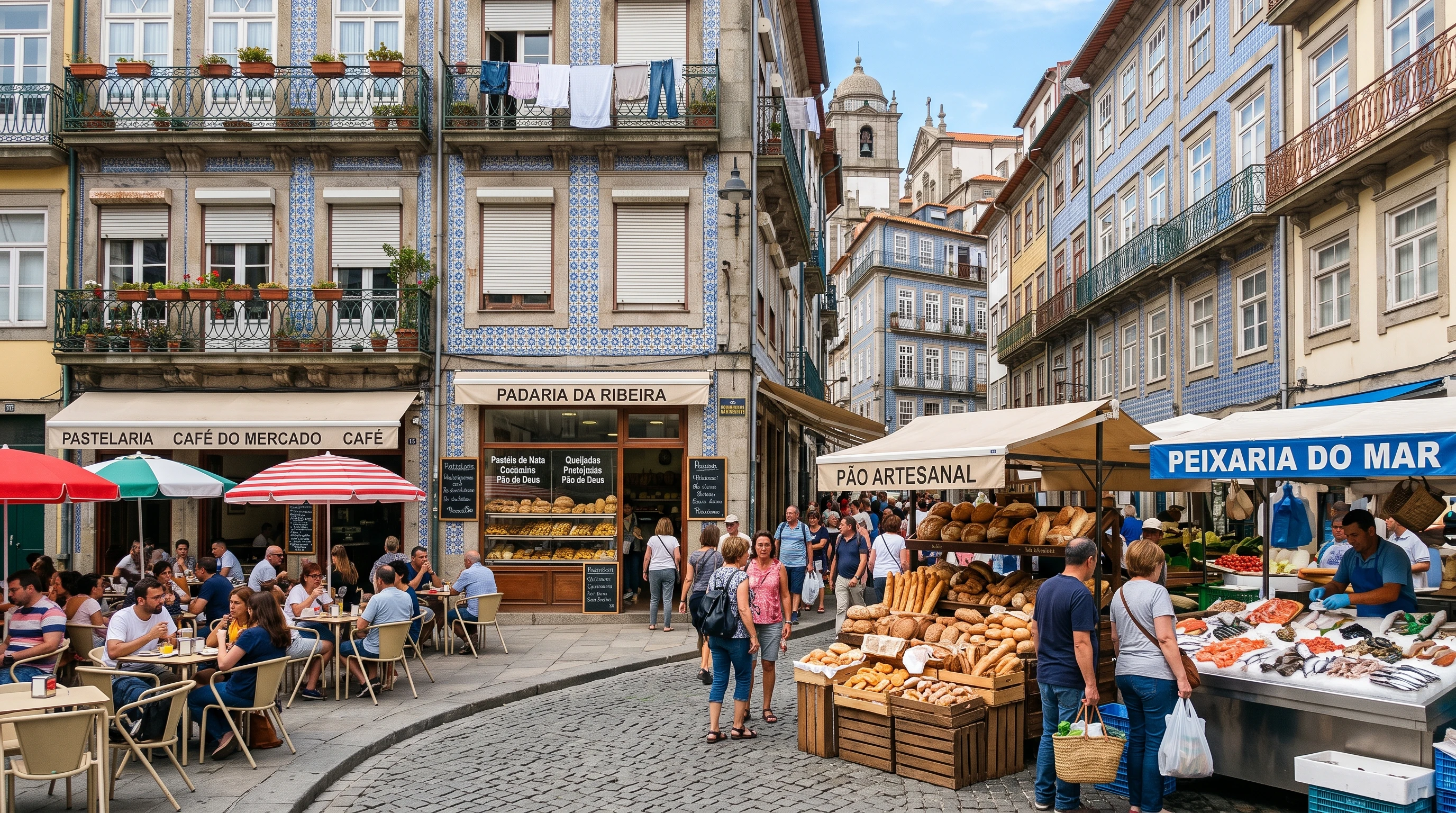
Cafés and bakeries shape Porto’s daily dining scene. Common breakfast or snack options include pastel de nata (that famous Portuguese custard tart), pão de Deus (coconut-topped bun), or bolo de arroz (sweet rice flour cake). Tosta mista, a hot ham and cheese toast, is a favorite, paired with strong espresso-coffee. Most bakeries and cafés sell snacks all day, like sandes (sandwiches) or slices of simple cake—making them practical stops for light meals. Prices are usually budget-friendly, and staff tend to be warm and quick, so these venues are great for brief breaks or pre-sightseeing fuel.
Cafés range from old-school marble-counter classics and wood-walled hideaways to modern coffee shops with fast WiFi. In some cafés, sitting at the bar may cost less than sitting outside, although this depends on the venue. Many Porto bakeries offer savory and sweet treats around the clock, so whenever hunger strikes, something comforting is always within reach.
Some favorites include Confeitaria do Bolhão, Manteigaria for pastel de nata, and Padaria Ribeiro. Cafés can also give visitors a simple look at Porto’s daily food habits.
Traditional Restaurants
Local restaurants come in all sorts: tiny family-run spots or larger places with even bigger menus. The focus lands on meat, fish, and hearty comfort foods—francesinha (that decadent sandwich with steak, sausage, ham, cheese, and spicy sauce) is best sampled where locals crowd the tables. You’ll often run into classics like caldo verde (kale and potato soup) and tripas à moda do Porto (bean and tripe stew), especially during lunch. Bacalhau (salt cod) regularly appears, sometimes grilled, baked, or as fritters known as bolinhos de bacalhau.
Menu prices vary by neighborhood; tourist-heavy zones may run higher and might not always offer the best quality. Taking a short walk away from main tourist streets—just a few blocks—can sometimes lead to better value and a more local-feeling meal. Lunchtime isn’t complete without looking for the “prato do dia” (dish of the day) specials, often including soup, bread, main dish, drink, and coffee at a wallet-friendly price.
Restaurant portions are generous; sharing starters or small dishes is common for lighter appetites. Not every spot serves dinner before 7pm, and the busiest times are around 1pm for lunch and 8pm for dinner. At places popular with locals or tourists, booking ahead is smart.
Petisco Bars and Casual Evening Food
Petiscos are the Portuguese spin on tapas—small, savory dishes that cover everything from marinated olives to grilled chouriço sausage or meat pastries. Favorite Porto petiscos include bifana (spicy pork sandwich), prego (garlic steak sandwich), rissóis (fried pockets filled with meat or shrimp), croquetes, and bolinho de bacalhau (cod fritters). Cured meats like presunto and salpicão or cheese pair perfectly with bread and a glass of vinho verde or local red wine.
Petisco bars can work well for laid-back dinners or for sampling multiple dishes—a few plates can equal a hearty meal. They’re social, lively, and usually budget-conscious. Petiscos don’t just fill late afternoon gaps—they can be the main event. Prices per dish are smaller, so building a meal of several makes for a relaxed and varied evening.
Some of Porto’s standouts for petiscos are Taberna Santo António, Casa Guedes, and the bars along Rua das Flores and Rua Galeria de Paris.
Seafood Restaurants and Matosinhos
For seafood, many visitors look toward Matosinhos. This suburb—only a short metro from Porto’s downtown—has seafood restaurants lining its main street, many grilling today’s catch over open coals. Sardines, sea bass, dourada (sea bream), octopus, shellfish, and cataplana seafood rice are tried-and-true orders. Porto restaurants along the river and in nearby neighborhoods also feature seafood-heavy menus.
It is important to check how fish is priced, since it’s often sold by weight, not portion; getting an estimate before ordering helps avoid surprises when the bill arrives. In the summer, seafood spots can get packed, so an early meal or a reservation is a good idea.
Famed Matosinhos stops include O Gaveto, Tito 2, and A Marisqueira de Matosinhos. In the city, Adega São Nicolau and Taberna dos Mercadores often come recommended for fish and shellfish plates.
Opening hours, menus, prices, and popularity can change, so it is always worth checking recent reviews and booking details before choosing a specific place.
Food Markets in Porto
Nothing shines a light on Porto’s food culture like its markets. Mercado do Bolhão—the city’s most notable indoor market—recently got a well-deserved facelift, and now offers fresh produce, butchers, fishmongers, flowers, and cafés all under one roof. Mercado Bom Sucesso and Mercado Beira-Rio are smaller options, with vendors selling fruit, bread, cheese, cured meats, pastries, and ready-to-eat regional snacks.
Markets are perfect for picking up fresh ingredients for budget meals or picnics. They can also show what is in season and introduce visitors to local products. There’s usually space to sit and enjoy a baked treat or coffee while watching the bustle. For more detail, see Portuguese Food Markets.
Supermarkets and Small Grocery Shops
For meals on the go or simple food at accommodation, Porto supermarkets and tiny grocers are a big help. Chain stores like Continente, Pingo Doce, and Minipreço can be found all over town and stay open late. Local mercearias stock everyday items—bread, cheese, fruit, yogurt, preserves, snacks, and even cheap wine. Ready-made sandwiches and store-brand sweets fill in any gaps.
Supermarkets can help keep food costs lower and are useful for finding local snacks, canned seafood, seasonal fruit, bread, cheese, and simple ready-made foods. Want more ideas? What to Buy at Portuguese Supermarkets is a handy reference. Staff are used to tourists, and packaging usually features plenty of images, so basic items are usually easy to identify even without strong Portuguese.
Should You Take a Porto Food Tour?
First-timers or those short on time will find food tours in Porto a useful way to sample local specialties with minimal planning. Most tours mix sweet and savory: local pastries, petiscos, cheese, meats, wines, and often a main course like francesinha or seafood. Guides usually share background about local dishes, cafés, markets, wine, and eating habits. A tour may cost more than eating independently, but it can be a simple way to sample several foods in one route. Many tour providers offer vegetarian swaps or adjust for dietary needs if requested in advance.
If you want to try several Porto foods with local context, a guided Porto food tour can be a simple way to sample pastries, petiscos, wine, and local dishes without planning every stop yourself.
Common Mistakes to Avoid
- Picking only cafés and restaurants on popular tourist streets, which can be pricier and less flavorful.
- Missing out on bakeries and cafés for breakfast, snacks, or simple meals.
- Overlooking fish and seafood prices before ordering—sometimes these are much higher per kilo than expected.
- Assuming table snacks are free: Bread, olives, cheese, or other small items may be charged if eaten. If you do not want them, leave them untouched and ask the server politely.
- Eating every meal at the same type of eatery instead of mixing things up: cafés for breakfast, markets for lunch, and either a petisco bar or a classic restaurant for dinner.
- Ignoring food markets and supermarkets for easy on-the-go snacks or cheap meals.
- Assuming food service is available all day long—many places stop serving mid-afternoon.
Related Guides
- What to Eat in Porto
- What to Eat in Lisbon
- Portuguese Breakfast Culture
- Portuguese Café Culture
- Portuguese Snacks to Try
- Portuguese Petiscos Explained
- Eating in Portugal on a Budget
- What to Buy at Portuguese Supermarkets
- Best Food Souvenirs from Portugal
Frequently Asked Questions
Where should first-time visitors eat in Porto?
First-time visitors can get a good overview of Porto food by mixing cafés, bakeries, traditional restaurants, petisco bars, markets, and one seafood-focused meal. This gives a better sense of the city than eating every meal in the same type of place.
Is Porto good for cheap food?
Porto can be good for budget-friendly food if you use bakeries, cafés, markets, supermarkets, and dish-of-the-day lunch menus. Prices are usually higher in very tourist-heavy areas, riverside restaurants, and seafood-focused places.
Where can you eat francesinha in Porto?
Francesinha is served in many casual restaurants and cafés across Porto. Quality, sauce style, portion size, and price vary, so it is worth checking recent reviews, menus, and whether the restaurant is known for the dish.
Is Matosinhos good for seafood?
Matosinhos is a popular area for grilled fish and seafood near Porto. It is easy to reach from the city by public transport, but visitors should still check menus, fish prices, opening hours, and recent reviews before choosing a restaurant.
Are Porto cafés good for breakfast?
Porto cafés are usually good for simple breakfasts, coffee, pastries, toast, sandwiches, and quick snacks. They can be useful for budget-friendly meals, short breaks, and casual food throughout the day.
Should you visit Mercado do Bolhão?
Mercado do Bolhão can be worth visiting if you want to see a central Porto market with produce, food stalls, cafés, flowers, and local products. It is especially useful for snacks, browsing, and getting a feel for everyday food culture.
Can you eat well in Porto without a food tour?
Yes, you can eat well in Porto without a food tour by using cafés, bakeries, markets, traditional restaurants, and petisco bars. A food tour can still be useful if you want local context, several tastings, and less planning.
What is the best area for food in Porto?
Good food areas in Porto include Baixa, Bolhão, Rua das Flores, Ribeira, and nearby Matosinhos for seafood. The best area depends on whether you want cafés, traditional food, markets, wine experiences, or seafood.
Where to Eat in Porto: Final Tips
Porto is easy to explore through cafés, bakeries, markets, traditional restaurants, petisco bars, and seafood-focused areas. For a first visit, it helps to mix different food experiences instead of relying only on tourist streets or one type of restaurant.
A simple day of eating in Porto could include coffee and pastries at a café, a market or bakery snack, a traditional lunch, and petiscos or seafood in the evening. Food tours can also be useful for visitors who want several tastings with local context.
The best approach is to check menus, compare prices, respect local meal times, and choose the type of place that fits your budget, appetite, and schedule.