
Some of the links on this page are affiliate links, which means I may earn a small commission if you make a purchase through them, at no extra cost to you. This helps support the site and allows me to continue creating helpful content.
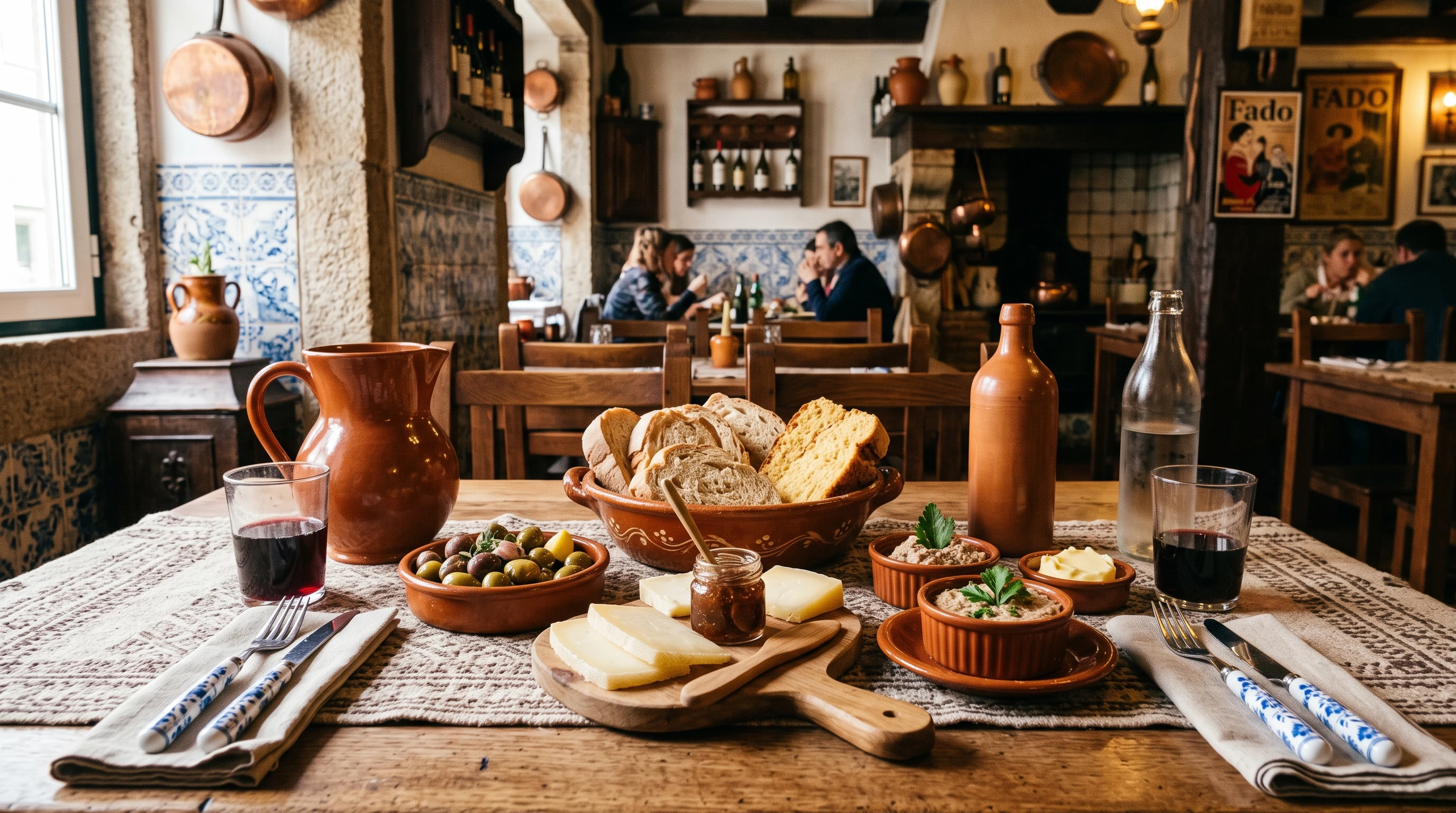
First-time visitors eating out in Portugal may notice bread, olives, butter, cheese, pâté, or other small snacks arriving at the table before they order. In many Portuguese restaurants, these table items are known as couvert. Couvert can be confusing because it may look like a free welcome snack, but it is usually charged if you eat it. The charge is normally small for bread or olives, but it can be higher if cheese, cured meats, seafood, or other extras are included.
This guide explains what couvert means in Portugal, whether it is free, how to refuse it politely, what items are commonly included, and how to avoid surprises on the bill.
Quick Answer
Couvert in Portugal usually means small table snacks such as bread, olives, butter, cheese, pâté, or cured meats. These items may arrive before your main order is taken, but they are not always free. If you eat the couvert, expect to see a small charge on the bill. If you do not want it, leave it untouched or politely ask the server to remove it. To avoid confusion, check the menu or ask how much the couvert costs before eating it.
What Does Couvert Mean in Portugal?
In Portugal, couvert usually refers to small items placed on the table before or at the beginning of a meal. These may include bread, olives, butter, cheese, pâté, cured meats, or other simple snacks. The exact items vary by restaurant. A simple local restaurant may only bring bread and olives, while a seafood restaurant may offer fish pâté, small seafood snacks, or other starters. In some places, each item is priced separately. In others, the menu may show one couvert price. Couvert is not necessarily meant to trick visitors. It is a common restaurant practice, but it can surprise travelers who expect bread or olives to be complimentary. The safest approach is simple: check the menu, ask the price, or leave the items untouched if you do not want them.
Is Couvert Free in Portugal?
Couvert is usually not free in Portugal. If you eat the bread, olives, butter, cheese, pâté, or other items placed on the table, they may be added to the bill.
Simple items such as bread or olives are often inexpensive, while cheese, cured meats, seafood snacks, or larger portions can cost more. The price should usually appear on the menu, either as “couvert” or as separate items such as pão, manteiga, queijo, or azeitonas.
If you are unsure, ask: “Quanto custa o couvert?” This means “How much is the couvert?” If you do not touch the items, they generally should not be charged.
What Should You Do If You Do Not Want It?
If you do not want the couvert, leave it untouched or ask the server to remove it. This is normal and should not be seen as rude.
Useful phrases include:
“Não, obrigado.” — No, thank you.
“Não, obrigada.” — No, thank you.
“Pode retirar, por favor?” — Could you remove it, please?
Use “obrigado” if you are male and “obrigada” if you are female.
It is best to say something soon after the items arrive, so there is less confusion when the bill comes. If you are unsure what is included or charged, ask the server before eating it.
Common Couvert Items
| Item | What It Is | Notes |
|---|---|---|
| Bread (Pão) | Fresh loaves, rolls, or slices | Usually white, sometimes corn or regional varieties |
| Olives (Azeitonas) | Bowl of marinated green or black olives | Sometimes flavored with garlic or herbs |
| Butter (Manteiga) | Individually wrapped portions or small dishes | Often salted, sometimes housemade |
| Cheese (Queijo) | Slices or wedges of local cheeses | Sheep, goat, or cow’s milk, regional specialties |
| Pâté | Tuna, sardine, or liver spread | Often comes in a small package or ramekin |
| Cured Meats | Chouriço, presunto (ham), or salpicão (smoked sausage) | Less common at casual spots |
| Seafood Starters | Small servings of marinated octopus, codfish fritters, mussels | Mainly in seafood restaurants or coastal regions |
Some restaurants may also offer regional items, especially in coastal areas or traditional restaurants. If something looks more substantial than bread or olives, check the price before eating it.
Is Couvert the Same as a Starter?
Couvert and starters (entradas) both arrive before the main course, but they aren’t always the same thing. Couvert is usually placed on the table automatically, without being ordered. Starters are chosen from the menu, like soup, shrimp, or tapas plates. Occasionally, a menu will list couvert options under the starters section, so it pays to check.
It’s common to have couvert on the table, and then order an actual starter from the menu. If you only want one, just let the server know. Some places keep things clear by listing both separately on the menu. This distinction helps avoid confusion for international visitors, who might expect complimentary snacks as in other countries. Checking the menu helps avoid confusion, especially in restaurants where both couvert and starters appear separately.
Find food tours in Lisbon, Porto, and other Portuguese cities.
How to Check the Bill
When it’s time to pay, check the bill for terms like “couvert” (cover charge), “pão” (bread), “manteiga” (butter), “queijo” (cheese), “azeitonas” (olives), or “entradas” (starters/appetizers). The charge may be listed together as “couvert” or each item might have its own line. Reviewing the bill before paying is totally normal, and most servers expect it. If you see a charge for something you did not eat or touch, you can point it out and ask it to be removed.
If you are with a group, check whether the couvert is charged per person or per table. If something is unclear, ask before paying.
Common Mistakes to Avoid
- Assuming bread and olives are always free.
- Eating cheese, seafood snacks, or cured meats without checking the price.
- Thinking couvert is the same as a free welcome snack.
- Forgetting to ask before eating.
- Checking the bill only after paying.
- Assuming every restaurant has the same couvert policy.
- Touching items you do not want and then disputing the charge later.
The easiest way to avoid confusion is to check the menu, ask the server, or leave the items untouched.
Related Guides
- How to Order Food in Portugal
- Prato do Dia in Portugal
- Eating in Portugal on a Budget
- Best Cheap Eats in Porto
- Portuguese Petiscos Explained
- Portuguese Snacks to Try
- What to Eat in Lisbon
- What to Eat in Porto
Frequently Asked Questions
What is couvert in Portugal?
Couvert refers to small table snacks such as bread, olives, butter, cheese, and sometimes other items placed on the table in Portuguese restaurants, usually before your meal arrives. If you eat them, they’re generally charged on your bill.
Is couvert free in Portugal?
Most couvert items are not free. The cost is usually low for bread and olives, but can be higher for cheese, seafood, or cured meats. Check the menu or ask your server if you’re unsure.
Are bread and olives free in Portuguese restaurants?
Not usually. Bread and olives often come with a small charge if eaten. If left untouched, they generally aren’t charged.
Can you refuse couvert in Portugal?
Yes, you can. Politely ask the server to remove it or just leave it untouched. It’s normal and won’t offend anyone.
Is it rude to send couvert back?
It’s not rude at all. Staff regularly remove items from tables if guests don’t want them.
What items are usually included in couvert?
Bread, olives, butter, cheese, pâté, cured meats, and sometimes seafood snacks. Offerings vary by region and restaurant.
How do you avoid paying for couvert?
Leave the couvert items untouched on the table or ask for them to be taken away. Check the menu for prices, and review your bill before paying.
Is couvert the same as a starter?
No, couvert is usually placed on the table automatically and is often less elaborate. Starters must be ordered from the menu and are typically larger or more complex dishes.
Bottom Line
Couvert is a common part of eating out in Portugal. It usually includes small table items such as bread, olives, butter, cheese, pâté, cured meats, or other snacks brought before or at the start of the meal. These items are usually charged if you eat them, even if you did not specifically order them. If you do not want couvert, leave it untouched or politely ask the server to remove it. For first-time visitors, the best approach is simple: check the menu, ask the price if you are unsure, and review the bill before paying. Understanding how couvert works can help you enjoy restaurants in Portugal without confusion or unwanted charges.