
Some of the links on this page are affiliate links, which means I may earn a small commission if you make a purchase through them, at no extra cost to you. This helps support the site and allows me to continue creating helpful content.
Lisbon is one of the easiest places in Portugal to explore local food, especially for first-time visitors. The city has cafés, bakeries, seafood restaurants, petiscos bars, food markets, and supermarkets where travelers can try everything from pastries and sandwiches to salt cod, grilled fish, small plates, wine, and local coffee.
With so many choices, it can be hard to know what is worth ordering first. Some dishes are everyday Lisbon classics, while others are seasonal, regional, or easier to find in certain neighborhoods. Prices and quality can also vary, especially around busy tourist streets.
This simple Lisbon food guide covers what to eat in Lisbon, where to try different foods, which snacks are good for budget travelers, and when a guided food tour may be useful for first-time visitors.
Quick Answer: What Should You Eat in Lisbon?
Some of the best foods to try in Lisbon include pastel de nata, bifana, prego, bacalhau, grilled sardines, seafood rice, octopus, clams, petiscos, caldo verde, piri piri chicken, Portuguese cheese, pão de Deus, ginjinha, vinho verde, Port wine, and local coffee.
For a simple first visit, start with a pastel de nata and coffee, try a bifana or prego for a quick lunch, order seafood or bacalhau for a traditional meal, and consider petiscos if you want to sample several small dishes in one sitting.
Best Foods to Try in Lisbon
| Food | Type | Best For |
|---|---|---|
| Pastel de nata | Sweet pastry | Breakfast or snack |
| Bifana | Pork sandwich | Quick lunch |
| Bacalhau | Salt cod dish | Traditional meal |
| Grilled sardines | Seafood | Summer/local classic |
| Petiscos | Small plates | Casual dinner |
| Ginjinha | Cherry liqueur | Local drink experience |
Pastel de Nata and Lisbon Pastries
Pastel de nata is one of the easiest Lisbon foods to try, especially for breakfast or a quick coffee break. This custard tart is crispy, flaky, and creamy at the same time. A true classic. Well-known places such as Manteigaria and Pastéis de Belém are popular with visitors, but many neighborhood pastelarias also sell good fresh natas. A common way to try one is with a bica, or Portuguese espresso, at a café or pastelaria.
Lisbon has a lot more than natas, though. A few more pastries worth checking out:
- Pão de Deus – Soft roll with coconut topping, chewy and sweet
- Bolo de arroz – Light rice cake, wrapped in a paper collar. Not very sweet; easy on the stomach for breakfast
- Simple bakery snacks – Croissants, queijadas, and other little cakes. These are best early in the day, straight from the bakery or café counter
For more detail, see the guides on Portuguese Breakfast Culture and Portuguese Desserts & Sweets.
Seafood to Try in Lisbon
Portugal is packed with coastline, and Lisbon’s seafood is a highlight for locals and visitors. Prices and freshness vary by season, neighborhood, and type of place, so for better value, it can help to compare menus and avoid choosing only restaurants on the busiest tourist streets.
Some simple seafood dishes to start with:
- Grilled sardines – Usually served with boiled potatoes and peppers, especially good from May to October
- Bacalhau (salt cod) – Served as fritters, casseroles, or salads; bacalhau à Brás is one of the most approachable versions for first-time visitors.
- Octopus (polvo) – Tender and flavorful, roasted or grilled with olive oil and potatoes
- Seafood rice (arroz de marisco) – Saucy rice loaded with fresh shellfish
- Clams “à bulhão pato” – Steamed clams in garlic, olive oil, and cilantro
- Simple grilled fish – Ask for “peixe grelhado” and you’ll usually get the day’s catch, grilled simply with olive oil and lemon
Remember: It’s pretty normal to see prices per kilo or per portion, so double check before you order. For more seafood ideas, compare menus carefully and check what is seasonal before ordering. If you want an even deeper jump into the local seafood scene, Lisbon’s coastal location means many restaurants source fresh catches daily for a varied menu. Seasonal options, like sardines or goose barnacles, offer special treats. Don’t be shy about asking your server for their recommendations on what’s freshest that day—locals do this all the time.
Traditional Lisbon Meals and Petiscos
Petiscos are Portugal’s answer to tapas. Think small, sharable plates perfect for a relaxed dinner or a fun way to sample lots of local flavors with friends. On a menu, you’ll spot both hot and cold options, and it’s really common to mix and match. Petiscos spots range from super traditional to ultramodern in Lisbon, so it’s easy to find one that fits your vibe and budget.
- Bacalhau (often as small fritters or salads)
- Croquetes – Fried beef or fish croquettes, crispy and filling
- Rissóis – Pastry pockets, often with shrimp or chicken
- Chouriço – Smoky, spicy sausage, sometimes flambéed at the table
- Sheep or goat cheese – Served with bread or olives for snacking
- Olives – Often dropped on the table as soon as you sit down (just know you’ll usually pay a small fee)
Most traditional restaurants offer petiscos menus, but specialized bars are where you’ll get the best range. Curious about petiscos? Have a look at Portuguese Petiscos Explained for all the details. If you want to take a break from meat and fish, many petiscos places also serve roasted peppers, marinated carrots, cod fritters, and mushroom dishes for plant-based travelers.
Quick Snacks and Budget Foods
Eating on the move or trying to keep your spending light? Lisbon has tons of tasty cheap eats. Here are a few practical snacks and budget-friendly foods to look for:
- Bifana – Pork sandwich, quick and satisfying, often sold at snack bars and counters
- Prego – Steak sandwich, usually a bit juicier than bifana. Sometimes available with cheese or a fried egg (prego especial)
- Bakery snacks – Savory turnovers, croissants, or small cakes
- Supermarket picnic food – Grab bread, cheese, cured meats, fresh fruit, or yogurt for an easy park lunch
- Canned seafood – Sardines, mackerel, tuna, or octopus. Found in supermarkets or specialty shops, and honestly tasty with good bread
- Fresh fruit – Local markets and corner shops always have seasonal, flavorful fruit
- Cafés – Simple “prato do dia” (dish of the day) lunches, or a galão (milky coffee) and toast
Check out these guides for more snack inspiration: Portuguese Snacks to Try and Eating in Portugal on a Budget. If you’re exploring neighborhoods like Alfama and Bairro Alto, keep an eye out for snack bars—small, family-run places often have the freshest bifanas and pastel de nata.
Drinks to Try in Lisbon
Lisbon has a drink for every mood, and it’s pretty fun to sip your way through local favorites. Coffee and wine are the default, but there are a few other classics you might see on menus or markets too:
- Portuguese coffee – Ask for a bica (espresso), garoto (macchiato), or galão (milky coffee)
- Vinho verde – Light, crisp, and slightly bubbly. A warm weather must
- Red and white wine – Wines from Alentejo or Douro are easy to find and usually a good value
- Port wine – Sweeter, higher alcohol wine often served as a small glass with dessert
- Beer (cerveja) – Super Bock and Sagres are standard, light and cold
- Ginjinha – Ginjinha is a small sour cherry liqueur often served as a quick drink at traditional bars or kiosks
If you’re picking up bottles to take home, check customs rules for your country and make sure you pack carefully. In some cafés, counter service may be cheaper than table service, but this depends on the place. And of course, drink responsibly. For those looking for alcohol-free choices, most cafés serve homemade lemonades and there’s a growing scene of artisanal juices and herbal teas using local ingredients.
Food Markets and Supermarkets in Lisbon
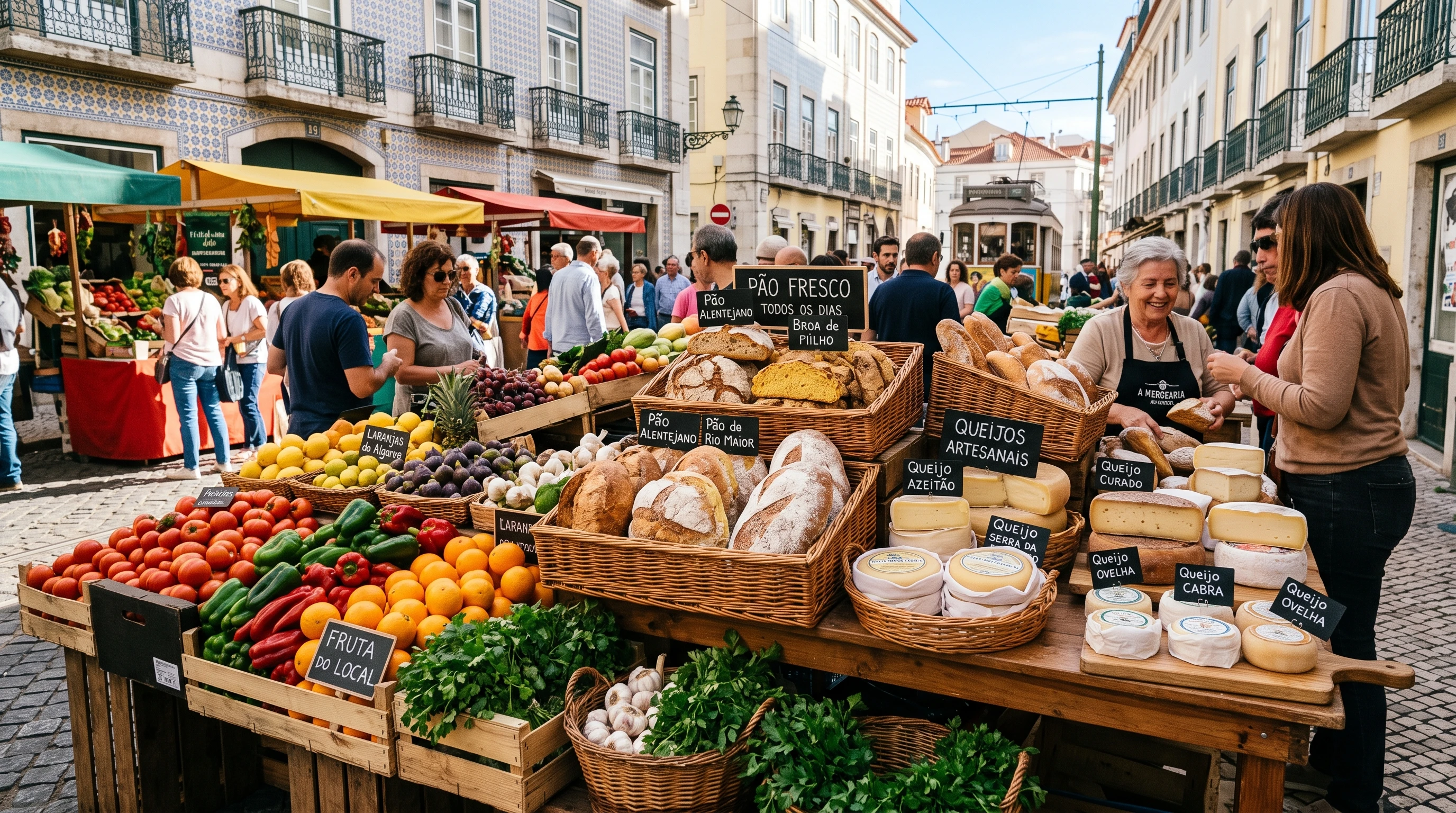
Lisbon has several useful food markets and market halls where visitors can try local dishes, snacks, seafood, pastries, and drinks in one place. Places like Mercado da Ribeira (Time Out Market) or Mercado de Campo de Ourique let you snack on everything from pastries to seafood at small stalls. These markets can include both affordable options and higher-priced choices, depending on the stall and location. Corner bakeries, cheese shops, and small grocery stores can also be useful for snacks, picnic food, and edible souvenirs.
If you pop into a supermarket, you’ll find great deals on bread, cheese, fruit, yogurts, and those famous Portuguese canned sardines. Larger supermarkets can be useful for practical edible souvenirs such as coffee, wine, canned seafood, packaged sweets, and biscuits.
Want to find neighborhood markets? Look for Mercado de Alvalade or Mercado de Arroios, which can feel more local than the busiest central food halls. You may find vendors selling local honey, jams, chouriço, regional spices, and other food products that can work as gifts.
For more, see Portuguese Food Markets and What to Buy at Portuguese Supermarkets.
Should You Take a Lisbon Food Tour?
If you want to taste a bunch of Lisbon foods and hear some stories behind traditional dishes, guided food tours are worth checking out. You’ll usually hit several local spots in a few hours, trying pastries, cheese, petiscos, seafood, and drinks with a local guide keeping it fun and easy. It’s a chill way to get your bearings and taste a range of things without having to plan every stop. Food walks in neighborhoods like Mouraria or Graça can also help you spot hidden gems and small family-run places you’d miss on your own.
If you want to try several Lisbon foods with local context, a guided food tour can be a simple way to sample pastries, petiscos, seafood, wine, and neighborhood favorites without planning every stop yourself.
Common Mistakes to Avoid
- Sticking to restaurants near major tourist streets (food is often pricier and less tasty. Wandering a few blocks away is usually worth it)
- Assuming every place marked “traditional” offers a local or good value meal (always check reviews or ask a local)
- Skipping the morning bakery or café culture (you’ll miss some of Lisbon’s best bites)
- Forgetting to check seafood prices by the kilo or portion before ordering
- Showing up for dinner before 7:30pm and finding the restaurant empty (locals eat late. 8:00pm or later is normal for proper dinner atmosphere)
- Assuming table snacks (bread, cheese, olives) are free. Ask or check the menu, as you often pay a couple euros extra
- Trying to pack fresh pastéis de nata or other delicate pastries for long journeys. They taste best right after baking and may not survive the trip
Related Portugal Food Guides
Want to dig into Portuguese food culture? Try these:
- Portuguese Snacks to Try
- Portuguese Breakfast Culture
- Portuguese Café Culture
- Portuguese Desserts & Sweets
- Portuguese Petiscos Explained
- Eating in Portugal on a Budget
- What to Buy at Portuguese Supermarkets
- Best Food Souvenirs from Portugal
Frequently Asked Questions
What food is Lisbon famous for?
Lisbon is especially known for pastel de nata, bacalhau dishes, grilled sardines, bifana sandwiches, seafood rice, petiscos, and ginjinha. The city is also a good place to try Portuguese coffee, pastries, seafood, and wine.
What should first-time visitors eat in Lisbon?
First-time visitors can start with pastel de nata and coffee, then try a bifana or prego sandwich, bacalhau, grilled sardines in season, seafood rice, petiscos, and a small glass of ginjinha. Bakeries, cafés, seafood restaurants, and markets are useful places to begin.
Is Lisbon good for seafood?
Yes, Lisbon can be a good city for seafood, including grilled fish, sardines, octopus, clams, seafood rice, and cod dishes. Quality and prices vary by restaurant, season, and location, so it is worth checking menus carefully before ordering.
What is a good cheap meal in Lisbon?
Good budget-friendly meals in Lisbon can include bifana or prego sandwiches, bakery snacks, prato do dia lunches, simple café meals, supermarket picnic food, bread, cheese, fruit, and canned seafood. Prices are usually higher in very tourist-heavy areas.
Should you take a food tour in Lisbon?
A Lisbon food tour can be useful for first-time visitors who want to try several dishes with local context in a short time. It can also help if you prefer not to plan every food stop yourself. Independent travelers can still eat well by using cafés, bakeries, markets, and local restaurants.
What desserts should you try in Lisbon?
Pastel de nata is the classic dessert or sweet snack to try in Lisbon. Other options include pão de Deus, bolo de arroz, queijadas, travesseiros, and seasonal pastries from local bakeries.
Can you eat well in Lisbon on a budget?
Yes, it is possible to eat well in Lisbon on a budget by using bakeries, cafés, snack bars, supermarkets, markets, and prato do dia lunch menus. For better value, compare menus and avoid relying only on restaurants in the busiest tourist streets.
Wrapping Up
Lisbon is a great city for first-time visitors who want to explore Portuguese food without making the trip complicated. A good food plan can include cafés, bakeries, seafood restaurants, petiscos bars, markets, and supermarkets, depending on your budget and travel style.
Start with simple classics such as pastel de nata, bifana, bacalhau, grilled sardines in season, seafood rice, petiscos, ginjinha, and Portuguese coffee. Fresh pastries and seafood are best enjoyed during the trip, while packaged sweets, coffee, wine, and canned seafood can work as souvenirs if your travel rules allow.
For the best experience, mix popular Lisbon foods with everyday local places, check seafood prices before ordering, and consider a guided food tour if you want to sample several dishes with extra context.