
Seeing an Italian restaurant menu for the first time can feel overwhelming. I still remember sitting in a small trattoria in Rome, staring at words like “antipasti” and “primi” with no idea where to start. Do you need to order everything? What do these sections even mean? And how do you avoid picking the wrong dish? The good news is that Italian menus are actually very simple once you understand the basics. In this guide, I’ll show you exactly how to read an Italian menu, what the key sections mean, and how to confidently choose a meal without stress.
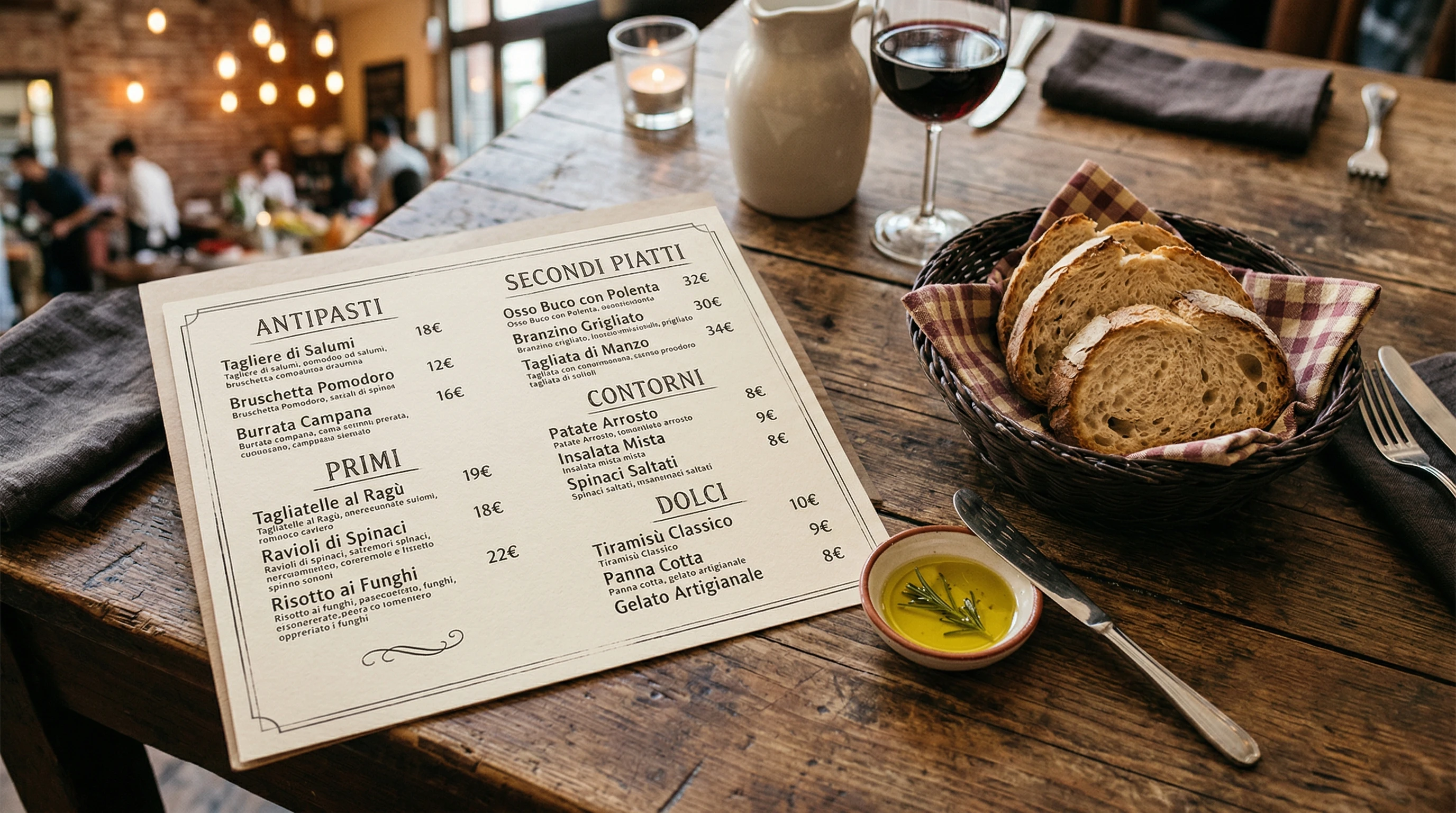
What Do Italian Menu Sections Mean?
If you’re trying to understand how to read an Italian restaurant menu as a tourist, learning these sections is the first step. The structure of an Italian menu is different from what I was used to growing up. Instead of just “starters” and “mains,” Italian menus are usually divided into specific sections, and it helps to know what each means. Here’s a breakdown of the main parts you’ll see and some dish examples to make things even clearer.
- Antipasti: These are appetizers or “before the meal” plates. Think small portions, meant to start your appetite. Dishes like bruschetta (grilled bread with tomatoes), prosciutto e melone (cured ham and melon), marinated vegetables, or cheese plates often show up here.
- Primi (Primi Piatti): The first main course. Most of the time, this means pasta, risotto, gnocchi, or soup. Examples include spaghetti alle vongole (spaghetti with clams), risotto ai funghi (mushroom risotto), and lasagne al forno (ovenbaked lasagna).
- Secondi (Secondi Piatti): The main course, usually focused on proteins. This could be meat, fish, or poultry. Some examples are pollo alla griglia (grilled chicken), bistecca alla fiorentina (Florentinestyle steak), or branzino al forno (ovenbaked sea bass).
- Contorni: Side dishes meant to go with the secondi. These are usually vegetables or potatoes, served on a separate plate. You’ll often see patate arrosto (roast potatoes), verdure grigliate (grilled vegetables), or insalata mista (mixed salad).
- Dolci: Dessert section. Here’s where you find tiramisu, panna cotta, gelato, or other sweet treats.
Menus can also include sections for bread (pane), cheese (formaggi), or beverages, but those main five sections cover most of what you’ll encounter in a sit down restaurant.
Common Italian Menu Words Explained
Even after I figured out the main menu sections, I found myself puzzled by certain words added to dish names. Learning what they really mean saves time and helps avoid surprises, so here are a few I think every traveler should know:
- Al forno: Means “baked in the oven.” For example, melanzane al forno is ovenbaked eggplant.
- Alla griglia: Indicates that something is grilled, usually over an open flame. Pesce alla griglia is grilled fish.
- Al pomodoro: Means “with tomato.” A pasta dish “al pomodoro” is served with tomato sauce.
- Bianco / Rosso: “Bianco” means “white,” often referring to the absence of tomatoes in the sauce (for example, pizza bianca). “Rosso” means “red” and typically means the sauce contains tomato.
- Fresco: Fresh. You might see “fresco” in dishes with fresh seasonal ingredients, like formaggio fresco (fresh cheese).
- Ripieno: Stuffed, like peperoni ripieni (stuffed peppers).
- Cotto / Crudo: “Cotto” means cooked, “crudo” means raw. Prosciutto crudo is uncooked, cured ham, while prosciutto cotto is cooked ham.
- Affumicato: Smoked. For example, salmon affumicato is smoked salmon.
- Piccante: Spicy.
Reading through dish names, picking out these little words helped me decide what sounded appetizing and what I might want to skip, especially if I wasn’t in the mood for spicy food or didn’t want baked dishes. Some of these words also pop up in Italian cuisine outside of restaurants, so it’s handy to keep them in mind when shopping or just chatting about food with locals.
How To Quickly Understand Any Menu (Simple Strategy)
With hundreds of choices and unfamiliar words, I used to get stuck staring at the menu too long. Over time, I found a simple way to narrow things down fast:
- Scan the sections. I look at how the menu is divided to see the structure. I’m not trying to read every dish just yet.
- Look for familiar ingredients. I look for words I recognize or ingredients I know I like (like “pomodoro” for tomato, “pollo” for chicken, or “pasta”).
- Pick 1–2 dishes only. I choose one “main” from either the primi or secondi section, and maybe an antipasto or contorno if I’m extra hungry or curious. I never feel pressured to order everything.
Following this method keeps things simple and makes my meal more enjoyable. I try not to overthink it. Sometimes, I even just choose based on what sounds exciting or what I hear other tables ordering. If I’m with friends, we might even each pick something different and share, which is a great way to get a taste of more menu items.
If you’re still unsure what to actually choose, check out my guide on what to order in Italy for the first time.
Quick Menu Cheat Sheet
- Antipasti: Starters/appetizers
- Primi: First course (pasta, risotto, soup)
- Secondi: Main course (meat, fish, or eggs)
- Contorni: Side dishes (vegetables, salad, potatoes)
- Dolci: Desserts
- Al forno: Ovenbaked
- Alla griglia: Grilled
- Ripieno: Stuffed
- Bianco/Rosso: Without/with tomato
- Fresco: Fresh
I keep this list handy, even as a photo on my phone, for a quick reference anytime I look at a new menu. Having these words at your fingertips really takes the edge off if you feel unsure.
What Tourists Should Look For On A Good Menu
After a few meals across different towns in Italy, I started to look for certain signs that meant the menu was worth paying attention to. Here’s what I think really matters if you want an authentic meal:
- Short menu = better food. A small menu is usually a sign that the kitchen is focused and the food is made fresh. When I see pages and pages of choices, I get a little wary.
- Seasonal dishes. I love seeing items marked “di stagione” (seasonal). That often means better flavor and a glimpse of local food traditions.
- Handwritten specials. When a menu has a small chalkboard or a printed special that’s different each day, I find those dishes are often the best of the night.
- Local dishes. Menus that track down regional specialties feel more genuine to me. For example, in Bologna, I look for “tagliatelle al ragu” rather than spaghetti Bolognese. In Naples, pizza margherita is a classic.
Spotting these clues can really help you avoid touristfocused places and find meals that local Italians actually eat. Joining in on the local dining rhythm—like eating dinner a little later—is also a fun way to step into Italian life for an evening. Before you order, it’s also worth knowing what to avoid — not every menu leads to a great experience.
Red Flags On Italian Menus
Some menus give away their touristy vibe right away. I learned to watch out for a few warning signs over my trips:
- Huge menus. If a place offers pizza, sushi, burgers, and ten types of pasta all on one menu, I know it’s probably not making any of them particularly well.
- Too many cuisines. Real Italian places stick to Italian food. If I see Chinese spring rolls or American club sandwiches, I’m in the wrong spot for Italian flavor.
- Photos of food. Most traditional restaurants don’t have glossy pictures next to every item. A few photos for specials is fine, but pages of images tend to mean lower quality.
- Menus with English (and twelve other languages). Some translation is helpful, but a menu that’s more English than Italian is usually designed for tourists, not locals. These places may not serve the most authentic food or best prices.
I always step back and look for a restaurant full of Italians, where I hear lots of local language and see handwritten signs or blackboards. Those places usually have the best food and atmosphere. The whole dining experience feels richer when you’re surrounded by locals enjoying themselves.
Example: How I Read A Menu In Italy
Imagine sitting down at a small trattoria in Florence. Here’s how I actually read and choose from the menu:
- I check the sections just to know where they are: “antipasti,” “primi,” “secondi,” “contorni,” “dolci.”
- The “antipasti” offers crostini toscani (liver pate toast) and bruschetta. I’m not that hungry, so I skip to “primi.”
- I see “pappardelle al cinghiale” (wild boar pasta) and “ribollita” (Tuscan soup). I love pasta, so I decide on the pappardelle.
- Now in “secondi,” I consider “bistecca alla fiorentina” (famous Florentinestyle steak), but it’s huge and for two people. I’m traveling alone, so I skip it.
- For “contorni,” I order a small “insalata mista.”
- I doublecheck if I want dessert, but after the rich pasta and salad, I’m full.
- I use a polite phrase. “Vorrei ordinare, per favore” (“I would like to order, please”), and point to the pasta and salad on the menu while saying their names.
- Now I just wait, knowing exactly what’s coming to my table, and ready to enjoy my meal.
Taking it section by section kept things simple, and I didn’t stress about getting the “perfect” combination—just food I know I’ll enjoy. Picking regional dishes also feels like celebrating the place you’re in, and sometimes, the server will smile approvingly if you go for a local classic.
Tips For Ordering Without Speaking Italian
Not knowing Italian doesn’t have to get in the way of a good meal. Here’s how I get by even if my pronunciation is off:
- Simple polite phrases. I like “Per favore” (please) when asking for something and “Grazie” (thank you) after I order. “Vorrei…” means “I would like…” and works wonders.
- Pointing works great. If a dish’s name is long or tricky, I just point to what I want on the menu. Staff are used to it and appreciate the effort.
- Ask for help. “Cosa mi consiglia?” means “What do you recommend?” I often get great suggestions that way. Staff usually know which dishes are freshest or local favorites.
- Don’t worry about mistakes. Italians are used to tourists, and a smile goes a long way. I’ve never had a problem by just trying and asking questions.
A little effort with language goes a long way, and most Italians are happy to help you figure things out. If you’re nervous, practicing a few menu words ahead of time can help you feel more relaxed.
Common Mistakes Tourists Make
- Overthinking. I used to stress about every word or ingredient. It’s more fun and relaxing to trust my instincts or the staff’s advice.
- Ordering too much. With so many sections, it’s tempting to get one dish from each. I learned that’s a lot of food. Usually, I pick an antipasto or a primo OR secondi, with a side, and leave room for dessert if I want.
- Ignoring menu structure. Skipping around between sections or mixing things in a way that doesn’t make sense can make the meal feel less special. Embracing the order of courses, even loosely, makes the meal feel like a real Italian experience.
It’s easy to get excited by all the options—Italy is a food lover’s dream! But a meal that moves through courses, even if you just have a couple, gives you the full restaurant experience and lets the flavors shine.
Frequently Asked Questions
What do primi and secondi mean?
Answer: “Primi” refers to the first main course (usually pasta, risotto, or soup), while “secondi” is the second main course focused on protein like meat, fish, or eggs.
Do I need to order every course?
Answer: No, you can choose one or two courses, and no one will mind. Many locals only order a primo or a secondo and maybe a contorno. There’s no pressure to do every section.
Is it okay to ask for help with the menu?
Answer: Absolutely. Restaurant staff are usually happy to explain dishes or make recommendations, especially if you show interest and curiosity.
Are English menus available in Italy?
Answer: In tourist areas, most places offer an English menu or will help you translate. Off the beaten path, you might not find an English version, but staff usually try to help however they can. Having a translation app or a menu cheat sheet helps, too.
Wrapping up
Reading an Italian menu might feel confusing at first, but it quickly becomes second nature. Once you understand the structure and a few key words, ordering becomes part of the experience — not something to stress about. Take your time, keep it simple, and enjoy the process. Some of the best meals in Italy come from trying something new without overthinking it.