
If you love food as much as I do, Spain is an absolute dream destination. Every corner of the country brings its own flavors, traditions, and signature dishes. Spanish cuisine goes far beyond paella and tapas. From the seafood-rich coasts of Galicia to the hearty roast meats of Castile, each region delivers something truly memorable.
Why Spanish Cuisine Is Worth Exploring
Spanish food is bold, simple, and deeply social. Meals are meant to be shared, enjoyed slowly, and celebrated with friends and family. Whether you’re standing at a noisy tapas bar or gathered around a huge paella pan, eating in Spain feels like a social event rather than just a meal.
At the heart of Spanish cooking you’ll find:
- High-quality olive oil
- Fresh seasonal produce
- Garlic, peppers, and tomatoes
-
Time-honored traditions passed down through generations
Centuries of cultural influence shape today’s Spanish cuisine. The Romans brought olives and wine, the Moors introduced rice and spices, and ingredients from the Americas – like tomatoes and potatoes – transformed local cooking forever.
Spain’s Main Food Regions
Spanish cuisine is really a collection of regional food cultures. Here are some highlights:
- Andalusia
Gazpacho, salmorejo, fried fish, and the birthplace of tapas. Olive oil plays a central role here. - Valencia
Home of paella and famous rice dishes like arroz negro and fideuà. - Catalonia
Known for romesco sauce, seafood stews, escalivada, and modern gastronomy in Barcelona. - Galicia
Seafood heaven – octopus, clams, mussels, and empanadas dominate menus. - Basque Country
Pintxos bars, premium beef, seafood, and legendary Basque cheesecake. - Castile and León
Roast lamb, suckling pig, rich soups, and rustic comfort food. - Extremadura
World-famous jamón ibérico, smoked paprika, and simple country dishes.
Spain has 17 autonomous communities, each with its own culinary identity, so there’s always more to discover.
Must-Try Dishes by Region
- Andalusia: Gazpacho, fried anchovies, flan
- Valencia: Paella Valenciana, arroz negro, fideuà
- Catalonia: Escudella stew, calçots with romesco, crema catalana
- Galicia: Pulpo a la gallega, seafood empanadas
- Basque Country: Bacalao al pil pil, chuletón steak, pintxos
-
Castile: Roast suckling pig, roast lamb
Key Ingredients in Spanish Cooking
Some staples you’ll see everywhere:
- Olive oil
- Garlic
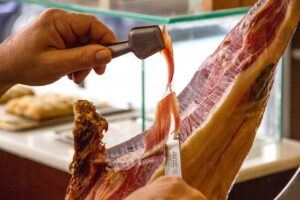
- Jamón ibérico
- Fresh seafood
- Rice
- Smoked paprika (pimentón)
-
Tomatoes and peppers
These ingredients shape the bold, rustic flavors Spanish food is famous for.
Food Experiences You Shouldn’t Miss
- Tapas crawl in Seville – croquetas, prawns, montaditos
- Pintxos in San Sebastián – tiny masterpieces on bread
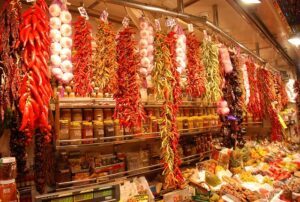
- Market visits in Barcelona – La Boqueria & Sant Antoni
- Authentic paella in Valencia – cooked over open flames
- Pulpo bars in Galicia – octopus with paprika and olive oil
-
Jamón tastings in Extremadura – visit a curing house
These experiences give you a real taste of Spanish food culture.
Tapas vs Pintxos – What’s the Difference?
- Tapas: Small plates served all over Spain
-
Pintxos: Basque-style bites, usually skewered with a toothpick
Both are fun, social, and perfect for bar hopping – just don’t call a pintxo a tapa in San Sebastián 😉
How To Eat Like a Local
- Take a cooking class (Barcelona is perfect for this)
- Visit local markets instead of supermarkets
- Order menú del día for lunch
- Ask locals where they eat
-
Attend food festivals and seasonal events
Frequently Asked Questions
What food is each region known for?
Valencia for paella, Galicia for seafood, Andalusia for cold soups, Basque Country for pintxos, Castile for roast meats.
How would you describe Spanish cuisine?
Flavorful, rustic, generous, and social.
What defines Spanish food?
Fresh ingredients, olive oil, cured meats, regional pride, shared meals.
How do I find authentic places to eat?
Ask locals, explore markets, avoid tourist menus.
Final Thoughts
Exploring Spanish cuisine means discovering far more than paella. Expect rich stews, fresh seafood, incredible cheeses, sweet desserts, and hand-sliced jamón in sunny plazas. Whether you’re into street food or cooking classes, Spain delivers unforgettable flavors.
Stay curious, try everything, and follow the locals – that’s how you experience Spain properly.