
Breakfast in Italy often surprises travelers expecting big, savory spreads like those found in other European countries or the US. The truth is, morning routines here focus on quick, sweet bites and, above all, coffee. There’s a lot more to it than just grabbing a pastry; this daily ritual fits perfectly into Italian life, blending practicality, social tradition, and a love of simple pleasure. Understanding how Italians eat in the morning is one of my favorite ways to start feeling like a real local when I’m in Italy, and it always helps me avoid common tourist mishaps. This guide explains what Italians really eat for breakfast, how the morning routine works, and how travelers can experience authentic Italian breakfast culture.
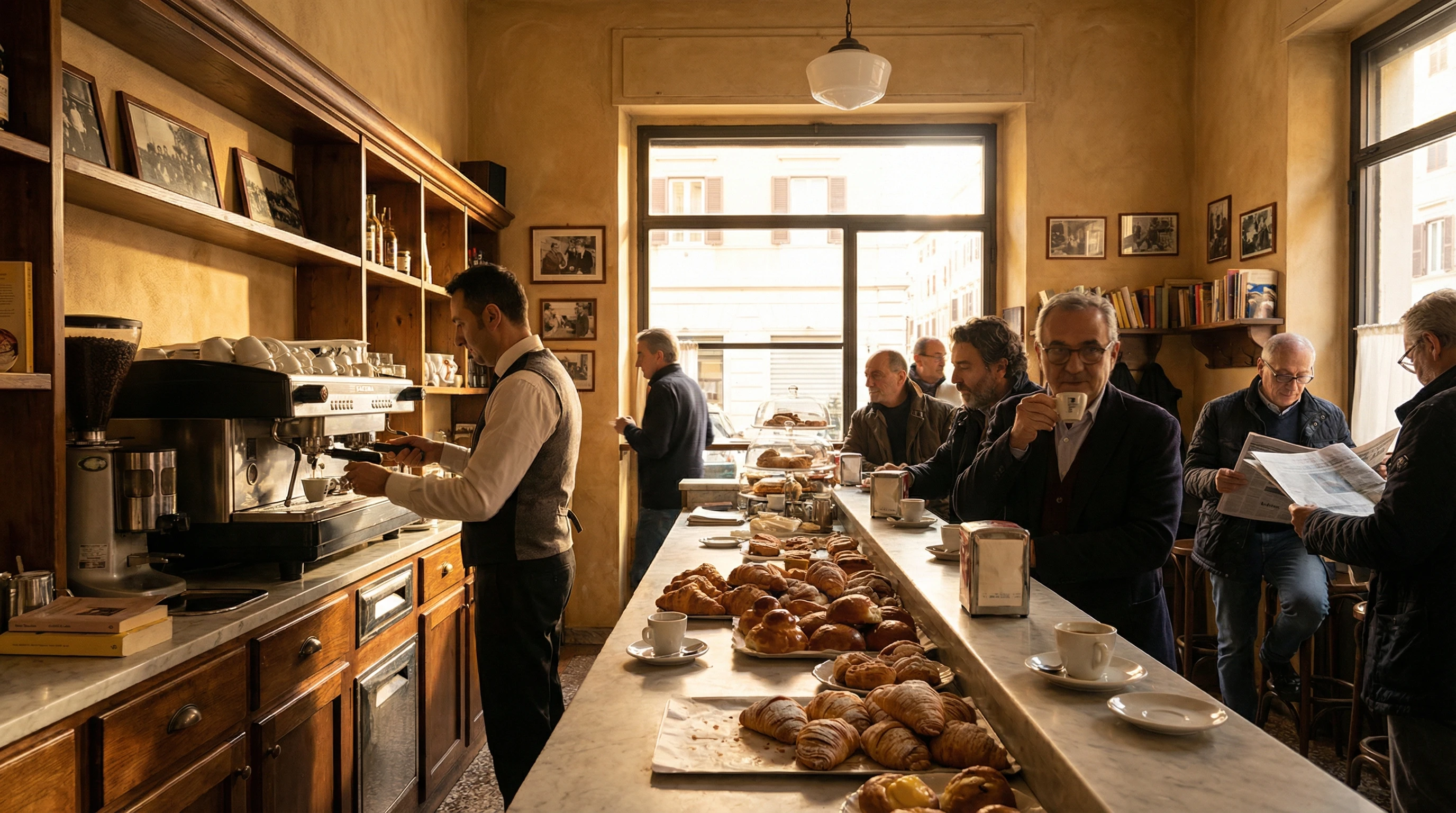
Before looking at breakfast itself, it helps to understand the daily eating rhythm in Italy:
Daily Meal Rhythm In Italy:
- Breakfast — quick coffee and pastry
- Lunch — main meal of the day
- Aperitivo — social pre-dinner drinks
- Dinner — late and relaxed
Typical Italian Breakfast Foods & Morning Routine
The first thing I noticed about Italian breakfast is how light it is. Eating in the morning is all about ease; coffee always comes first, and almost everything leans sweet rather than savory. Most days, Italians eat in a rush before heading off to work or school. The meal is rarely filling since lunch is the main event. You’re most likely to see people standing at a bar (what Italians call their coffee shops), sipping coffee and grabbing a quick pastry. There are some regional quirks, but the basics stay the same all over the country.
Breakfast fits into a much bigger picture. Lunch, which usually comes in the early afternoon, is where real eating happens, often with multiple courses and plenty of time to savor each bite. The morning meal, by comparison, is just a gentle wake-up for the stomach and a social check-in before the day gets busy. Over time, I’ve realized that this simplicity is part of what makes Italian mornings so appealing—it’s a mindful approach that sets the mood for the day.
Italian Coffee Culture in the Morning
Coffee habits in Italy have their own rules and routines. Espresso is the classic choice—a shot served quickly, usually at the counter. If you ask for coffee, this is exactly what you get. Some folks start with a cappuccino, a mix of espresso and foamed milk, but it’s really only seen before 11 a.m. Drinking anything milk-based after breakfast draws odd looks from locals.
Drinks like caffè latte (hot milk with coffee) and macchiato (espresso with a small dot of milk foam) are also popular in the morning. You won’t see Italians ordering big cups of drip coffee or walking around with to-go cups; part of the charm is taking a minute to stand at the bar, chat with the barista, then head on your way. It’s also cheaper to stand than to sit; tables inside or outside usually come with an added fee, especially in busy cities.
A quick tip: Tourists sometimes make the mistake of ordering cappuccino with lunch or dinner, which is considered odd in Italy. Save the milky drinks for morning, and you’ll blend in easily. Learning a few coffee terms doesn’t hurt—saying “un espresso” or “un cappuccino, per favore” will help you fit right in. Be ready for strong flavors; Italian espresso packs a punch compared to the milder brews in some countries.
Common Italian Breakfast Foods
I’ve lost count of how many mornings I’ve started with a cornetto, the Italian take on a croissant. Most bars offer these filled with jam, cream, or served plain. They’re flakier and a touch less buttery than those found in France. Biscotti (crispy twice-baked cookies) are also common, and I love them dunked straight into my coffee. Sometimes, Italians eat fette biscottate (dry toasted bread) with jam or honey, or a slice of plain bread with a bit of butter and preserves.
Sweet pastries fill most display cases, like bomboloni (think donuts with fillings), crostatine (mini fruit tarts), or torta della nonna (custard tart with pine nuts). Yogurt or fruit shows up from time to time, especially in more health-conscious spots, but it isn’t a default choice. Each region has local specialties. Sicily might offer a sweet cannolo or even granita with brioche. Northern Italian cafés may have torta sbrisolona, a crumbly cake from Mantua, while in parts of the south, you’ll see crispelle (fried dough) in winter months.
The reason sweet foods dominate is partly historical. Light, easy-to-digest sugar and carbs give a gentle energy boost, and help set the stage for a longer, heartier lunch. It’s quick, comforting, and lets locals ease into the day. Convenience also plays a role; pastries can be easily grabbed on the go, and many bars bake fresh batches daily to draw in the morning crowd.
Where Italians Eat Breakfast (Bars vs Home)
Most people eat breakfast at the local bar, which is more of a coffee shop than a spot for alcoholic drinks. These places are everywhere, and I often see regulars stopping in each morning for their daily espresso and a chat with the barista or other customers. Cafés feel lively, but everything runs quickly; people hardly ever linger, especially during the morning hustle. You’ll see a lot of folks grabbing breakfast while standing at the counter, chatting for a minute, then heading on their way.
While bars are a favorite, some Italians still prefer to start the day at home, especially families with kids or those living in quieter towns. At home, it’s common to see coffee from a moka pot paired with packaged pastries, biscotti, or bread—simple but classic. Hotel breakfasts, on the other hand, usually cater to international expectations, offering eggs, cheese, meats, cereal, and juice. This isn’t how locals actually eat, but it can be convenient if you’re just looking for something familiar and filling.
Want to experience authentic Italian breakfast?
Stay near local cafés and neighborhood bars where locals eat every morning. Choosing the right area makes a huge difference in your experience.
Regional Breakfast Differences Across Italy
The basics stay the same everywhere, but I’ve noticed a few fun changes as you travel around. In Northern Italy, people often choose focaccia or sweet breads along with their coffee. In Rome and much of Central Italy, the classic combo is caffè and cornetto. The south boasts a serious pastry scene; try sfogliatella in Naples or granita and brioche in Sicily.
Different coffee drinks also pop up. In some spots, you’ll find caffè d’orzo (a barley-based, caffeine-free alternative) or a marocchino (chocolate, espresso, and milk foam served in a small glass). Local ingredients and traditions shape the display cases at each bar, so it’s worth trying whatever you spot on offer. Exploring these regional differences gives you a richer taste of Italy’s food culture and showcases the country’s amazing variety.
Why Italian Breakfast Is Light Compared To Other Countries
There are quite a few reasons Italians keep things easy in the morning. First off, lunch is supposed to be the big meal, so starting the day light helps with appetite and digestion. It matches the usual Italian routine, where people spend the morning on the go and don’t want to feel weighed down. Plus, Italy’s climate can be pretty warm in many regions, making rich or heavy foods less appealing after waking up.
I’ve noticed that the lighter breakfast style also fits into the quick pace of city life. There’s always time to squeeze in a coffee and pastry, even if you only have five minutes before work or errands. It’s a habit that just makes sense for the way things run here. This way of eating supports not only physical well-being, but also the time-pressed schedules of modern Italian urban life.
Common Tourist Mistakes
Tourists often walk into an Italian café and ask for eggs and bacon, or look for huge continental breakfasts. These are pretty tough to find outside of hotels and touristy areas. Another classic error is ordering a cappuccino after lunch, which gets you a raised eyebrow or a gentle correction from the barista. Expecting big portions is also off-base, as bar snacks are small and meant to just tide you over until the main meal.
Sitting down at a busy café and occupying a table all morning is another common slip; locals move quickly, especially in the morning rush. Finishing up and freeing space for someone else is considered polite. Trying only tourist-friendly bars means missing out on authentic pastries or the lively local routine. Sometimes, visitors forget to pay at the register first; in most Italian bars, you pay before you order at the counter, not after.
How Travelers Can Eat Breakfast Like a Local
The main way to fit in is to order at the counter. Find a bar that looks busy with locals and head to the register first, where you pay and get a ticket for your coffee and snack. Bring your ticket to the barista, order your coffee and pastry by name, and enjoy your food while standing at the counter. Try whatever pastry is described as the house specialty or ask for a recommendation—regional variety is always strong.
Keep things quick but don’t stress; friendly small talk is common, but there’s no pressure to linger. If you want to sit, be ready to pay a little bit extra and try to move on once you’ve finished. Timing matters too: avoid the late morning rush if you want to take it slow, but hit peak hours for a real taste of the daily social buzz. Adopting these small habits makes the experience even more memorable and gives you real insight into Italian mornings.
How Italian Breakfast Supports the Lifestyle
There are plenty of benefits to Italy’s slimmed-down breakfast. Eating a small, sweet meal in the morning keeps digestion light. There’s enough energy to start the day, and I find it helps prevent overeating later. The morning trip to the bar also supports regular social interaction; some people see the same familiar faces every day, trading greetings and gossip with their coffee.
Above all, this approach to breakfast supports the Italian rhythm—fast, efficient, but still enjoyable. It reflects a bigger philosophy: enjoy life’s little pleasures, don’t rush the good stuff, and balance food with company. This special balance between simplicity and enjoyment helps keep daily routines stress-free and satisfying.
Wrapping Up
Authentic Italian breakfast brings together all the little things that make local culture so irresistible. It’s simple, quick, enjoyable, and about much more than just food. Slipping into a bar for espresso and a cornetto offers a slice of real Italian life; one you’ll remember long after the trip is over. Following these habits helps you ditch the tourist routine and enjoy the best parts of Italy, right from your first bite in the morning.
Frequently Asked Questions
Here are some popular questions travelers have about Italian breakfast:
Do Italians eat breakfast at home or at a bar?
Both, but many Italians stop at a local bar (coffee shop) for a quick espresso and pastry—especially on workdays. At home, it’s often moka coffee with simple sweets or toast.
What coffee should I order in Italy in the morning?
If you want to blend in, order an espresso (just say “un caffè”). A cappuccino is normal in the morning too, but it’s typically a breakfast-only drink.
Why is Italian breakfast mostly sweet?
It’s designed to be quick and light because lunch is usually the main meal. A sweet pastry plus coffee gives fast energy without feeling heavy.
What’s the most “local” breakfast combo to try?
A cornetto + espresso at the counter is the classic. If you’re in Sicily, try granita with brioche for a very local twist.
What are the biggest tourist mistakes at Italian breakfast?
Expecting eggs and bacon in regular cafés, ordering cappuccino with lunch, and sitting too long during the morning rush (locals move fast).