
If you plan your trips around what you’ll eat next, Portuguese cuisine deserves a spot at the top of your list. Food in Portugal is flavorful, honest, and deeply rooted in tradition. While Italian and Spanish dishes often steal the spotlight, traditional Portuguese food quietly wins hearts with simple ingredients like olive oil, garlic, and seafood fresh from the Atlantic. This guide will help you explore Portuguese regional cuisine and discover the famous meals you simply can’t miss on your foodie adventure.
What Makes Portuguese Cuisine Special?
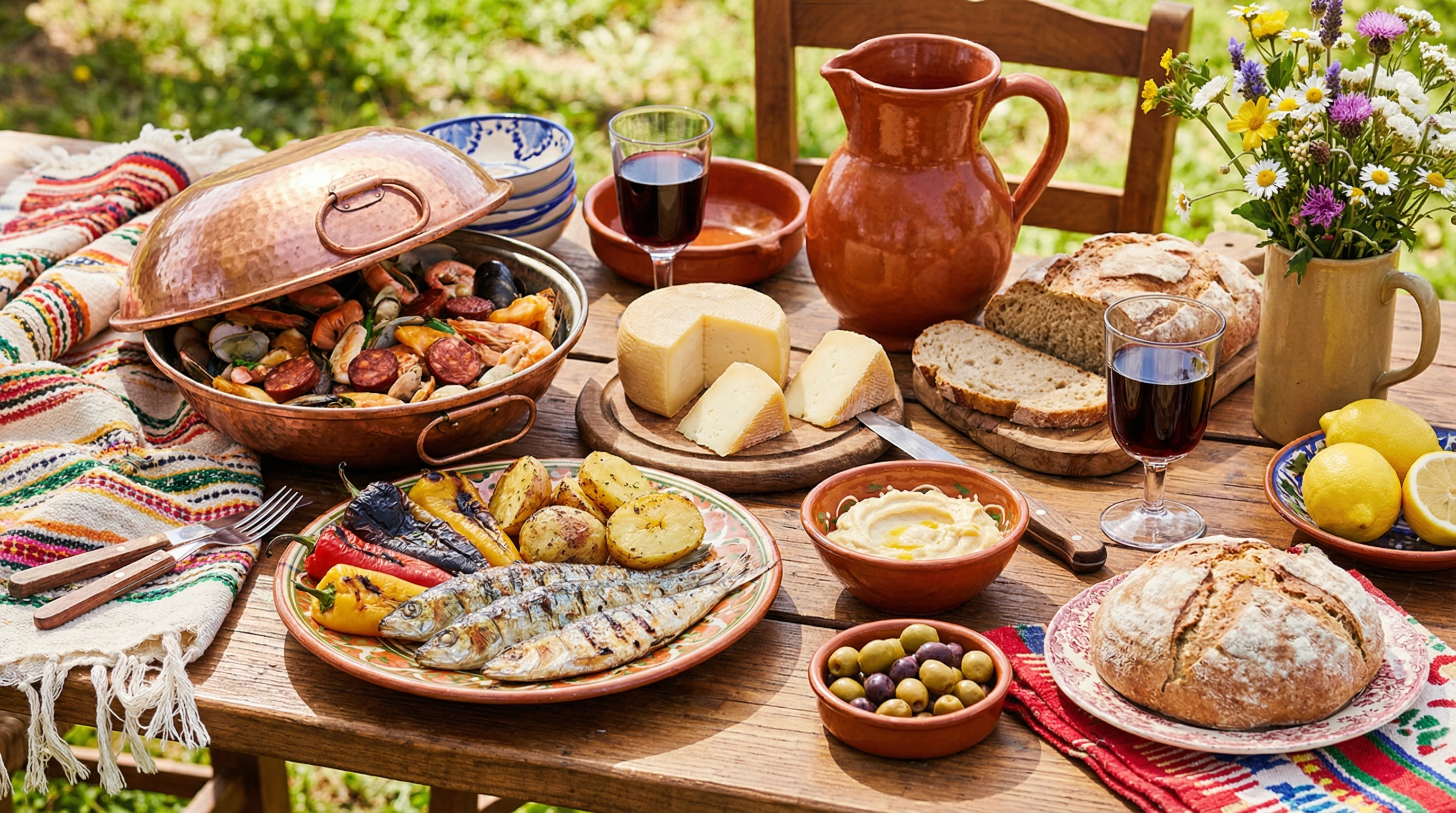
Portuguese cuisine focuses on comfort, simplicity, and high-quality ingredients. Many classic dishes started as humble home-cooked meals in fishing villages and rural towns. Today, big family tables are still piled high with stews, fresh seafood, and crusty bread.
Portuguese food for beginners may look simple at first, but every dish tells a story shaped by history, trade routes, and local traditions. Discovering what to eat in Portugal often feels like stumbling upon a hidden gem that hasn’t yet been overrun by tourists.
Regional Food in Portugal: What’s Eaten Where
Each region has its own specialties shaped by climate, geography, and local produce.
Lisbon & Tagus Valley
In Lisbon, you’ll find amêijoas à Bulhão Pato (clams in garlic and herbs), bacalhau à brás (salt cod with eggs and potatoes), and the famous bifana pork sandwich sold at street kiosks.
Porto & The North
Porto is home to the legendary francesinha, a massive meat and cheese sandwich covered in spicy beer sauce. Northern regions also love caldo verde soup and summer grilled sardines. Nearby Douro Valley vineyards produce wines that pair perfectly with local dishes.
Algarve
Seafood dominates Algarve cuisine. Cataplana (seafood stew cooked in a copper pan), grilled sardines, octopus salad, and almond desserts reflect the region’s coastal and Moorish influences.
Alentejo
Expect rustic flavors: black pork, bread soups (açorda), strong olive oil, and farm-style cheeses. This region defines traditional Portuguese comfort food.
Azores & Madeira
On São Miguel, try cozido das Furnas, slow-cooked underground using volcanic steam. Madeira offers black scabbardfish with banana, bolo do caco bread, and local wines. Island cuisine is adventurous and unique.
Portuguese Ingredients You’ll See Everywhere
- Bacalhau (salted cod) – cooked hundreds of ways
- Olive oil – the backbone of Portuguese cooking
- Seafood – sardines, clams, octopus, shrimp
- Pork – sandwiches, stews, sausages
-
Spices – paprika, garlic, piri-piri chili
Markets are the best place to see these staples up close and sample local flavors.
Must-Try Portuguese Dishes
- Bacalhau à Brás – creamy cod, egg, and potato dish
- Francesinha – Porto’s famous loaded sandwich
- Caldo Verde – potato-kale soup with chouriço
- Sardinhas Assadas – charcoal grilled sardines
-
Cataplana – Algarve seafood stew
For quick bites, check out my Portuguese street food guide.
Don’t skip desserts: pastel de nata, arroz doce, queijadas.
Eating Like a Local
Lunch is the main meal (1–2 pm). Dinner starts late, usually after 8 pm. Meals are social, slow, and shared. Restaurants often bring bread, olives, and cheese first (you only pay if you eat them).
Tascas (small neighborhood restaurants) serve some of the best food in Portugal. Local festivals and markets turn cooking into community events.
Eating Well on a Budget
Portugal is one of Europe’s best countries for affordable food:
- Daily specials (prato do dia)
- Local bakeries
- Markets and street stalls
-
Pastéis de nata & bifanas
You can eat incredibly well for just a few euros.
FAQ: Food in Portugal
What dishes should beginners try?
Bacalhau à brás, caldo verde, pastel de nata.
Is Portuguese food spicy?
Mostly savory, not spicy. Heat comes from optional piri-piri sauce.
How important is seafood?
Very! Coastal regions depend heavily on fish and shellfish.
Best food cities?
Lisbon, Porto, Faro – but small towns surprise you too.
For more inspiration, check out my guides on Portuguese desserts, wine pairings, and food markets. If you love discovering food through travel, Portugal will keep your taste buds busy from start to finish.