
If you’ve ever wandered into an Italian restaurant and felt a little lost reading the menu, trust me, you’re not alone. Italian menus can look totally different from what most tourists are used to. Instead of listing out mixed plates, they’re arranged by courses, often in Italian, with words that might seem confusing at first glance. Knowing how to decode these menus makes eating out way more fun and helps you order with confidence like a local. Learning how to read an Italian restaurant menu makes dining in Italy much easier and helps you order dishes with confidence.
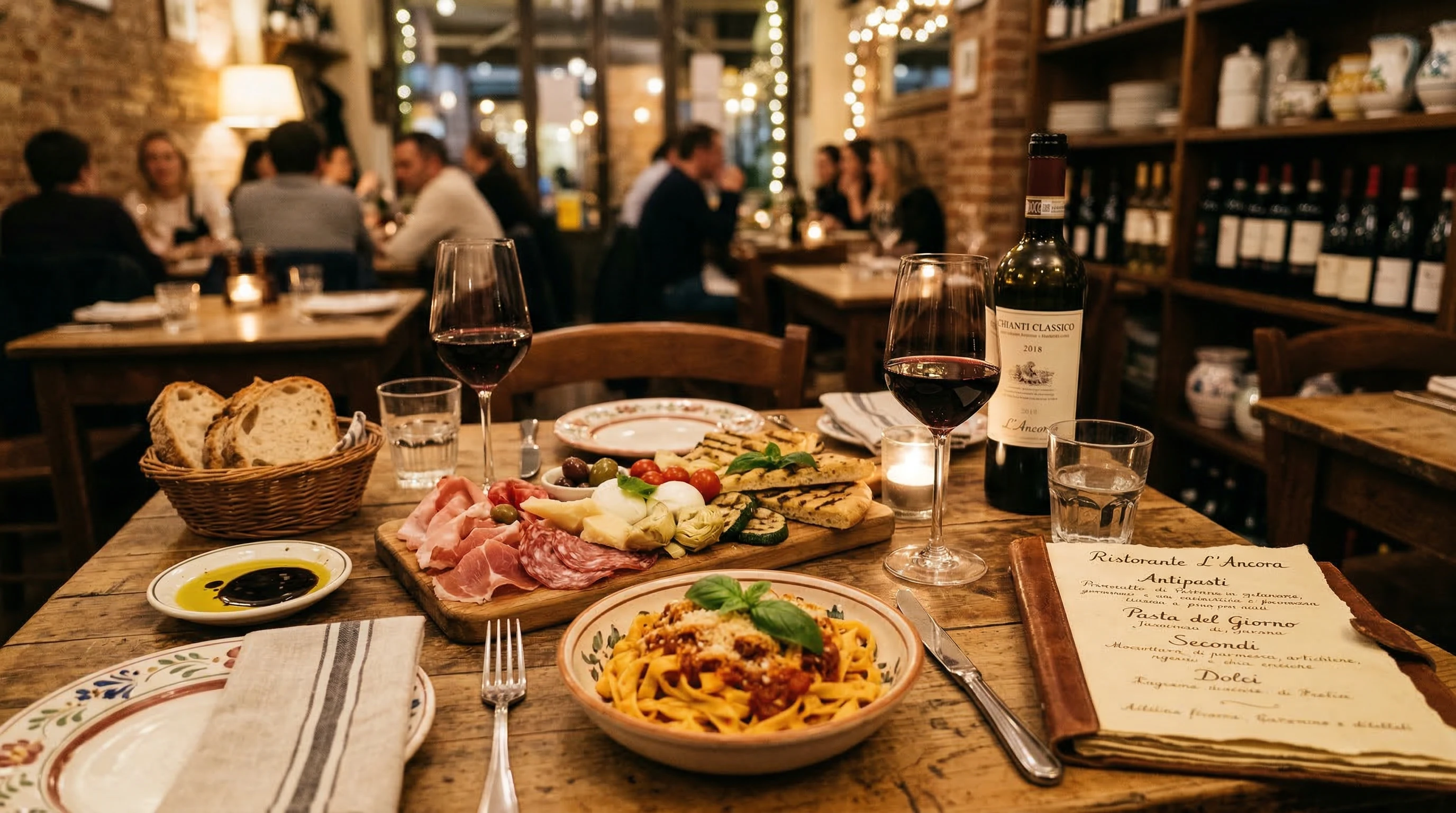
What Is An Italian Restaurant Menu Structure?
Italian restaurant menus are organized by courses rather than by main dishes with sides. The typical structure includes antipasti (appetizers), primi (pasta or risotto), secondi (meat or fish), contorni (side dishes), and dolci (desserts).
Why Italian Menus Look Different
Italian restaurant menus might feel a bit intimidating if you’re seeing them for the first time. Instead of featuring combos or plates that come with everything, Italian menus sort dishes by course. This means you won’t typically find a single “main dish” with sides all on one plate like you might see elsewhere. Italians usually enjoy their meals in multiple courses, each with its own category on the menu. The idea is to savor each part of the meal separately; it’s a tradition that goes back generations and still feels fresh every day.
So if you’re used to picking just a single “entrée” with everything included, you might find the Italian style totally new. But don’t worry. Once you learn how it works, it’s actually pretty simple and opens up the chance to try more flavors. Italians see their meals as an opportunity to gather, chat, enjoy, and sample lots of foods across several courses.
The Main Sections Of An Italian Menu
Understanding how the menu is laid out goes a long way. Each section represents a course, and while you’re welcome to order from just one (no pressure to eat every course!), knowing what’s what makes it much easier to pick something delicious. Here are the key sections you’ll see on most Italian menus:
Antipasti
This is where your meal starts. “Antipasti” means “before the meal” and is all about small plates, appetizers, or shared bites. You might spot:
- Bruschetta – Toasted bread with toppings like tomatoes, basil, and olive oil.
- Carpaccio – Thinly sliced raw beef or fish, dressed with olive oil and lemon.
- Prosciutto e Melone – Slices of cured ham with sweet melon.
- Caprese – Slices of mozzarella, tomatoes, and basil, drizzled with olive oil.
It’s totally normal to share a few antipasti at the table. Some places might offer local cheeses, marinated veggies, or olives as well. Trying these starters is one of the best ways to get a taste of regional flavors right off the bat.
Primi (Primi Piatti)
This section features “first courses.” These are usually hot dishes like pasta, risotto, or soup. They’re not sides or starters; think of them as their own proper meal portion, but usually served before the main meat or fish course. Common dishes include:
- Spaghetti alla Carbonara – Pasta with egg, pecorino cheese, pancetta, and black pepper.
- Risotto ai Funghi – Creamy rice cooked with mushrooms.
- Penne all’Arrabbiata – Pasta with a spicy tomato sauce.
- Lasagna al Forno – Baked pasta layered with meat sauce and béchamel.
Portions can be filling, but they’re not supposed to replace the main course unless you want them to. Many restaurants offer a variety of regional pastas, with shapes and sauces that reflect the traditions of the area. For example, in Tuscany, pappardelle with wild boar ragu is common, while in Liguria, you might track down trofie with pesto.
Secondi (Secondi Piatti)
This is the “main course” section, centered on proteins: meat, fish, or sometimes eggs or cheese. Unlike in some countries, these may not come with any sides unless you order them separately. Expect to find:
- Pollo alla Griglia – Grilled chicken.
- Bistecca Fiorentina – Thick, Tuscan-style T-bone steak, served rare.
- Branzino al Forno – Oven baked sea bass.
- Salsiccia – Italian sausage, sometimes grilled or braised.
If you want veggies or potatoes with your steak or fish, check the next section. Secondi are a great chance to try local specialties—one region might feature hearty game meats, while seaside towns offer mouthwatering fish plates.
Contorni
“Contorni” are side dishes. You order these along with your main (secondo) if you want vegetables, potatoes, or salad. Some favorites:
- Patate al Forno – Roasted potatoes.
- Verdure Grigliate – Grilled seasonal vegetables.
- Insalata Mista – Mixed green salad.
- Spinaci al Burro – Spinach sautéed with butter.
It’s totally normal to pick one or two contorni with your secondi. Sides are usually big enough for sharing. Depending on the locale, you might stumble upon artichokes, roasted peppers, or even chickpea fritters as classic sides.
Dolci
Time for dessert! The “dolci” section highlights Italy’s sweet traditions:
- Tiramisu – Coffee soaked ladyfingers, layered with mascarpone cream and cocoa.
- Panna Cotta – Creamy vanilla custard with a fruit sauce.
- Crostata – Fruit tart made with jam or fresh fruit.
- Gelato – Italian ice cream, with a range of flavors.
Plus, you’ll spot espresso, grappa, or limoncello to help finish the meal on a classic Italian note. In many regions, there are also local desserts that change with the seasons, such as almond cakes in the south or chestnut tarts in the north.
Quick Italian Menu Structure
- Antipasti – starters or shared appetizers
- Primi – pasta, risotto, or soup
- Secondi – meat or fish main course
- Contorni – side dishes
- Dolci – desserts
Common Italian Menu Words Tourists Should Know
Lots of the words you’ll see on Italian menus describe how a dish is prepared or what’s in it. Here are a few that pop up almost everywhere:
- al forno – Baked in the oven (like “lasagna al forno”).
- alla griglia – Grilled (such as “pesce alla griglia” for grilled fish).
- al pomodoro – With tomato sauce (found in “spaghetti al pomodoro”).
- fatto in casa – Homemade (used for pasta, bread, or desserts).
- fresco – Fresh.
- stagionale – Seasonal (meaning made with in season ingredients).
Picking up these basic terms makes menu reading less intimidating. When in doubt, these cues are super useful for understanding what you’ll get. Some extras you might see: “ripieno” (stuffed), “affumicato” (smoked), “piccante” (spicy), and “crudo” (raw). Getting a handle on these small words will definitely help you avoid surprises when your plate arrives!
Typical Italian Restaurant Menu Example
Menus will look a little different from one region to the next, but here’s a sample to show how dishes and prices might appear in a standard trattoria (informal restaurant):
Antipasti
– Bruschetta Mista – €6
– Affettati misti (cured meats platter) – €9
Primi
– Tagliatelle al Ragù – €12
– Risotto ai Funghi Porcini – €13
Secondi
– Saltimbocca alla Romana – €15
– Orata al Forno (baked sea bream) – €18
Contorni
– Patate Arrosto (roast potatoes) – €4
– Insalata di stagione (seasonal salad) – €5
Dolci
– Tiramisu – €5
– Gelato artigianale – €6
This kind of menu layout helps you see the courses and pick exactly what you want. Some places also offer a “menu del giorno” (menu of the day) for a set price, with a smaller selection from each course. Don’t hesitate to ask for it if you’re looking for a good deal or want to taste what the kitchen recommends!
Tips For Ordering From An Italian Menu
I’ve had those moments where I wasn’t sure what to get or how much to orderwhat to get or how much to order, especially in a busy Italian trattoria. Here are some tips I’ve picked up along the way:
- If you’re not super hungry, just order a “primo” or a “secondo” with a contorno. Italians won’t bat an eye if you order fewer courses.
- If you’re unsure about a dish, ask the server for a recommendation by saying, “Cosa mi consiglia?” (What do you recommend?)
- Don’t worry if you mispronounce things; staff are used to tourists and appreciate the effort!
- To try more flavors, order different starters and swap bites with your travel buddies.
- Remember that coffee at the end of a meal usually means espresso, unless you ask specifically (“caffè americano” for a longer coffee).
- If you’re sharing, let your server know—they may split the dish onto extra plates. Italians are often happy to help make the meal comfortable.
- Pay attention to the “coperto”— a small charge per person for bread and table service. It’s standard in Italy and will be noted on the menu.
- Don’t rush; Italian meals are a leisurely affair, especially at dinner, so expect the pace to be slower than in many other countries.
Mistakes Tourists Make When Reading Italian Menus
I’ve seen (and made) a few common errorsI’ve seen (and made) a few common errors over the years. Some pitfalls to avoid include:
- Expecting main dishes to come with sides. They almost always need to be ordered separately in Italy.
- Assuming every “primo” is vegetarian or every “secondo” is meat. Read dish descriptions or check with staff if that matters to you.
- Ordering a dish just for the name, without checking the main ingredients. For example, “carbonara” does not have cream in Italy; “pepperoni” is not spicy sausage but actual bell peppers.
- Skipping over antipasti, which can be some of the most delicious part of the meal!
- Thinking pizza is always available at every meal. Many full restaurants only serve pizza at dinner and sometimes only on certain nights.
- Forgetting to look for regional specials that might not be featured in guidebooks. Letting the server suggest something can lead to unforgettable meals!
How Locals Choose Dishes
Italians approach meals more like an experience than a quick stop. Many Italians pick dishes according to what’s fresh, seasonal, or traditional for that area. The local house specialty (“piatto della casa”) often gets suggested by servers eager to show off dishes from their region. In coastal towns, locals may lean toward fish, while in the countryside, you’ll spot more game and hearty recipes.
Most Italians might choose either antipasto and primo, or primo and secondo, but rarely every course every time unless it’s a feast or holiday. At big family gatherings or festive dinners, though, it’s common to enjoy each course leisurely, paired with local wine. Mealtime is less about rushing and more about enjoying the ride and the company.
Don’t be shy about asking what’s popular or what’s special that day. Italians love when guests show interest in their food culture. Servers can help you learn about obscure local pasta shapes, rare cheeses, or unique regional desserts. Taking their advice is often a recipe for great memories!
Simple Strategy For Tourists
If the menu still feels overwhelming, I use this step by step approach:
- Skim the menu for any daily specials (often written on a blackboard or separate card).
- Choose an antipasto if you want to share something light, or skip to the primo if you want to fill up.
- Pick a primo if you’re curious about local pasta or risotto.
- Decide if you want a secondo (meat or fish); if yes, look at the contorni to add a veggie or salad.
- Save space for dolci if you see something you love, or just stick with espresso to finish your meal.
- If you get stuck, point to something interesting and ask the waiter “È buono?” (Is it good?). The smile and answer will usually help you decide!
You don’t have to order one of everything. Mix and match as you like. Italian meals are as much about relaxing and trying new flavors as they are about tradition. On top of that, sharing with your tablemates means you get to sample even more and enjoy dining like a true Italian.
Wrapping Up
Eating out in Italy is all about stumbling upon new tastes, good company, and enjoying the local flavors. Take your time, try something new, and don’t be afraid to ask questions. Italian menus offer so much variety that even after dozens of meals, there’s always something different to enjoy. With a little know how, you’ll get the most out of your Italian dining adventures and maybe even surprise yourself with an unexpected favorite dish.
Frequently Asked Questions
Do I have to order every course on the menu?
No, you can order just one or two courses if you want. It’s totally fine to have only pasta or a main with a side. Italians do it all the time.
Will I find vegetarian or vegan options?
Many Italian menus offer veggie dishes; look for “verdure” (vegetables) and check the antipasti and primi sections. Vegan options might need a quick check with staff as dairy and eggs are common ingredients.
Do I need to speak Italian to order successfully?
Knowing a few words helps, but pointing to what you want or asking for recommendations works well everywhere. Most restaurants in tourist spots will help in English.
What if I have allergies or dietary restrictions?
Tell your server about any allergies or restrictions right away. Use simple phrases or show them written notes just to be clear; it’s pretty common and staff are usually understanding.
Exploring Italian menus is one of the best parts of visiting Italy, so enjoy every bite. Buon appetito!