
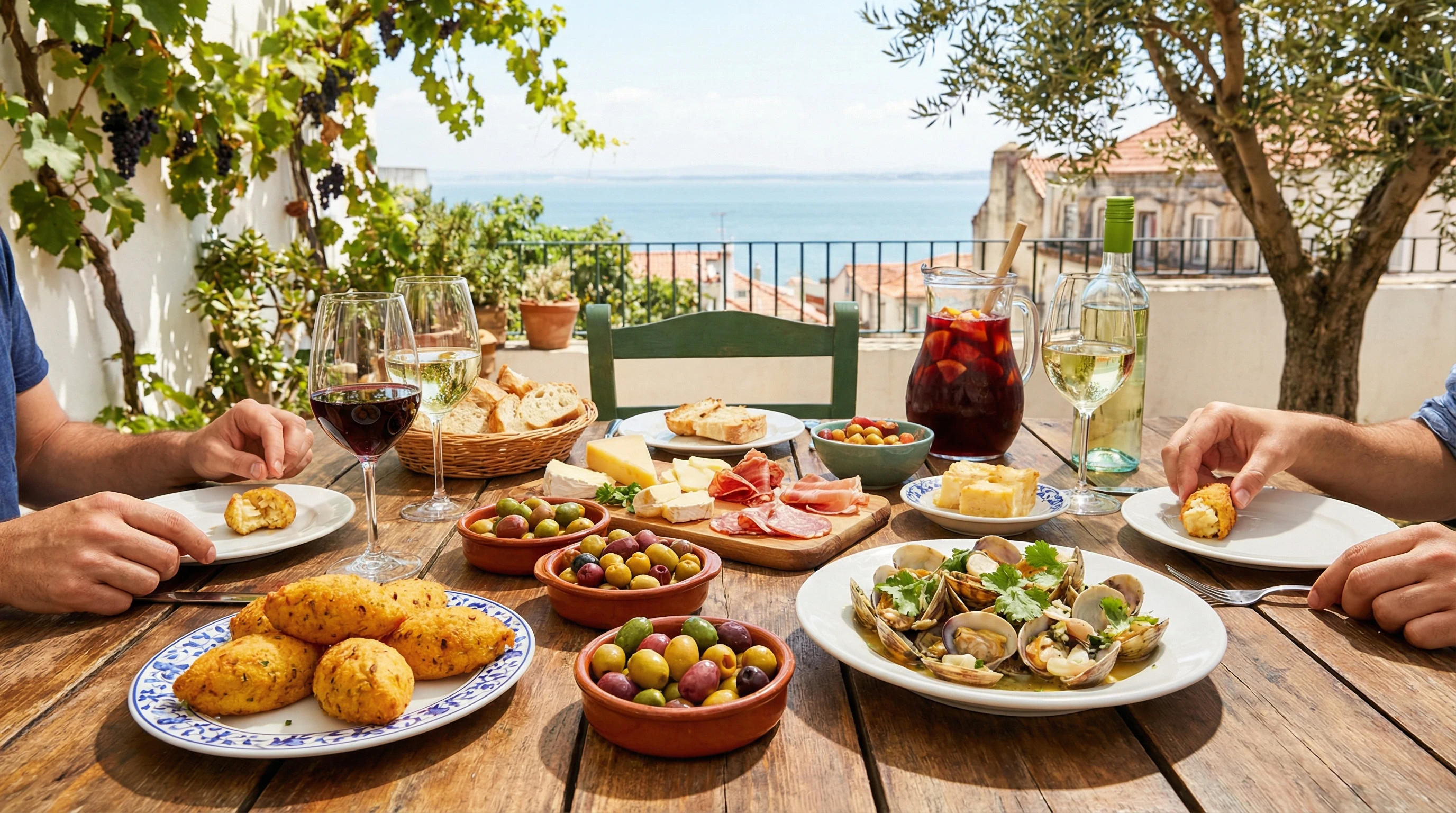
Portuguese petiscos culture isn’t just about what’s on the table, it’s about how people connect in bars, markets, and tascas across Portugal. This is why Portuguese petiscos culture is one of the easiest ways to eat like a local in Portugal. Many visitors walk in expecting a classic three-course meal, but eating like a local in Portugal means ditching formal courses and embracing plates made for sharing. Here, food is just one half of the experience; the other half is catching up with friends, talking about the day, and lingering over small bites. Petiscos are where food meets social life in Portugal; they offer a great way to join in, even if it’s your first time.
What Are Portuguese Petiscos?
The word “petiscos” comes from the Portuguese verb “petiscar,” meaning to snack or nibble. These are small, flavorful dishes served in casual settings all over Portugal. Petiscos aren’t considered appetizers; they’re the main act in a meal that’s all about sharing. You order a few, or many, and everyone helps themselves as the conversation rolls on.
Unlike Spanish tapas, which often get compared to petiscos, there’s no pressure to stand at a bar or pile your plate high all at once. In most places, petiscos can be enjoyed at any pace. This style is perfect for a relaxed catch-up with friends. Locals often order petiscos early in the evening, when they’re more interested in talking and sipping their drinks than having a big sitdown dinner.
Petiscos vs Tapas: Why They’re Not the Same
Comparing petiscos to tapas in Portugal and Spain might seem natural, but there are some key differences. Spanish tapas are often served with drinks automatically in some regions or ordered individually in others. Portion sizes and styles can vary a lot, and the focus is usually on moving from bar to bar, sampling a specialty at each stop.
Petiscos, on the other hand, lean toward bigger portions. Imagine smaller versions of main dishes. In Portugal, the approach is less about hopping between spots and more about picking a place to land for the evening. There’s a lot of flexibility. People can order a couple of plates just to snack or fill the entire table for a shared dinner that lasts hours.
Pacing matters, too. While tapas tend to come out quickly and encourage a quick stop, petiscos service might feel much more laid-back. Nobody is in a hurry, and the local Portuguese food culture is more about settling in and letting the meal stretch out naturally.
Where Locals Eat Petiscos in Portugal
If you want to eat like a local in Portugal, skip the “fine dining” scene for one of these spots:
- Tascas: These small, often familyrun taverns are classic petiscos territory. Friendly, no-frills, and usually packed with regulars, tascas serve as the heart of many neighborhoods.
- Neighborhood Bars: Drop by a local bar in Lisbon, Porto, or any coastal town, and you’ll see tables with several petiscos and folks chatting long after their glasses are empty.
- Wine Bars and Cervejarias: Petiscos pair perfectly with Portuguese wine or cold beer. Wine bars often showcase regional petiscos, while cervejarias (beer halls) offer more robust options and shellfish.
- Food Markets: Modern markets like Mercado da Ribeira in Lisbon or Mercado do Bolhão in Porto have stalls dedicated to petiscos, perfect for an informal bite.
- Coastal Towns vs Cities: In coastal spots, petiscos often feature fresh fish and seafood, while city tascas highlight sausages, cheeses, and classic fried treats.
No matter where you go, petiscos keep things lively and make it easy to join in on local life, even if you don’t speak much Portuguese.
Typical Portuguese Petiscos to Try
- Picapau: Marinated beef or pork cut into bites, cooked in a garlicky sauce, and eaten with toothpicks. Always good with a cold beer.
- Bolinhos de Bacalhau: Golden codfish cakes made from salted cod, potatoes, and herbs. Crunchy outside, silky inside.
- Ameijoas à Bulhão Pato: Clams cooked with garlic, cilantro, olive oil, and white wine. The broth is made for dunking your bread.
- Presunto, Queijo, Olives: Slices of cured ham, chunks of regional cheese, and juicy olives make up the petiscos platter seen on nearly every table.
- Sardines & Grilled Seafood (Seasonal): Grilled sardines pop up all summer, especially near coastal towns, joined by prawns or tiny fried fish, depending on the catch.
Menus often rotate with what’s fresh or what the cook feels like making that day, so it’s worth asking about offmenu specials wherever you go. Sometimes a cook will put together a special petiscos plate with unique twists, like octopus salad, pickled vegetables, or spiced lupini beans. These surprises can turn a regular meal into a mini adventure.
How Petiscos Fit Into Daily Life
In most Portuguese towns and cities, the daily rhythm centers around meals, but not always the big, plannedout ones. Before dinner, you’ll find people filling up bars and terraces, each group ordering petiscos to share over a glass of vinho verde or a beer.
The late afternoon or early evening is prime petiscos time. It’s when locals wrap up work or drift in after errands, looking for a bite and a chat. Petiscos aren’t about eating to get full. They’re more about snacking slowly, soaking up the atmosphere, and leaving room to enjoy dessert, coffee, or another round later on.
This style suits anyone who prefers a spontaneous evening. Meals stretch, plans change, and nobody rushes. The Portuguese take their time, and with good reason. The slow approach leads to more conversation and laughter, making the meal feel more like an event rather than just a way to eat.
Some petiscos lovers even make a tradition out of meeting every week or two just to sample the latest seasonal ingredients and check out what’s being served. Whether you live there or you’re just visiting, the routine welcomes anyone who wants to join in.
Cost & Budget: Eating Petiscos Like a Local
A big part of what makes eating petiscos really fun is how affordable it feels versus classic restaurant meals. A single dish usually ranges from €3–€7, depending on where you are and the ingredients involved. Plates meant for sharing can stretch even further.
Ordering smartly means choosing a few petiscos at a time; enough to share, but not so many that you’re overwhelmed (or letting food go cold). Locals rarely order everything upfront, since it’s common to pause, see how full everyone feels, and then order one or two more dishes if needed.
Going for petiscos often ends up cheaper, especially if you’re in a group. You’re paying for what you actually eat, and meals are built for sharing anyway. Watch out for touristheavy spots in city centers or waterfronts, as they tend to price things higher and serve less authentic takes.
If you want even better value, try venturing a street or two away from popular sites or explore tascas in residential neighborhoods. These spots often have loyal regulars, generous portions, and menus written on chalkboards—sometimes only in Portuguese, but don’t let that scare you off. Just ask, and the staff will usually point you to popular dishes or what’s extra good that day.
Common Tourist Mistakes With Petiscos
- Ordering Too Much at Once: Petiscos aren’t meant to all come out together like a big dinner. Start slow; you can always order more.
- Expecting Fixed Menus: Some places write specials on chalkboards, and menus change day to day. Ask what’s good today instead of looking for familiar dishes.
- Confusing Petiscos with Full Dinners: While you can eat enough petiscos for a full meal, don’t expect a main course format. Embrace the mix and match style.
- Paying Tourist Prices in the Wrong Places: The best petiscos spots are often tucked away from the main tourist streets. Look for busy, noisy tascas filled with locals for better prices and authentic food.
So… Is Petiscos the Best Way to Eat Like a Local?
Petiscos shine when you’re in the mood for a lowkey evening. Think hanging out at a bar, sampling a few things with drinks, and keeping it relaxed. If you’re more into street food, Portugal’s markets, bakeries, and street stalls have plenty to offer, like bifanas, pastéis de nata, or grilled chouriço sandwiches.
Some locals mix all three throughout a week: grabbing quick snacks some days, meeting friends for petiscos another night, or gathering for a full sitdown meal at a tasca on the weekend. There’s no single right way to eat like a local in Portugal, but picking up the petiscos style is a good start.
Petiscos culture is really about stepping into the moment, joining the conversation, and tasting a bit of everything. If you’re visiting Portugal, don’t hesitate to try different petiscos or even ask others at the table what they recommend. The scene is welcoming, and it’s all about enjoying yourself and connecting with others.
Portuguese Petiscos FAQ
What is Portuguese petiscos culture?
It’s all about sharing small plates, stretching out meals, and socializing around simple, highflavor foods in a relaxed, friendly environment.
Are petiscos cheaper than restaurants?
Usually, yes. Petiscos are priced per plate and made for sharing, so the cost can feel much lower than ordering multiple courses per person at a regular restaurant.
Can you eat petiscos as a full meal?
Absolutely. Locals often make a meal out of several plates, especially when out with friends. Try starting small and see how full you get; you can always order more.
Do you need to speak Portuguese to order petiscos?
Not at all. Most places are friendly about gestures, pointing at menus, or recommending what’s fresh. Learning a few words can help, but you’ll usually get by just fine.