
Spanish food markets are a dream come true for anyone who loves food and local culture. These lively spaces buzz with regulars shopping for family meals, travelers tasting their way through Spain, and stallholders who have been selling cheese, jamón, and seafood for generations. For me, markets are the best way to understand a city, discover authentic Spanish market food, and try regional specialties you won’t always find in restaurants.
From historic covered markets to modern gourmet halls, Spain’s food markets offer a front-row seat to everyday life and culinary traditions.
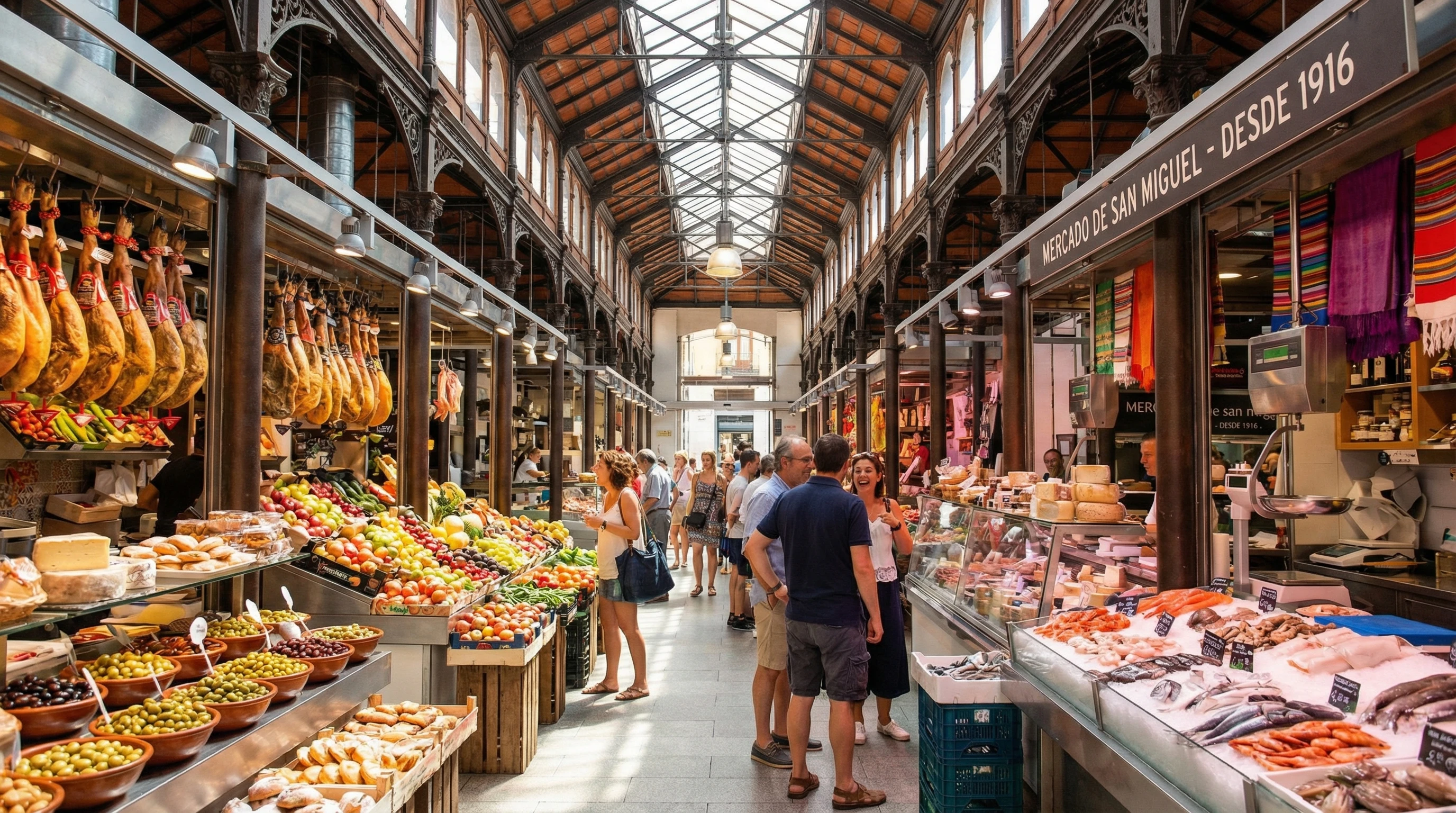
Why Food Markets Matter in Spain
Food markets play a huge role in Spanish culture. They are not just places to shop, but social hubs where neighbors meet, chat, and share recipe tips. Many families have been visiting the same butcher or fish stall for decades.
Most Spanish towns have permanent covered markets open almost daily. Inside you’ll find ultra-fresh produce, baked goods, seafood, cured meats, and plenty of ready-to-eat snacks. Spending time in a market lets you watch Spanish food culture in action – lively conversations, bargaining over fish counters, and kids tasting fresh fruit straight from the stall.
Markets also support small local producers and keep traditional food knowledge alive. It’s everyday life, not a tourist show.
Best Spanish Food Markets By City
Every city has its signature market. Some are historic landmarks, others have a modern vibe, but all promise great food and atmosphere.
Barcelona – La Boqueria
La Boqueria is Spain’s most famous market, just off La Rambla. Opened in the 1800s, it’s packed with colorful produce, seafood displays, jamón stalls, and tapas bars. Grab a cone of sliced ham, fresh juice, or sit at a counter for grilled fish and tortilla. Busy but unforgettable.
Madrid – Mercado de San Miguel
This glass-walled market near Plaza Mayor is a gourmet hotspot. Inside you’ll find croquetas, paella, oysters, olives, and classic tapas. It’s especially lively in the evenings when people gather for wine, sherry, and small plates.
Valencia – Central Market
Housed in a stunning modernist building, Valencia’s Central Market is famous for oranges, saffron, seafood, and rice for paella. Try local bites like cod fritters or esgarraet with a cold beer. The citrus stalls alone are worth the visit.
Seville – Mercado de Triana
Located across the river in Triana, this market feels truly local. Expect Andalusian seafood, fried snacks, cheeses, and cured meats. Several tapas bars inside serve regional favorites in a relaxed setting.
San Sebastián – Mercado de la Bretxa
One of Spain’s best food cities, San Sebastián’s main market supplies top chefs. Look for fresh fish, Basque cheeses, salt cod, and charcuterie. Pintxos counters make it perfect for snacking while you explore.
What To Eat At Spanish Markets
You’ll see classics everywhere plus regional specialties. Some top picks:
Jamón – Try Jamón Ibérico sliced paper-thin. Nutty, rich, and unforgettable.
Cheese – From manchego to blue cabrales and soft local varieties. Taste before buying.
Seafood – Prawns, sardines, clams, and crabs. Many stalls cook it fresh.
Empanadas – Savory pastries filled with tuna, meat, or vegetables.
Olives – Garlicky, spicy, stuffed – mix your own cup.
Street Snacks – Bocadillo de calamares, tortilla bites, pintxos, croquetas.
Budget Tips For Eating At Markets
Eating at markets is one of the cheapest ways to eat well in Spain.
- Choose standing bars instead of sit-down restaurants
- Snack on empanadas, cheese, and small jamón portions
- Look for menú del día deals
- Share plates to try more dishes
-
Accept free samples when offered
You’ll eat better for less than in tourist restaurants.
Best Time To Visit
Markets are busiest in the morning, especially weekends.
- Best vibe: 9–11am
- Quieter: after lunch
-
Many close around 2–3pm
Check hours on Sundays and holidays.
Tourist Markets vs Local Markets
Famous markets can be crowded and pricier, but still fun.
For authentic experiences, explore neighborhood markets away from main attractions. Prices are better, crowds smaller, and the vibe more local. Ask stallholders for recommendations – it often leads to hidden gems.
Drinks To Try At Markets
Vermouth – Served with orange and olive
Cañas – Small cold beers
Local wines & cava – Ask for pairing tips
Fresh juices – Especially in Barcelona
How Markets Reflect Regional Cuisine
Markets showcase local identity:
- North: seafood & shellfish
- South: olives, citrus, cured meats
-
Central Spain: grains, beans, cheeses
Walk any market and you’ll instantly understand what makes each region special.
Frequently Asked Questions
What time do markets open?
Usually 8–9am, closing around 2–3pm.
Can you eat inside?
Yes! Many stalls offer food to eat on the spot.
Are markets expensive?
Neighborhood markets are affordable. Tourist ones cost more.
Can you taste before buying?
Absolutely. Vendors often offer samples.
Final Thoughts
Spanish food markets are one of the best ways to experience the country. The smells, colors, flavors, and people create an atmosphere you won’t find in restaurants. Whether you’re hunting for the best bites, shopping like a local, or just wandering for inspiration, Spanish markets never disappoint.