
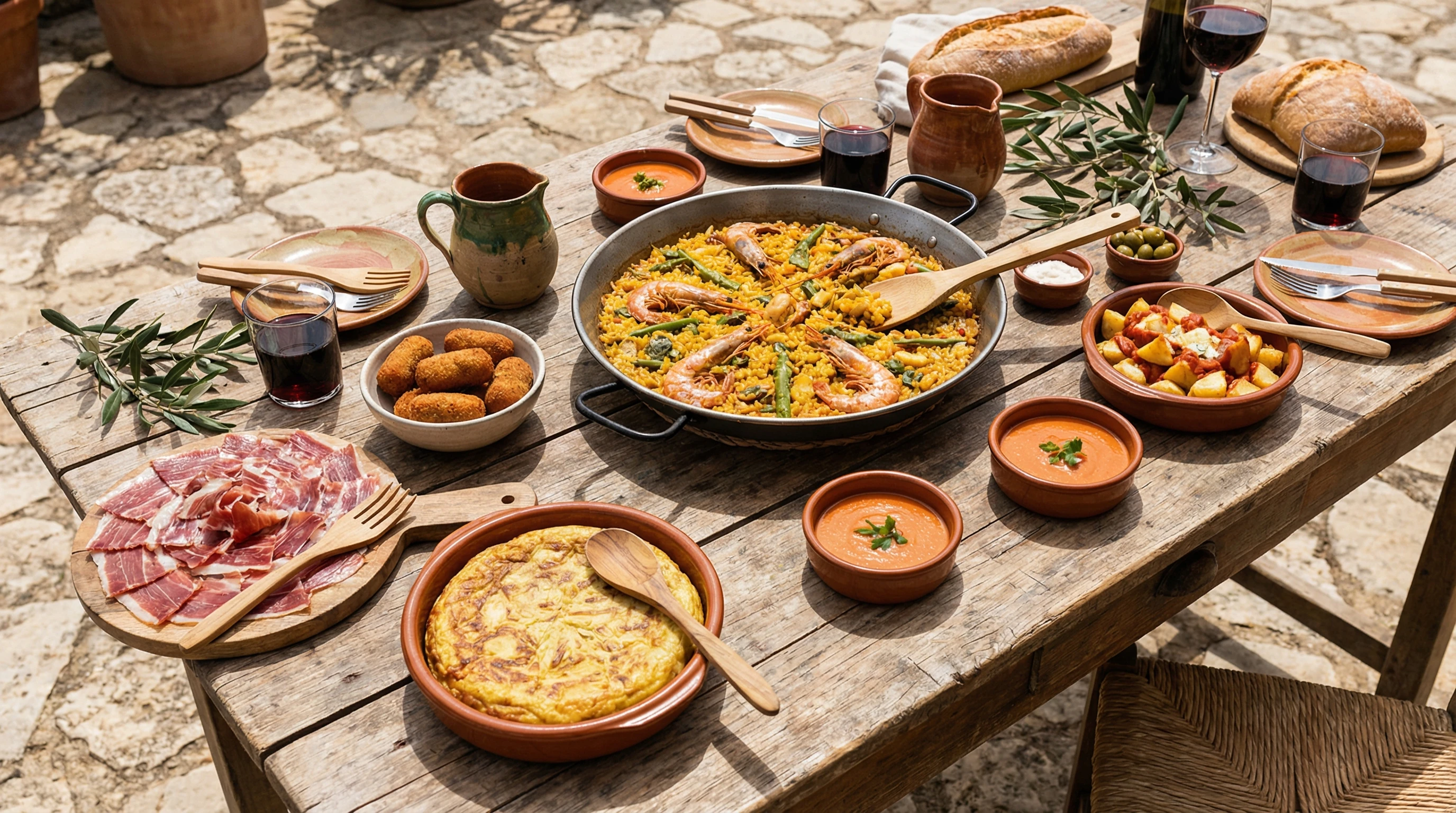
Spanish cuisine attracts food lovers from all over the world, offering bold flavors shaped by centuries of tradition. While traveling through Spain, I quickly realized that food here isn’t just about eating – it’s deeply connected to local culture, family heritage, and regional pride. Meals are social events, often shared with friends and family, and tapas culture makes every gathering feel warm and welcoming.
Why Spanish Cuisine Is Loved Worldwide
Spanish food stands out for its fresh ingredients, rich flavors, and regional diversity. From Valencia’s rice dishes to Andalusia’s refreshing soups and Galicia’s seafood, every area has its own specialties. Asking locals about their favorite dishes often feels like being invited into family traditions.
Sharing plates, laughing around the table, and enjoying long meals together is part of everyday life. This strong bond between food, people, and place makes Spanish comfort food both familiar and exciting for visitors.
Paella: The Heart of Valencia
Paella is one of the most famous Spanish dishes and originates from Valencia. It’s a rice dish cooked in a wide, shallow pan and traditionally shared at family gatherings or weekend lunches.
The classic Paella Valenciana includes chicken, rabbit, green beans, and sometimes snails. Seafood paella features shrimp, mussels, and calamari, while mixed paella combines meat and seafood.
For the best experience, order paella at a seaside restaurant and enjoy it straight from the pan. A crisp white wine or refreshing sangria pairs perfectly. (You can find more drink pairing ideas in my food & drink guide.)
Gazpacho & Salmorejo: Andalusia’s Cooling Soups
When summer hits southern Spain, gazpacho and salmorejo become daily essentials.
- Gazpacho is a light, refreshing soup made from tomatoes, cucumber, green pepper, garlic, olive oil, vinegar, and bread. It’s served ice-cold, often in a glass.
- Salmorejo is thicker and creamier, made mostly from tomatoes and bread, topped with olive oil, boiled egg, and jamón. These dishes show how Spanish food adapts perfectly to hot climates while staying full of flavor.
Tortilla Española: The Everyday Favorite
Tortilla Española (Spanish omelette) is made from eggs, potatoes, and sometimes onion – a topic of friendly national debate. Some prefer it sweet with onion, others simple and savory.
It’s served everywhere: cafés, bars, picnics, and street stalls. Soft in the center or fully cooked, tortilla is one of Spain’s most loved everyday foods. (For more grab-and-go ideas, see my Spanish street food article.)
Jamón Ibérico: The King of Cured Meats
Walk into any Spanish market and you’ll see rows of hanging hams. Jamón Ibérico is the star.
Jamón Ibérico de Bellota comes from free-range pigs fed on acorns and has a melt-in-your-mouth texture. Jamón Serrano is firmer and more affordable but still delicious.
Best enjoyed sliced thin with bread and olives. (Check my Spanish food markets guide for the best places to try it.)
Croquetas: Crispy Bar Favorites
Croquetas are creamy on the inside, crispy on the outside, and filled with ham, chicken, cod, or mushrooms. They’re one of Spain’s most popular tapas and appear in almost every bar.
Homemade versions are lighter, but grabbing a plate from a busy bar never disappoints. Seasonal fillings make them even more exciting.
Pulpo a la Gallega: Galicia’s Famous Octopus
Pulpo a la Gallega is a classic dish from northwestern Spain. Octopus is boiled until tender, sliced, seasoned with paprika, salt, and olive oil, and often served over potatoes.
It’s usually presented on a wooden plate and highlights how Spain’s coastal regions influence local cuisine. You’ll find it at fairs, festivals, and traditional bars.
Patatas Bravas: The Ultimate Tapa
Crispy potatoes topped with spicy tomato sauce or creamy alioli make patatas bravas a tapas classic.
Every city has its own recipe – smoky, spicy, or mild. Many versions are vegan, making it an easy choice for everyone.
How Locals Enjoy These Dishes
In Spain, lunch is around 2pm and dinner often starts at 9 or 10pm. Meals are meant to be shared, and tables fill with small plates for everyone.
Family recipes are passed down through generations, turning everyday meals into meaningful traditions.
Best Drinks With Spanish Food
Wine, cava, vermouth, and local beers are popular choices. In the north, try sidra (cider). On hot days, tinto de verano (red wine with lemon soda) is refreshing.
For detailed pairing tips, see my Spanish wine & pairing guide.
Where To Find Authentic Spanish Cuisine
Visit local markets, small family-run bars, and neighborhood restaurants. Avoid places with big tourist menus outside.
Ask locals where they eat – that’s where you’ll find the best food. Food festivals are also great for tasting regional specialties.
FAQ
What Spanish dish should I try first?
Tortilla Española or croquetas are perfect beginner choices.
Are there vegetarian options?
Yes – gazpacho, salmorejo, patatas bravas, tortilla, pimientos de padrón, and cheese plates.
How can I eat cheaply in Spain?
Visit markets, order tapas, and share plates with friends.
Final Thoughts
Exploring traditional Spanish dishes is one of the best ways to experience local culture. From lively tapas bars to seaside seafood markets, every meal tells a story.
Check out my other Spain travel and food guides for more inspiration – there’s always something new to discover in Spanish cuisine.