
Ordering food in Italy for the first time can feel overwhelming — I’ve been there too. You sit down, open the menu, and suddenly you’re looking at words you’ve never seen before. What’s the difference between “primi” and “secondi”? Do you need to order everything? And what should you actually pick to avoid a bad experience? The good news? Ordering in Italy is much simpler than it looks. This quick guide will show you exactly what to order, what to avoid, and how to enjoy your first Italian meal without stress.
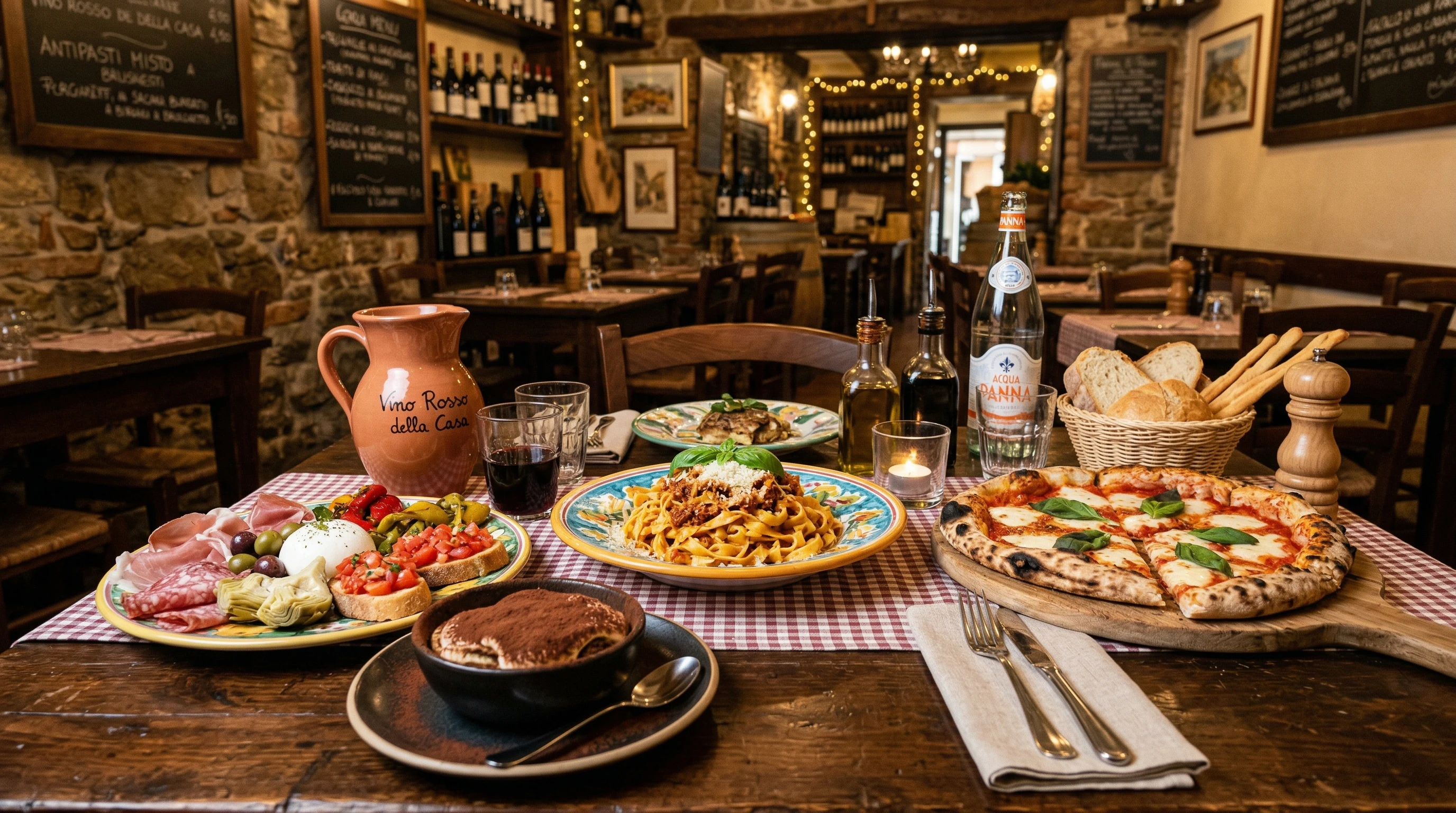
Understanding The Italian Meal Structure
In Italy, meals break down into several main sections. You’ll notice menus set up this way nearly everywhere, from lively pizzerias in cities to small trattorias in the countryside. Here’s a quick rundown to help you spot what’s what:
- Antipasti: Starters or appetizers. You’ll spot bruschetta, mixed meats, or marinated vegetables. These are small portions meant to wake up your appetite.
- Primi: The section for pasta and risotto. Primi are the first of the main courses, typically served before the protein-based dishes.
- Secondi: This is where you get meat and fish dishes. Think grilled chicken, roasted rabbit, or the catch of the day.
- Contorni: Sides, often vegetables, salads, or potatoes. You need to order these separately, as they don’t come with the main dish.
- Dolci: Desserts! Here’s where you find tiramisu, panna cotta, gelato, and other Italian sweets.
Don’t worry about needing to order something from every part of the menu. Italians rarely eat every course in a single meal. Most people pick two courses—like a pasta and a dessert, or perhaps a starter and a main. Just go with what suits your hunger and budget.
Quick First-Time Order Cheat Sheet
If you don’t want to overthink it, here’s a simple order that works almost anywhere in Italy:
- Main: Pasta carbonara OR pizza margherita
- Side: Small salad or grilled vegetables
- Dessert: Tiramisu or gelato
- Drink: Water + house wine (optional)
That’s it. Simple, authentic, and hard to mess up.
What Tourists Should Order First Time In Italy
If you’re facing that Italian menu as a first-timer, sticking with classics is the way to go. These dishes are friendly for beginners, satisfying, and easy to find. They let you sample Italian food without any surprises.
Pasta Dishes Worth Trying
- Carbonara: This Roman favorite mixes pasta (usually spaghetti), eggs, pecorino cheese, cured pork (guanciale or pancetta), and black pepper. There’s no cream, just a rich, glossy sauce.
- Amatriciana: Tomato sauce, pecorino cheese, and cured pork. This dish brings a bit more kick and tang, especially around Rome and central Italy.
- Pesto: If you’re in northern areas like Liguria, try trofie al pesto. This dish features pasta tossed in a fresh, green blend of basil, pine nuts, garlic, parmesan, and olive oil.
Pizza To Start With
- Margherita: Mozzarella, tomato, basil, and olive oil. Simple, iconic, and delicious. Perfect for tasting quality ingredients without a lot of toppings.
- Diavola: A pizza topped with spicy salami, this is a solid choice if you want a little heat.
Easy, Tasty Antipasti
- Bruschetta: Grilled bread topped with chopped tomatoes, olive oil, and basil. Sometimes you’ll get extras like garlic, meats, or cheeses.
- Prosciutto e Melone: Thin prosciutto slices paired with sweet melon. It’s a standout summer dish—refreshing and balanced.
- Caprese Salad: Sliced mozzarella, ripe tomatoes, fresh basil leaves and olive oil. It’s light, fresh, and familiar to most travelers.
Simple, Iconic Italian Desserts
- Tiramisu: Ladyfingers soaked in espresso, layered with mascarpone cream, and dusted with cocoa powder.
- Gelato: Italian-style ice cream, denser and more flavorful than most versions. Local gelaterias offer unique flavors in every town, going far beyond chocolate and vanilla.
Sticking with these classics makes your meal straightforward, full of flavor, and really enjoyable. Most are available almost everywhere, though you might spot local twists as you travel.
If you’re wondering what to order in Italy for the first time, these dishes are safe, authentic, and widely available.
No need to avoid anything completely, but some dishes or customs might trip up visitors. Here are a few things worth knowing so you’re not caught off guard:
- Offal Dishes: In traditional spots, the special of the day might feature tripe or liver. Totally normal in some regions, but if you aren’t feeling adventurous, ask the server for details on unfamiliar dishes.
- Anchovies: Italians use anchovies in pizzas, pastas, and antipasto platters. If you don’t like strong, salty flavors, be sure to double-check for them in the ingredient list.
- Seafood Pasta: Especially by the coast, you’ll find pastas loaded with whole seafood—shells, heads, and all. Fresh and authentic, but if you’re not ready for it, try spaghetti alle vongole (clams) for a milder intro.
- Local Specialties: Each region in Italy has signature dishes and unique ingredients. These can be fantastic, but are sometimes an acquired taste. If in doubt, politely ask for a quick description before ordering.
Knowing about these options helps you steer clear of surprises and keeps your first Italian food experience focused on enjoying yourself.
Simple Ordering Strategy (Step by Step)
Getting a great meal in Italy doesn’t have to be complicated. Here’s how to make ordering stress-free, especially when you want a relaxed lunch or dinner in between sightseeing:
- Check your appetite: For lunch, it’s perfectly normal to stick to a pasta or pizza and maybe a salad. Dinner can include more, but you never need to get every course unless you’re celebrating.
- Pick one or two dishes: An easy first meal for tourists can look like:
- Pasta (carbonara, amatriciana, pesto) or pizza (margherita, diavola)
- Add a side salad or grilled vegetables if you want something green
- Finish with tiramisu, or grab gelato as a treat later on
- Drinks: You’ll always be offered water (still or sparkling). Wine by the glass (vino della casa), local beers, or small-portioned soft drinks are all available. Don’t expect big fountain sodas like in the US.
A balanced meal could include bruschetta, spaghetti carbonara, a side salad, and tiramisu—just enough food for most appetites and a nice overview of Italian flavors. Before you order, here are a few common mistakes that can easily ruin your first experience in Italy:
Your first meal in Italy doesn’t have to be confusing.
Stick to simple, classic dishes, follow the local rhythm, and don’t overthink the menu.
Once you get the hang of it, ordering becomes part of the experience — and honestly, one of the best parts of traveling in Italy.Common Mistakes Tourists Make
After several trips to Italy and many chats with local servers, I’ve spotted some typical mistakes tourists make. They’re nothing to worry about, but understanding them will help you fit in and get the most from your meal:
- Overordering: Italian menu portions can seem modest, but two courses (like a primo and a dessert) are usually enough. Ordering all the courses can leave you stuffed and maybe even embarrassed when plates go unfinished.
- Expecting free sides: Dishes like steak or fish come solo. Sides are ordered as contorni, so if you want potatoes, spinach, or salad, add them to your order.
- Cappuccino at night: Italians drink cappuccino only in the morning; after meals, ask for espresso or a grappa instead. Ordering a cappuccino after dinner marks you as a tourist.
- Rushing your meal: Dining is social and relaxed. The staff won’t bring the check until you ask (“Il conto, per favore”). Take your time, savor the atmosphere and the food—there’s no hurry.
Knowing about these habits helps you slip into the rhythm of Italian dining and enjoy yourself more fully.
Tips For Ordering Like A Local
Eating like a local isn’t about getting everything “perfect”—it’s about relaxing and enjoying fantastic food. I picked up some helpful habits along my adventures in Italy:
- Keep it simple: Italian cuisine shines with just a handful of quality ingredients. No need to hunt for fancier dishes; classics are popular for a reason.
- Watch locals: Check out what the regulars are eating. If you notice a dish on every table, it’s probably worth a try yourself.
- Ask for suggestions: Servers are used to helping travelers and are happy to steer you toward house favorites. Just ask what pasta or pizza the staff loves—they might introduce you to something amazing.
- Don’t sweat the language: Italians are forgiving if you mispronounce a dish or point at the menu. Adding a “per favore” always earns smiles and makes things smoother.
If you keep an open mind (plus a backup choice just in case), you’re sure to have memorable meals throughout Italy.
Frequently Asked Questions
Do I need to order every course?
No way. Two dishes are usually plenty. Pasta or pizza with a salad works for most, and you won’t feel pressured to eat more.
What’s the safest dish to try first?
Pasta alla carbonara or pizza margherita are both safe bets. Both use familiar, high-quality ingredients, and are popular in restaurants everywhere.
Is pizza always available?
Pizza is widely available, but some restaurants focus more on pasta or meat. If you want pizza specifically, look for a “pizzeria” sign. In some areas, pizzerias open only in the evenings.
Can I share dishes?
Absolutely! Sharing a pizza or an antipasti plate among friends is normal and welcomed. If there’s a “coperto” (table charge), it’s usually small. Sharing is a big part of Italian dining culture.
Wrapping up, enjoying food in Italy is about taking it slow, sticking to great ingredients, and letting yourself enjoy new flavors without stress. With a little local savvy and a sense of adventure, every meal can become a highlight of your trip.