
Some of the links on this page are affiliate links, which means I may earn a small commission if you make a purchase through them, at no extra cost to you. This helps support the site and allows me to continue creating helpful content.
Florence might be known for its art and Renaissance history, but the city’s food scene is seriously impressive. If you’re planning a visit, it’s easy to end up in so-so tourist restaurants, missing out on the real local flavors. After many delicious trips and talking with local friends, I’ve learned what makes Florentine cuisine so enjoyable. These are the dishes you definitely want to put on your list. This guide is all about helping you track down the foods that locals actually love, so you won’t settle for an average meal while in one of Italy’s tastiest cities.
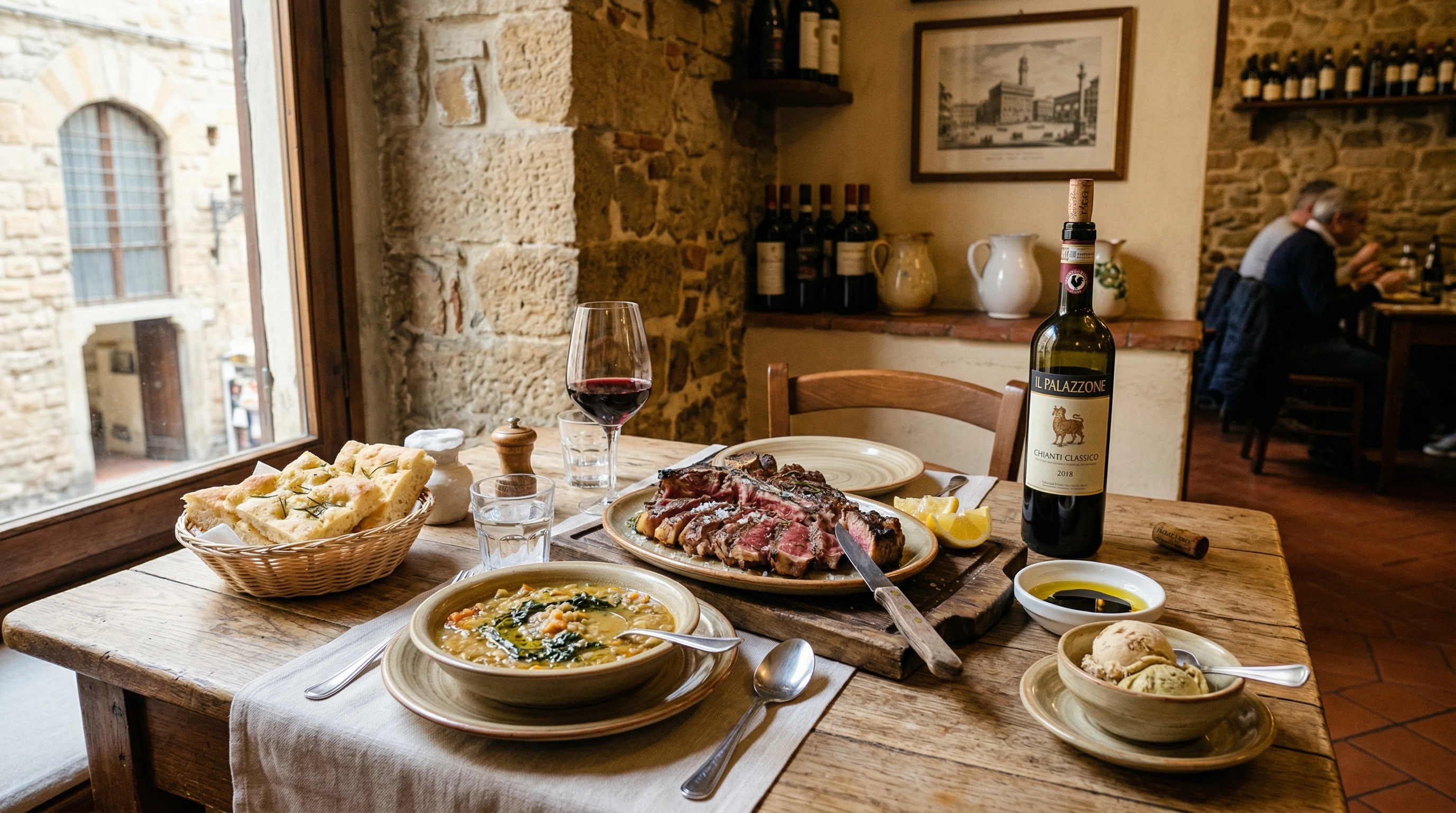
Quick List: Must-Try Foods in Florence
- Bistecca alla Fiorentina – Legendary Florentine T-bone steak
- Lampredotto – Flavorful street food sandwich made from slow-cooked beef stomach
- Ribollita – Hearty vegetable and bread soup packed with Tuscan veggies
- Pappa al Pomodoro – Tomato and bread soup that’s all about simple, deep flavor
- Schiacciata – Chewy Tuscan flatbread, perfect for sandwiches or as a snack
- Gelato – Creamy Italian ice cream, with real vs. tourist versions to watch out for
- Tuscan Wine – Classic Chianti, Super Tuscan, and other regional options
Why Florence Food Is Unique
Tuscan food isn’t about showy presentation or trending ingredients. Instead, what stands out is the focus on fresh, top-quality produce, local meats, and bread. Foods here are rooted in centuries-old traditions and have a strong identity that makes Florence’s culinary scene different from other Italian cities like Rome or Naples.
The cuisine highlights olive oil, unsalted bread, local beans, vegetables, and simple but bold flavors. Chefs and home cooks alike use what’s in season, so menus shift throughout the year. Dishes often come from peasant traditions (what some call cucina povera) that turn basic ingredients into seriously tasty meals. It’s a food culture that values heritage and doing simple things really well.
Must-Try Dishes in Florence
Bistecca alla Fiorentina
Florence’s signature steak is a huge T-bone or porterhouse, cut thick (think two fingers wide) and cooked over a wood fire. It’s left super rare inside, sliced, and served to share, usually between two or more people. Traditionally, it’s a breed called Chianina beef. Expect minimal seasoning: just a sprinkle of salt, pepper, good olive oil, and maybe a lemon wedge. The outside is charred and smoky, while the inside is juicy and tender. Locals are picky about the doneness; anything beyond rare is frowned upon.
If you want to try it like a Florentine, order it rare (al sangue) and pair with a glass of robust red wine. Most restaurants sell it by the gram or kilo, so check prices before ordering. Some places will even bring the raw steak to your table before cooking, so you can check the cut yourself and avoid surprises.
Keep in mind that real Bistecca alla Fiorentina is cooked over a wood grill, and the crust makes a big difference. For the best experience, enjoy it with rustic roast potatoes or simple beans on the side.
Want to try the real Florentine steak experience without guessing where to go?
👉 Check top-rated Florence food tours that include local tastings
Lampredotto
This classic Florentine street food is definitely for the adventurous eater; plenty of locals swear by it. Lampredotto means the fourth stomach of a cow, slow-cooked with herbs and vegetables until tender. You’ll find lampredotto served hot inside a chewy bun, usually topped with spicy green sauce (salsa verde) and sometimes a dollop of spicy red sauce (piccante). Some vendors will dip the top of the roll in cooking juices for extra flavor.
The best place to try it? Tiny food carts known as trippai are found at street corners and markets, especially around lunchtime. Even if you’re hesitant, I recommend giving it a try at least once; Florentines grow up eating this stuff. If you want an authentic experience, order it “bagnato” (dipped), and chat with the vendor about their preferred toppings.
Not sure where to find authentic street food spots?
👉 Explore Florence street food tours led by locals
Ribollita
Hearty and comforting, ribollita literally means “reboiled.” This thick soup uses leftover bread, white beans (usually cannellini), black cabbage (cavolo nero), carrots, onion, and whatever veggies are around. It’s traditionally made in big batches, left to rest overnight, and then heated again before serving. It’s filling, earthy, and especially good on chilly days.
Most trattorias serve ribollita as a first course or light lunch. It’s usually vegetarian and a great intro to Tuscan comfort food. Drizzle with extra-virgin olive oil for max flavor; sometimes you’ll even get a side jug of oil to add as you like. If you’re lucky enough to visit during winter, ribollita is at its peak.
Pappa al Pomodoro
Pappa al pomodoro is another example of turning leftovers into something special. This soup is made with ripe tomatoes, garlic, basil, olive oil, and chunks of stale bread that absorb all the flavors. It’s served thick, closer to a stew than a soup. Pappa al pomodoro tastes fresh and bright but still satisfies like a bowl of good comfort food.
You’ll see it mostly in spring and early summer when tomatoes shine. Try it in a small trattoria or osteria for the homiest version. Order a glass of local red wine or sparkling water to go with it, and enjoy how simple ingredients can bring loads of flavor to your table.
Schiacciata
Tuscany’s flatbread is like focaccia’s chewy cousin; golden, oily, and a little crisp on top. Schiacciata is everywhere, served plain as a snack, or stuffed with cured meats (like finocchiona, a fennelspiced salami), cheese, or roasted vegetables to make a killer sandwich. Some bakeries bake their schiacciata with rosemary or even grapes for a sweet-savory twist during harvest season.
Schiacciata sandwiches make for a quick lunch on the go, and it’s worth trying a few different fillings at local bakeries. Eat like a Florentine by ordering schiacciata with porchetta, an herb stuffed roast pork. If you’re visiting in September, look for schiacciata all’uva, a grape-studded sweet bread unique to the grape harvest season.
Gelato
You can’t visit Florence without stopping for gelato; this city claims to be the birthplace of modern gelato. Real, artisan gelato is stored in covered metal tins and made in small batches daily, not piled high in neon colors. Flavors should be seasonal and natural, and you’ll often find interesting local picks like honey, vinsanto (a Tuscan dessert wine), or even lavender.
The best gelaterias pride themselves on using local milk, nuts, and fruit. Look for signs that say artigianale. Skip the touristy shops selling frothy mounds of eyecatching colors, as that’s not real gelato. Go for a cone with classic flavors like nocciola (hazelnut) or pistacchio. Try something adventurous if you see it; fruit flavors like pear, fig, or wild berry showcase what’s local and in season.
Some food tours include stops at authentic gelaterias most tourists miss.
👉 Check current Florence food tour options here
Tuscan Wine
Tuscany is worldfamous for wine, and Florence is one of the best places in Italy to sample it. The city is surrounded by rolling vineyards producing Chianti (the classic choice), Brunello di Montalcino, and so-called Supertuscans. Wine isn’t just for fancy dinners, as locals sip a glass with lunch, alongside cheese and salumi, or as part of the classic evening aperitivo.
Most restaurants offer local wine by the glass or carafe (vino della casa). Ask for recommendations if you’re not sure which to try. Want something to pair perfectly with Florentine steak? A bold Chianti Classico or a Brunello hits the spot. Some wine bars let you sample different types by the glass, so you can taste a bit of everything without breaking the bank.
Where to Find Authentic Food in Florence
Some of the best meals I’ve ever had in Florence were tucked away from the crowds, out of sight of big tourist landmarks. True local food usually means small, familyrun places or street vendors who take pride in what they serve. Here’s what I’ve found works best for finding the real deal:
- Avoid restaurants right next to the Duomo or heavy traffic squares; these places often have higher prices and forgettable food.
- Look for trattorias and osterias on quieter sidestreets where locals eat. If the menu is written just in Italian, that’s usually a good sign.
- Try small alimentari (food shops) and bakeries for sandwiches or quick bites with a homemade feel.
- Markets like Mercato Centrale or Sant’Ambrogio have plenty of stalls serving true local meals, plus wine, cheese, and pastries you can snack on or take away.
- Menus with tons of dishes, especially “touristy” Italian American items, are worth skipping. Places that focus on a short list of local options often care more about quality.
If you spot a spot packed with Italians during lunch, chances are it’s worth checking out. Don’t be afraid to walk an extra block—it can mean the difference between bland and unforgettable.
If you want to skip the guesswork and eat where locals actually go:
👉 Browse top-rated Florence food tours here
Food Tour Recommendation
If you’re guessing where to find the best versions of these dishes, or only have a short time in Florence, a guided food tour can help you cut through the noise. I’ve tried a couple myself, and it’s a simple way to taste several specialties in one go, usually hopping between neighborhoods and learning a bit about the city’s history at the same time.
You usually get a mix of street food snacks, sitdown tastings, wine, local stories, and a local guide who can recommend other musttry spots nearby. Tours often include a lesson on Florence’s food culture, plus time for questions about drinks and where to shop for food souvenirs.
👉 Check the best Florence food tours here (local guides, hidden spots & authentic tastings)
Common Mistakes Tourists Make
Plenty of firsttimers in Florence fall into some easy food traps. Here are the mistakes I’ve seen (and made) the most:
- Grabbing lunch or dinner right next to big tourist attractions, where the food is rarely as tasty and usually pricier.
- Ordering pizza everywhere. It’s not a Florence specialty! While a few spots make great pizza, you’re better off sticking to local dishes and trying pizza on a trip to Naples or Rome instead.
- Ignoring classic Italian rules, such as eating bread with pasta or ordering cappuccino after meals. Florentines stick with espresso, and only have cappuccino for breakfast.
- Missing out on local, humble dishes because they sound odd or unfamiliar. Dishes like lampredotto or ribollita might seem unusual, but they’re loved for good reason, and skipping them means missing a real taste of Florence.
Avoid common restaurant mistakes in Italy
Tips for Eating Like a Local
- Take your time and enjoy your meal. In Florence, it’s all about relaxing and appreciating good food, not racing through your courses.
- Don’t over order. Courses here are smaller, and most meals are multiple courses (starter, pasta, main, dessert). Ask your server for recommendations if you’re not sure.
- Trust the menu, or ask what’s best that day. Many trattorias cook from what’s fresh or available, so daily specials are often excellent options.
- Leave room for wine, especially at lunch or as an aperitivo; local house wine is often surprisingly good and easy on the wallet.
- Finish with an espresso shot; never order a cappuccino after lunch, unless you want to look like a tourist. (Seriously, locals will give you a look!)
Frequently Asked Questions
Q: What’s the number one dish to try if I only get one meal in Florence?
The go-to answer is Bistecca alla Fiorentina. That said, if you’re vegetarian or not into steak, ribollita or pappa al pomodoro are tasty and unique local choices.
Q: When should I eat dinner in Florence?
Dinner in Florence doesn’t usually start until around 7:30 or 8 p.m. Locals eat later than many North Americans. If you show up at 6, you may only find open cafes or tourist traps. For the best experience, share a pre-dinner aperitivo and enjoy a leisurely evening.
Q: Is it safe to eat street food in Florence?
Florence has a long tradition of street food, and most vendors have high standards of cleanliness. Busy spots are often safe bets, thanks to high turnover and local customers. If you’re concerned, just keep an eye on what local people are ordering, and go with the crowd.
Q: Are reservations needed for restaurants?
Most popular spots recommend reservations, especially for dinner or on weekends. For lunch, you can usually walk in at smaller places, but it never hurts to book ahead for top picks, or if you have a large group. Some trattorias fill up fast, so calling ahead can save you time.
Q: Can I find vegetarian options in Florence?
Absolutely. Even with Florence’s love of meat and cheese, there are plenty of great vegetarian and vegan options. Classics like ribollita, pappa al pomodoro, and a huge range of seasonal vegetable sides are easy to find on most menus. Some places even offer vegan versions of local favorites or can make substitutions if you ask.
Ready to Eat Your Way Through Florence?
Florence has some of the most memorable meals I’ve ever had. From rich soups to perfectly seared steak and true knockout gelato, it’s a city that takes flavor seriously. If you want to hit the highlights on your next trip and skip the tourist traps, booking a food tour is a pretty handy shortcut. You get local insight, plenty of samples, and way less food FOMO. Don’t forget to save space for dessert!